Stacking the odds: Multiple sites for HSV-1 latency
- PMID: 36696497
- PMCID: PMC9876545
- DOI: 10.1126/sciadv.adf4904
Stacking the odds: Multiple sites for HSV-1 latency
Abstract
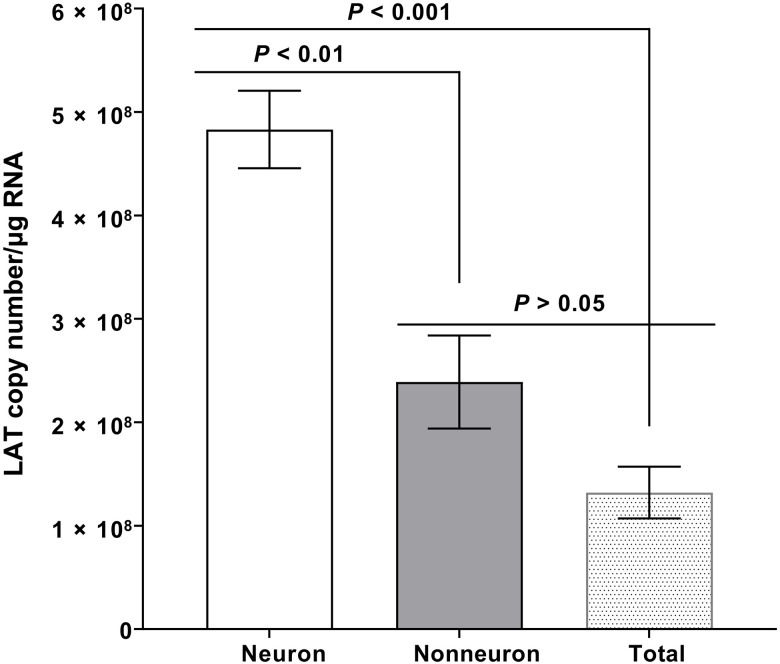
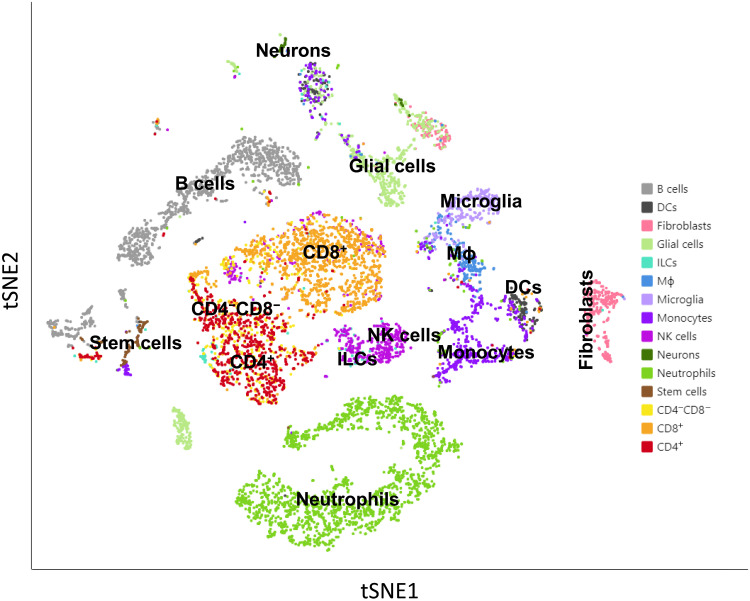
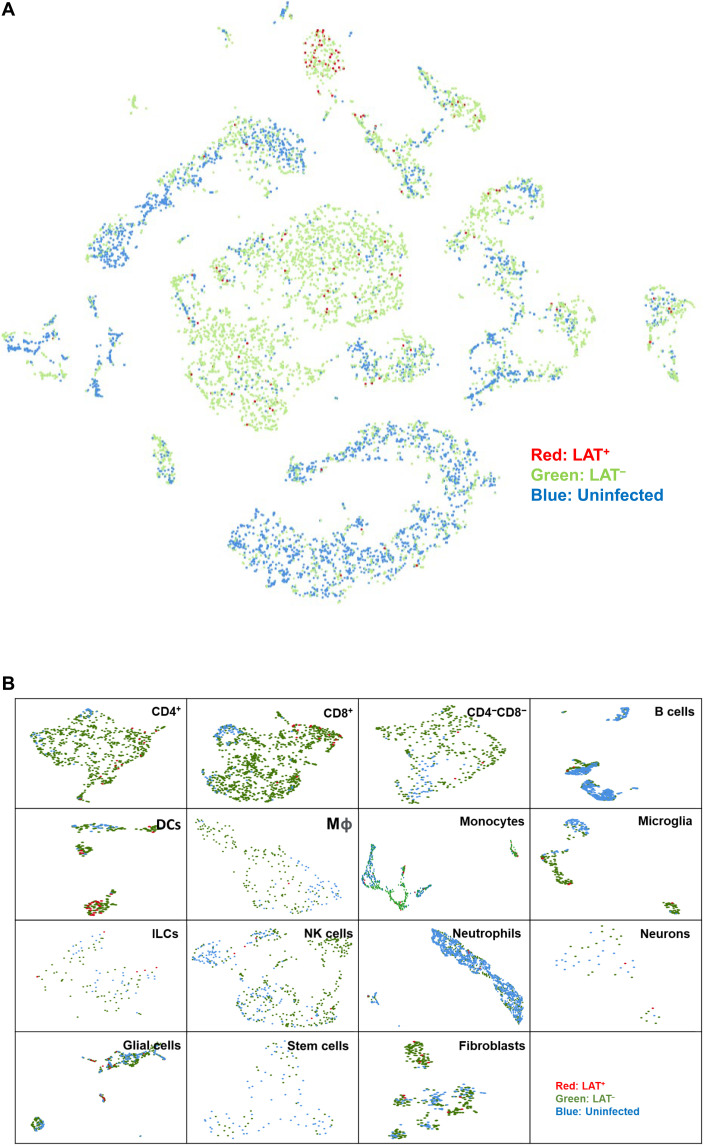
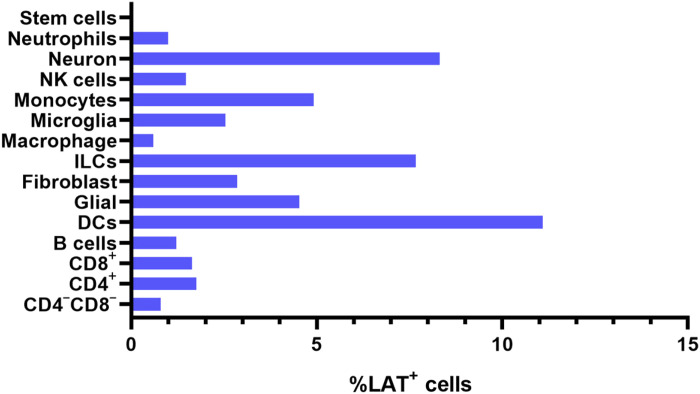
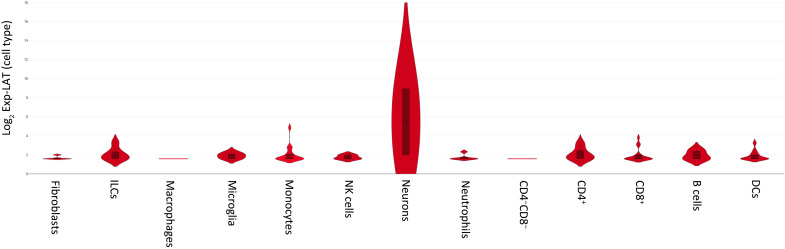
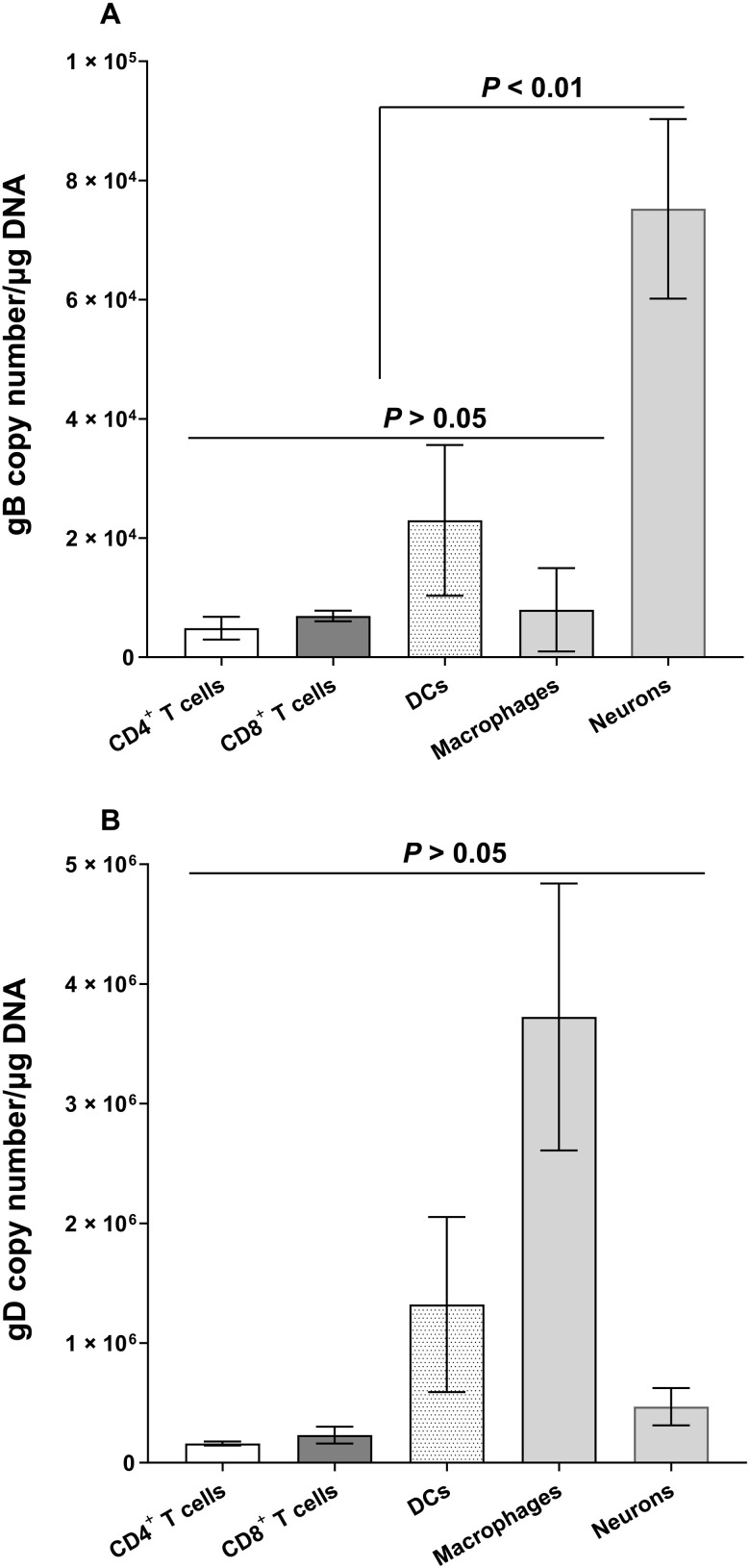
A hallmark of herpes simplex virus (HSV) infection is the establishment of latent virus in peripheral sensory ganglia of the latently infected host. We and others originally reported that the latency-associated transcript (LAT) is the only abundantly expressed viral gene in neurons within trigeminal ganglia (TG) of a latently infected host. Here, we investigated the possible contribution of various cells [i.e., B cells, dendritic cells (DCs), fibroblasts, glial cells, innate lymphoid cells (ILCs), macrophages, microglia, monocytes, natural killer cells, neurons, neutrophils, and T cells] isolated from TG of latently infected mice. Our results demonstrated that all of these cell types contain LAT, with DCs, neurons, and ILCs having the most LAT+ cells. These results suggest that HSV-1 can establish a quiescent/latent infection in a subset of nonneuronal cells, which enhances the chances that the virus will survive in its host.
Figures
References
-
- M. L. Cook, J. G. Stevens, Latent herpetic infections following experimental viraemia. J. Gen. Virol. 31, 75–80 (1976). - PubMed
-
- J. M. Hill, F. Sedarati, R. T. Javier, E. K. Wagner, J. G. Stevens, Herpes simplex virus latent phase transcription facilitates in vivo reactivation. Virology 174, 117–125 (1990). - PubMed
MeSH terms
Grants and funding
LinkOut - more resources
Full Text Sources
Medical
Molecular Biology Databases
Research Materials
Miscellaneous