


Structural brain correlates of childhood trauma with replication across two large, independent community-based samples
- PMID: 36697368
- PMCID: PMC9970154
- DOI: 10.1192/j.eurpsy.2022.2347
Structural brain correlates of childhood trauma with replication across two large, independent community-based samples
Abstract
Introduction: Childhood trauma and adversity are common across societies and have strong associations with physical and psychiatric morbidity throughout the life-course. One possible mechanism through which childhood trauma may predispose individuals to poor psychiatric outcomes is via associations with brain structure. This study aimed to elucidate the associations between childhood trauma and brain structure across two large, independent community cohorts.
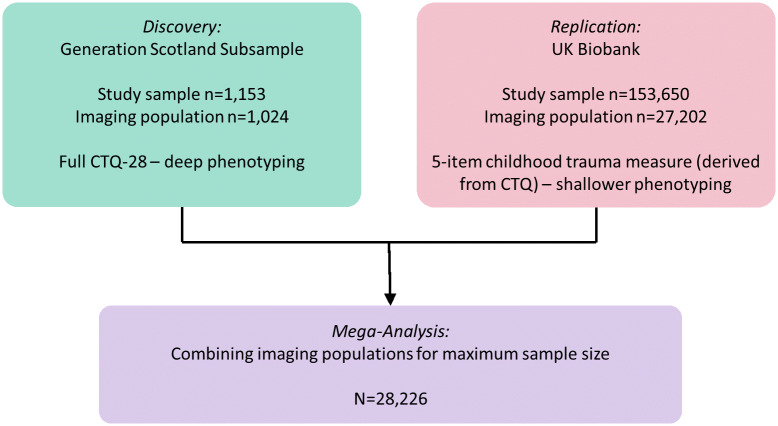
Methods: The two samples comprised (i) a subsample of Generation Scotland (n=1,024); and (ii) individuals from UK Biobank (n=27,202). This comprised n=28,226 for mega-analysis. MRI scans were processed using Free Surfer, providing cortical, subcortical, and global brain metrics. Regression models were used to determine associations between childhood trauma measures and brain metrics and psychiatric phenotypes.
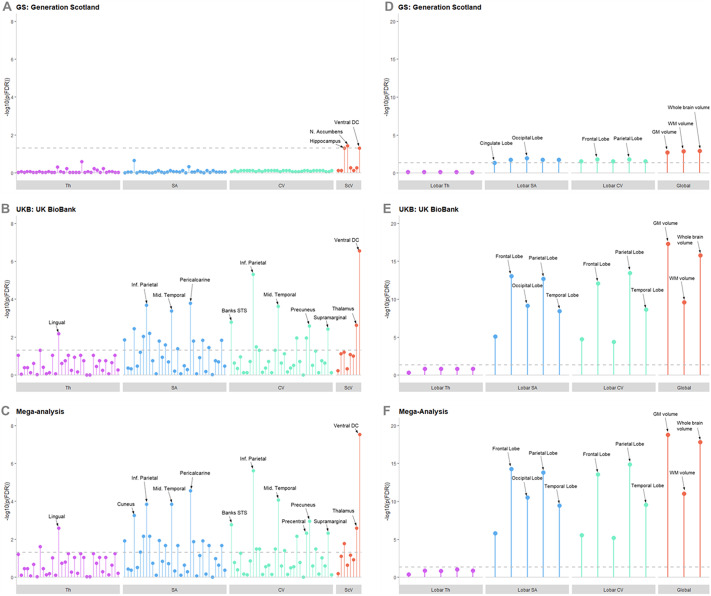
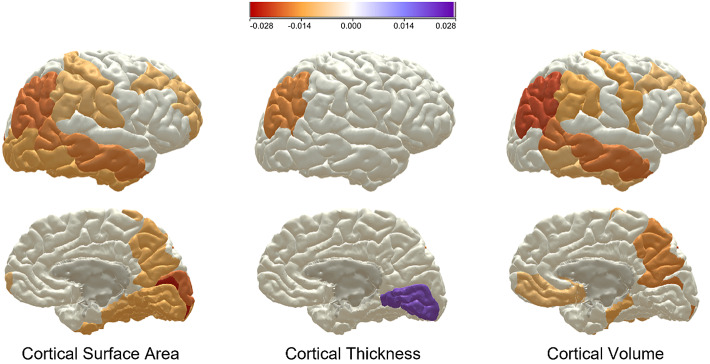
Results: Childhood trauma associated with lifetime depression across cohorts (OR 1.06 GS, 1.23 UKB), and related to early onset and recurrent course within both samples. There was evidence for associations between childhood trauma and structural brain metrics. This included reduced global brain volume, and reduced cortical surface area with highest effects in the frontal (β=-0.0385, SE=0.0048, p(FDR)=5.43x10⁻¹⁵) and parietal lobes (β=-0.0387, SE=0.005, p(FDR)=1.56x10⁻¹⁴). At a regional level the ventral diencephalon (VDc) displayed significant associations with childhood trauma measures across both cohorts and at mega-analysis (β=-0.0232, SE=0.0039, p(FDR)=2.91x10⁻⁸). There were also associations with reduced hippocampus, thalamus, and nucleus accumbens volumes.
Discussion: Associations between childhood trauma and reduced global and regional brain volumes were found, across two independent UK cohorts, and at mega-analysis. This provides robust evidence for a lasting effect of childhood adversity on brain structure.
Keywords: MRI; adversity; brain; depression; trauma.
Figures
References
-
- Bellis MA, Ashton K, Hughes K, Ford K, Bishop J, Paranjothy S. Adverse childhood experiences and their impact on health-harming behaviours in the Welsh adult population. Cardiff, UK: Public Health Wales NHS Trust; 2016.
-
- Bellis MA, Lowey H, Leckenby N, Hughes K, Harrison D. Adverse childhood experiences: retrospective study to determine their impact on adult health behaviours and health outcomes in a UK population. J Public Health. 2013;36(1):81–91. - PubMed
-
- Felitti VJ, Anda RF, Nordenberg D, Williamson DF, Spitz AM, Edwards V, et al. Relationship of childhood abuse and household dysfunction to many of the leading causes of death in adults. Am J Prev Med. 1998;14(4):245–58. - PubMed
-
- Felitti VJ, Anda RF, Nordenberg D, Williamson DF, Spitz AM, Edwards V, et al. Relationship of childhood abuse and household dysfunction to many of the leading causes of death in adults: the adverse childhood experiences (ACE) study. Am J Prev Med. 2019;56(6):774–86. - PubMed
-
- Bernstein DP, Stein JA, Newcomb MD, Walker E, Pogge D, Ahluvalia T, et al. Development and validation of a brief screening version of the childhood trauma questionnaire. Child Abuse Negl. 2003;27(2):169–90. - PubMed
Publication types
MeSH terms
Grants and funding
LinkOut - more resources
Full Text Sources
