. 2023 Jan 9:13:1027945.
doi: 10.3389/fendo.2022.1027945. eCollection 2022.

Global trends in polycystic ovary syndrome research: A 10-year bibliometric analysis

Affiliations

Global trends in polycystic ovary syndrome research: A 10-year bibliometric analysis

Na Shi et al. Front Endocrinol (Lausanne). .

Abstract

Background: Polycystic ovary syndrome (PCOS) is one of the most common reproductive metabolic disorders in women, significantly affecting the biological functionalities of ovaries. This disease has garnered enormous interest from researchers. However, there is a lack of a comprehensive research concerning assessing the current status and future trends in PCOS field. This study uses bibliometric tools to comprehensively analyze the PCOS-related research progress based on the literature in the past decade.

Methods: The reported PCOS literature in the past decade is downloaded from the Web of Science database. The bibliometric software is applied to analyze the co-authorship, co-citation, and co-occurrence status.

Results: A total of 9936 publications imported into bibliometric tools for analysis show a sharp increase in the annual citations. The USA is dominant in terms of contribution in the field of PCOS, while China is making a significant contribution to the advancement of this field. Monash University is the most prolific institution with the highest H-index value. The contribution of University of Adelaide must be acknowledged. Legro RS and Teede HJ are the most active and influential authors in recent times, while Azziz R is the most contributed pioneer in this field. The Journal of Clinical Endocrinology & Metabolism is the most active journal with the highest number of publications and citations. The pathogenesis of PCOS had been a long-term forefront of research. In recent years, the health management in PCOS prevention and long-term complications was attracting more and more attention. The keywords like "gut microbiota", "microRNAs", "apoptosis", "Myo-inositol", "TNF-alpha", "androgen receptor", and "Vitamin D-deficient" are considered the latest research topics.

Conclusion: The study comprehensively analyzes the current status and global trends in the PCOS field, providing a significant reference for researchers to explore this field effectively.

Keywords: bibliometrics; current status; global research trends; polycystic ovary syndrome; research hotspots.


Conflict of interest statement

The authors declare that the research was conducted in the absence of any commercial or financial relationships that could be construed as a potential conflict of interest.

Figures
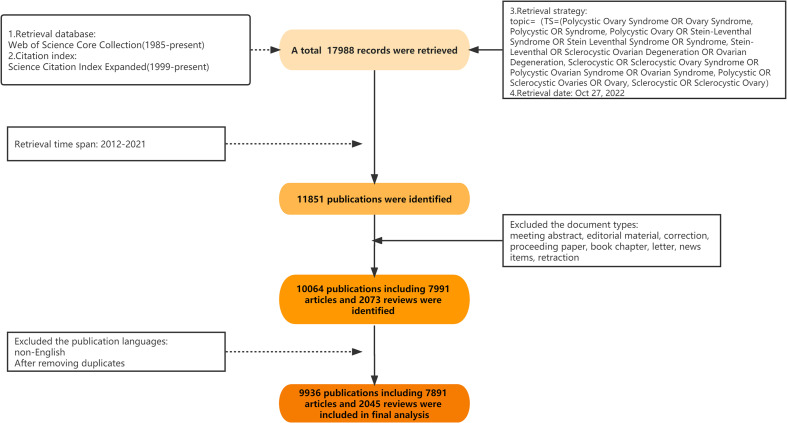
Figure 1
Figure 1
Flowchart of literature search and selection process.
Figure 2
Figure 2
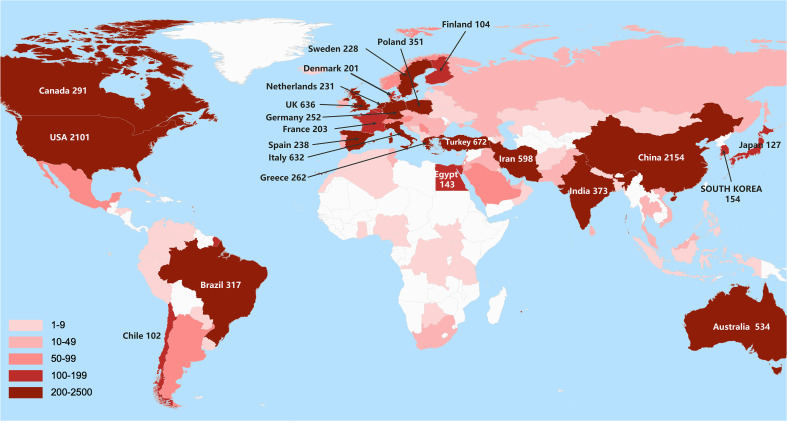
A world map displaying the contribution of each country to PCOS research based on publication counts: the darker the color, the more publications, as shown at the bottom left.
Figure 3
Figure 3
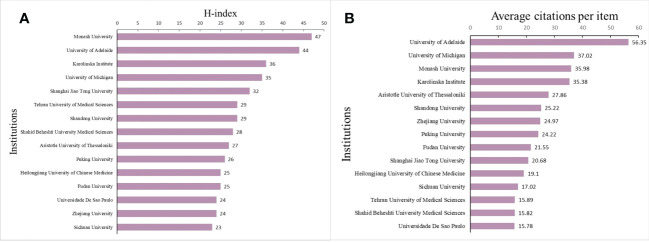
(A) The top 15 institutions according to H-index. (B) The top 15 institutions according to ACI.
Figure 4
Figure 4
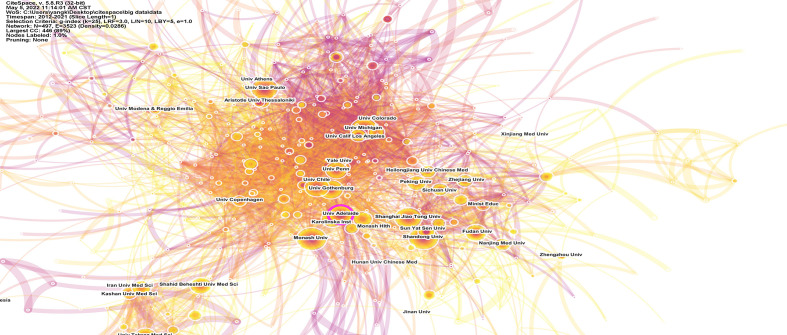
The network map of institutions by Citespace. The node size represents the number of publications from the institution. Node with purple ring in the network reflects it with high betweenness centrality (BC ≥ 0.1).
Figure 5
Figure 5
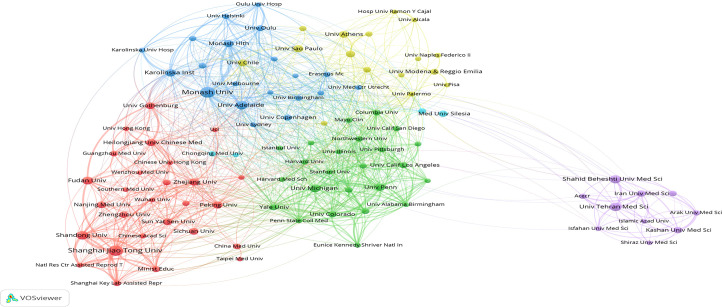
Institution co-authorship network visualization map by VOSviewer. The distance between two nodes indicates the relatedness of institutions in terms of co-authorship links. The smaller distance, the stronger relatedness, defined as one cluster with the same color.
Figure 6
Figure 6
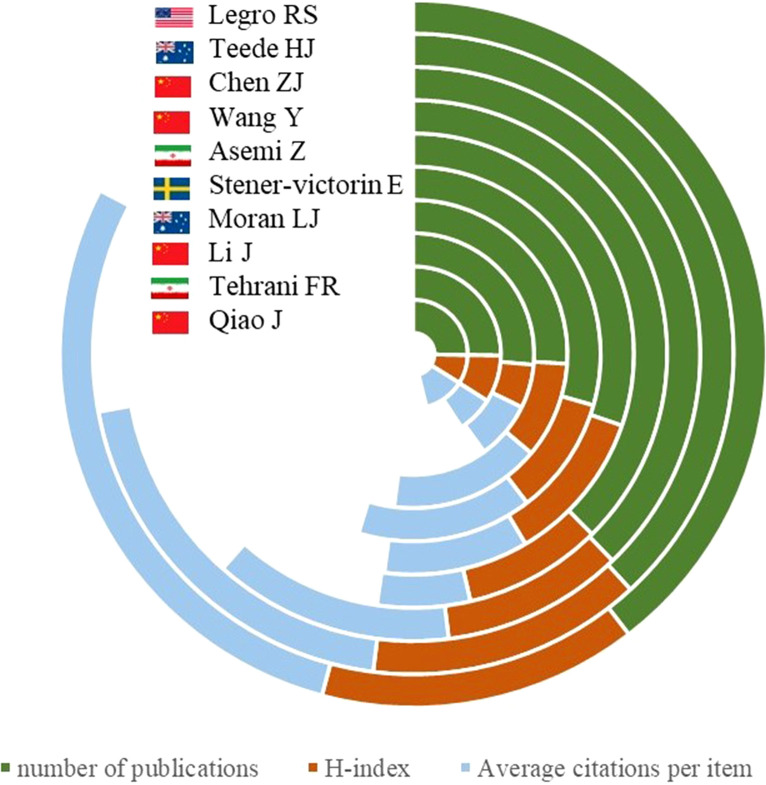
The top 10 authors in terms of total number of publications, ACI, and H-index.
Figure 7
Figure 7
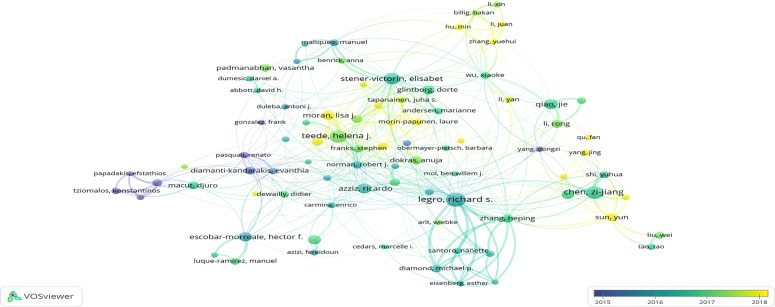
A co-authorship overlay visualization map of authors by VOSviewer.
Figure 8
Figure 8
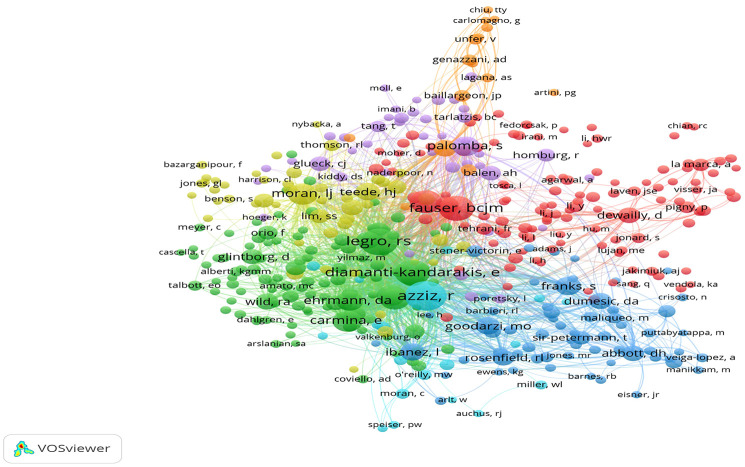
The co-citation network map of authors obtained by the VOSviewer. The node size represents the number of citations. The distance between two nodes indicates the relatedness of authors in terms of co-citation link. The smaller distance, the stronger relatedness, defined as one cluster with the same color.
Figure 9
Figure 9
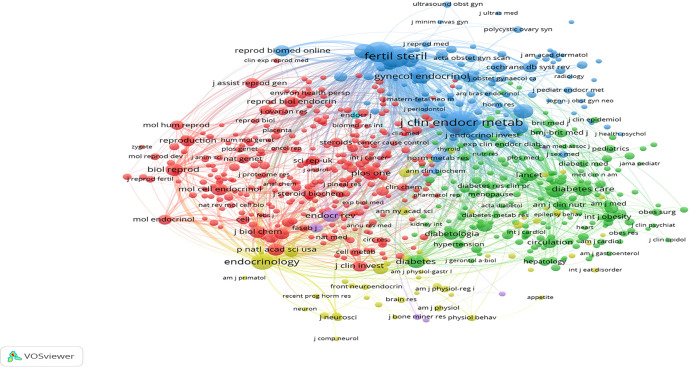
The co-citation network visualization map of journals by VOSviewer.
Figure 10
Figure 10
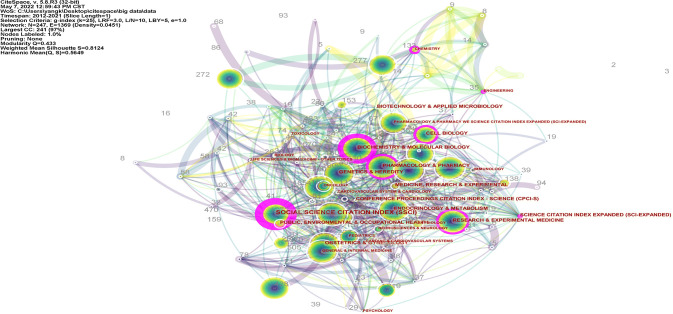
A co-occurring network map of subject categories generated by Citespace.
Figure 11
Figure 11
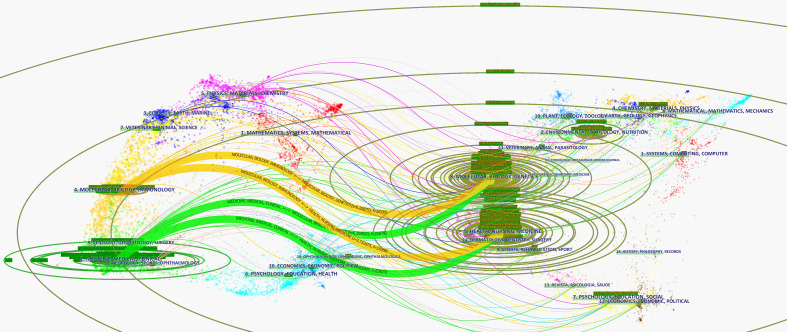
The dual-map overlay of journals stood for the topic distribution of academic journals involving PCOS research (generated by Citespace). The colored connecting lines represent citation relationship. The cited journals were on the right, and the citing journals were on the left.
Figure 12
Figure 12
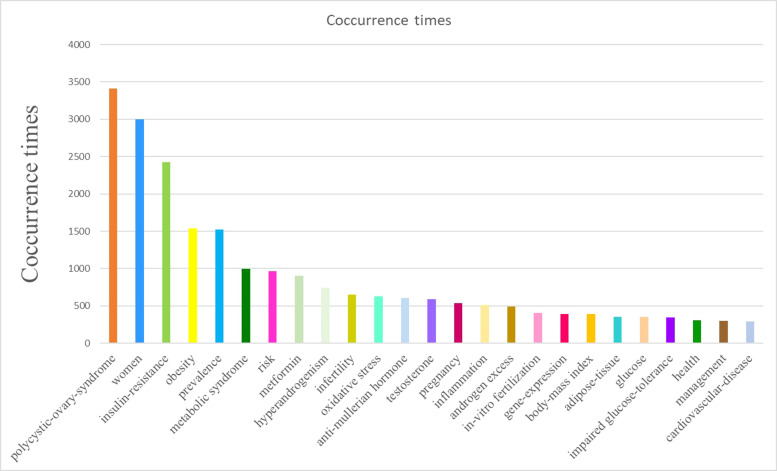
The top 25 keywords with the most frequent occurrences.
Figure 13
Figure 13
Overlay visualization map of keywords with co-occurrence. The color of each note is based on the average year (AAY) of keyword, as shown by the color gradient at the bottom right.

References

    1. Dumesic DA, Oberfield SE, Stener-Victorin E, Marshall JC, Laven JS, Legro RS. Scientific statement on the diagnostic criteria, epidemiology, pathophysiology, and molecular genetics of polycystic ovary syndrome. Endocr Rev (2015) 36(5):487–525. doi: 10.1210/er.2015-1018 - DOI - PMC - PubMed
    1. Zhang J, Sun Z, Jiang S, Bai X, Ma C, Peng Q, et al. Probiotic bifidobacterium lactis V9 regulates the secretion of sex hormones in polycystic ovary syndrome patients through the gut-brain axis. mSystems (2019) 4(2):e00017–19. doi: 10.1128/mSystems.00017-19 - DOI - PMC - PubMed
    1. Li R, Zhang Q, Yang D, Li S, Lu S, Wu X, et al. Prevalence of polycystic ovary syndrome in women in China: a large community-based study. Hum Reprod (2013) 28(9):2562–9. doi: 10.1093/humrep/det262 - DOI - PubMed
    1. Hull MG. Epidemiology of infertility and polycystic ovarian disease: endocrinological and demographic studies. Gynecol Endocrinol (1987) 1(3):235–45. doi: 10.3109/09513598709023610 - DOI - PubMed
    1. Palomba S, de Wilde MA, Falbo A, Koster MP, La Sala GB, Fauser BC. Pregnancy complications in women with polycystic ovary syndrome. Hum Reprod Update (2015) 21(5):575–92. doi: 10.1093/humupd/dmv029 - DOI - PubMed

Publication types