


The National Clinical Care Commission Report to Congress: Background, Methods, and Foundational Recommendations
- PMID: 36701594
- PMCID: PMC9887619
- DOI: 10.2337/dc22-0611
The National Clinical Care Commission Report to Congress: Background, Methods, and Foundational Recommendations
Abstract
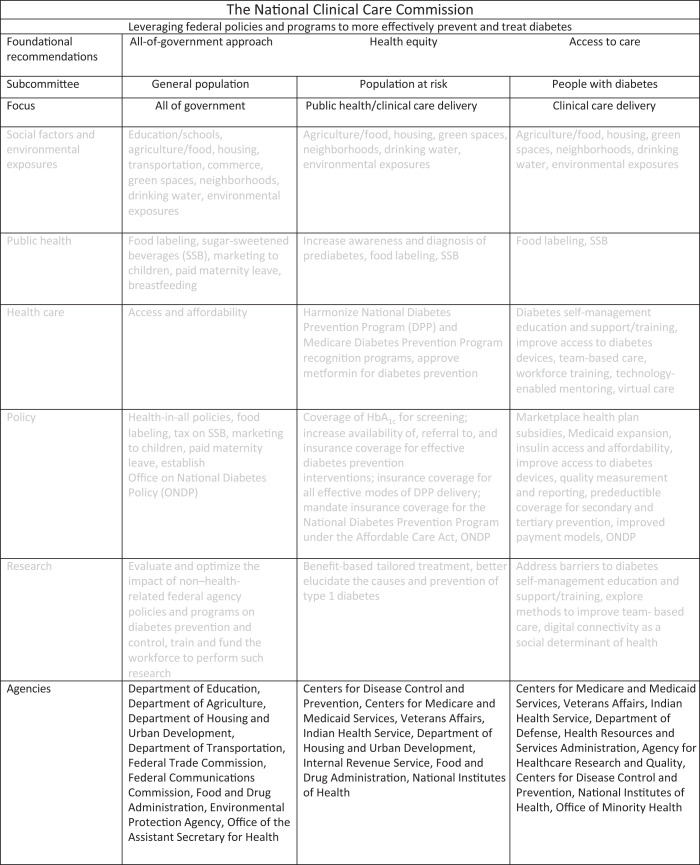
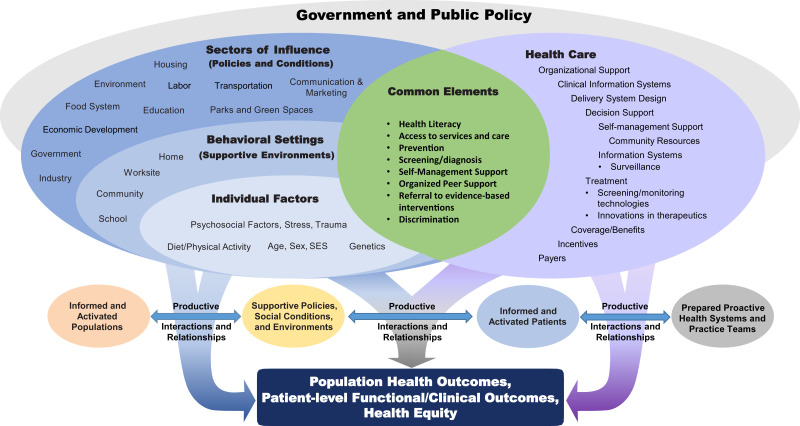
Since the first Federal Commission on Diabetes issued its report in 1975, the diabetes epidemic in the U.S. has accelerated, and efforts to translate advances in diabetes treatment into routine clinical practice have stalled. In 2021, the National Clinical Care Commission (NCCC) delivered a report to Congress that provided recommendations to leverage federal policies and programs to more effectively prevent and treat diabetes and its complications. In the five articles in this series, we present the NCCC's evidence-based recommendations to 1) reduce diabetes-related risks, prevent type 2 diabetes, and avert diabetes complications through changes in federal policies and programs affecting the general population; 2) prevent type 2 diabetes in at-risk individuals through targeted lifestyle and medication interventions; and 3) improve the treatment of diabetes and its complications to improve the health outcomes of people with diabetes. In this first article, we review the successes and limitations of previous federal efforts to combat diabetes. We then describe the establishment of and charge to the NCCC. We discuss the development of a hybrid conceptual model that guided the NCCC's novel all-of-government approach to address diabetes as both a societal and medical problem. We then review the procedures used by the NCCC to gather information from federal agencies, stakeholders, key informants, and the public and to conduct literature reviews. Finally, we review the NCCC's three foundational recommendations: 1) improve the coordination of non-health-related and health-related federal agencies to address the social and environmental conditions that are accelerating the diabetes epidemic; 2) ensure that all Americans at risk for and with diabetes have health insurance and access to health care; and 3) ensure that all federal policies and programs promote health equity in diabetes.
© 2023 by the American Diabetes Association.
Figures
References
-
- Centers for Disease Control and Prevention . National Diabetes Statistics Report. Accessed 12 October 2022. Available from https://www.cdc.gov/diabetes/data/statistics-report/index.html
-
- Centers for Disease Control and Prevention . Prevalence of Both Diagnosed and Undiagnosed Diabetes, 2020. Accessed 19 August 2021. Available from https://www.cdc.gov/diabetes/data/statistics-report/diagnosed-undiagnose...
-
- Coughlin SS, Calle EE, Teras LR, Petrelli J, Thun MJ. Diabetes mellitus as a predictor of cancer mortality in a large cohort of US adults. Am J Epidemiol 2004;159:1160–1167 - PubMed
Publication types
MeSH terms
Grants and funding
LinkOut - more resources
Full Text Sources
Medical
