


Large language models generate functional protein sequences across diverse families
- PMID: 36702895
- PMCID: PMC10400306
- DOI: 10.1038/s41587-022-01618-2
Large language models generate functional protein sequences across diverse families
Abstract
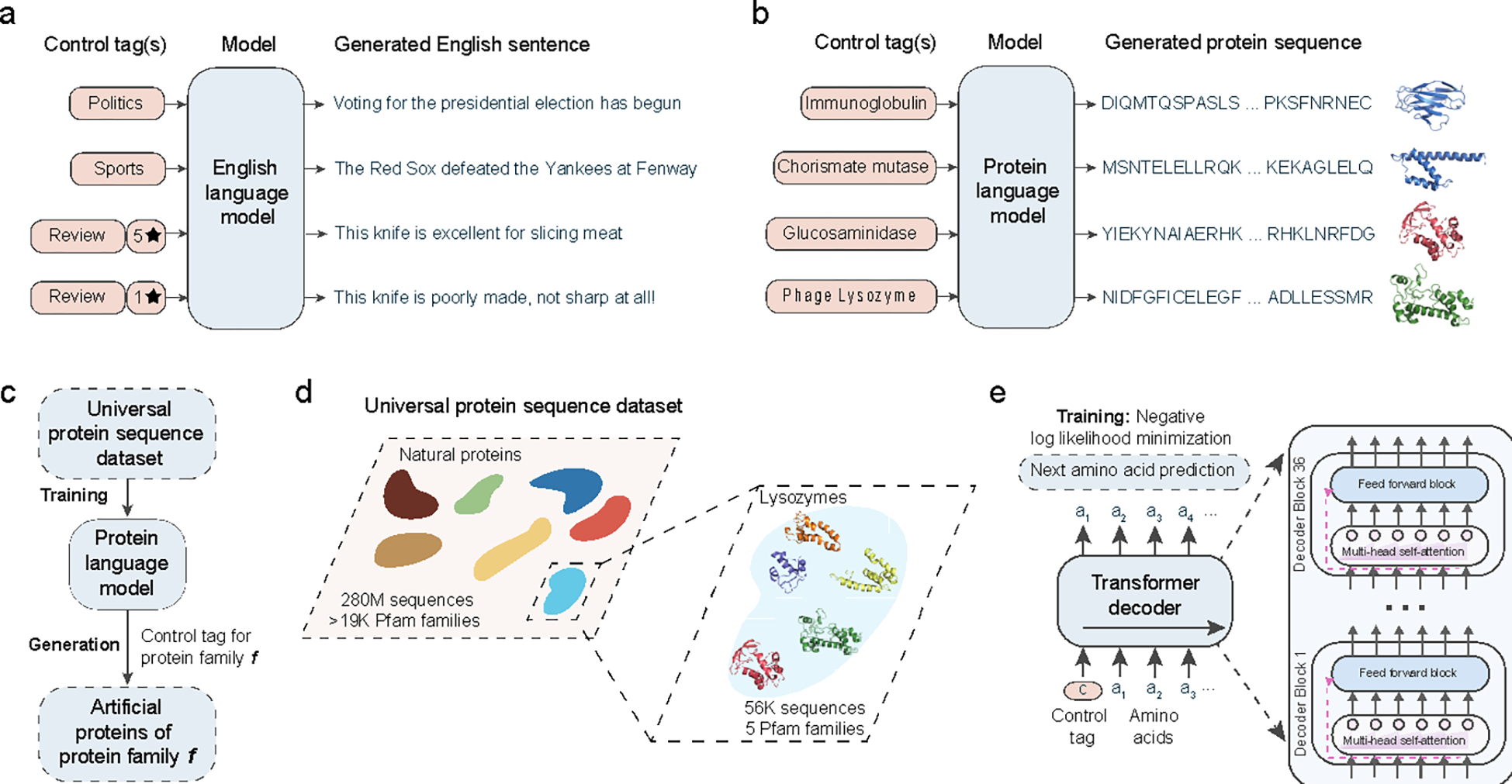
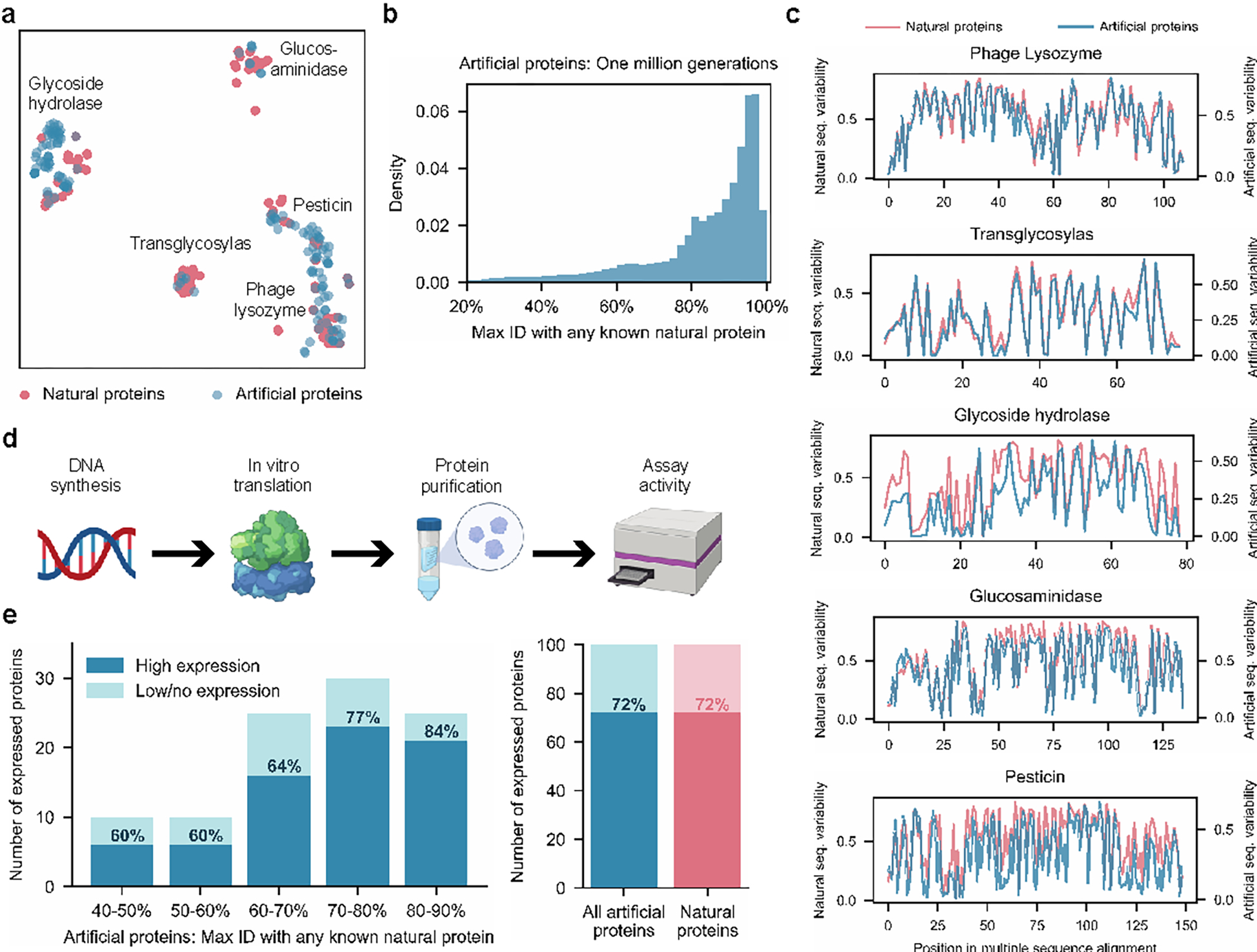
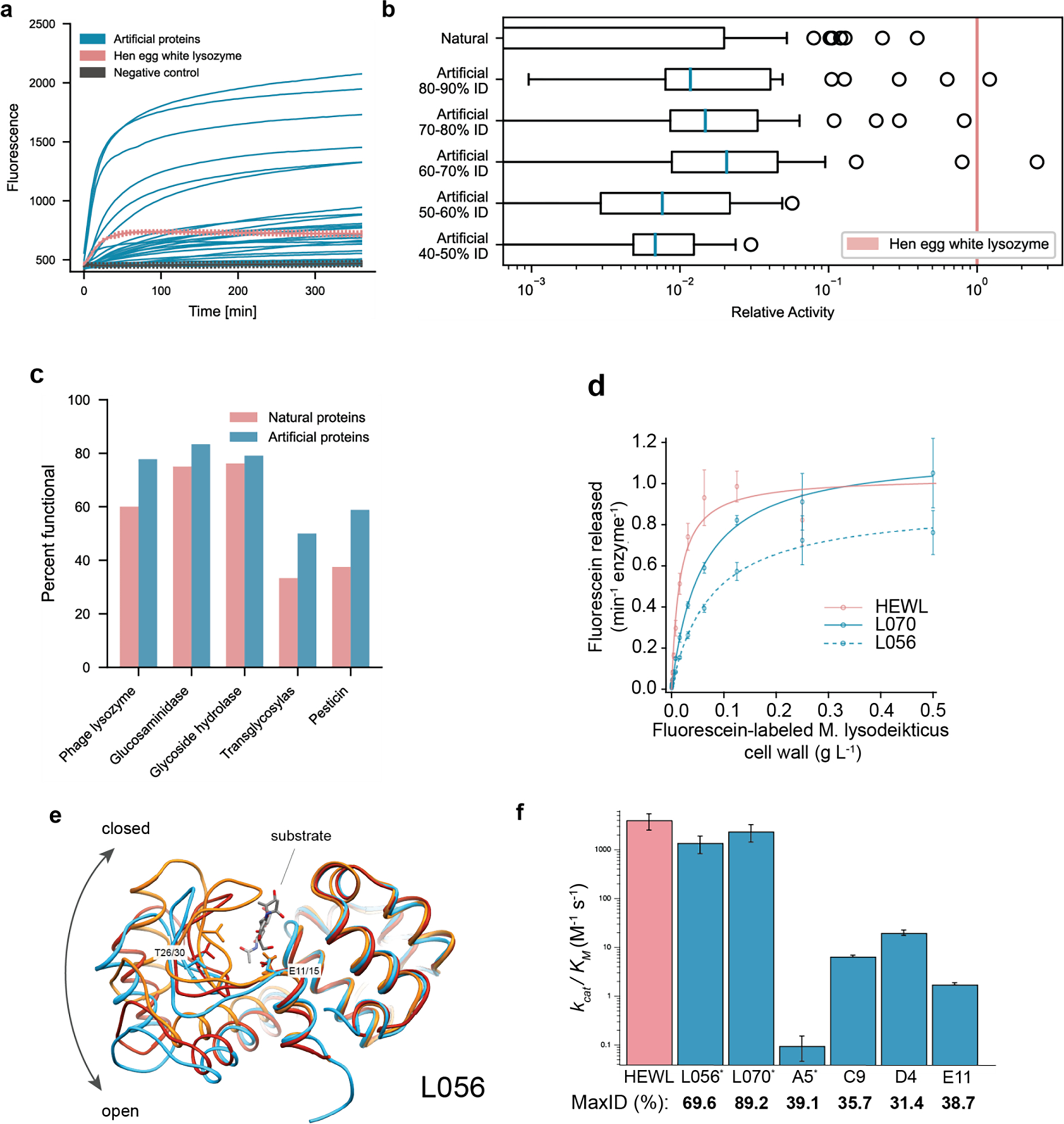
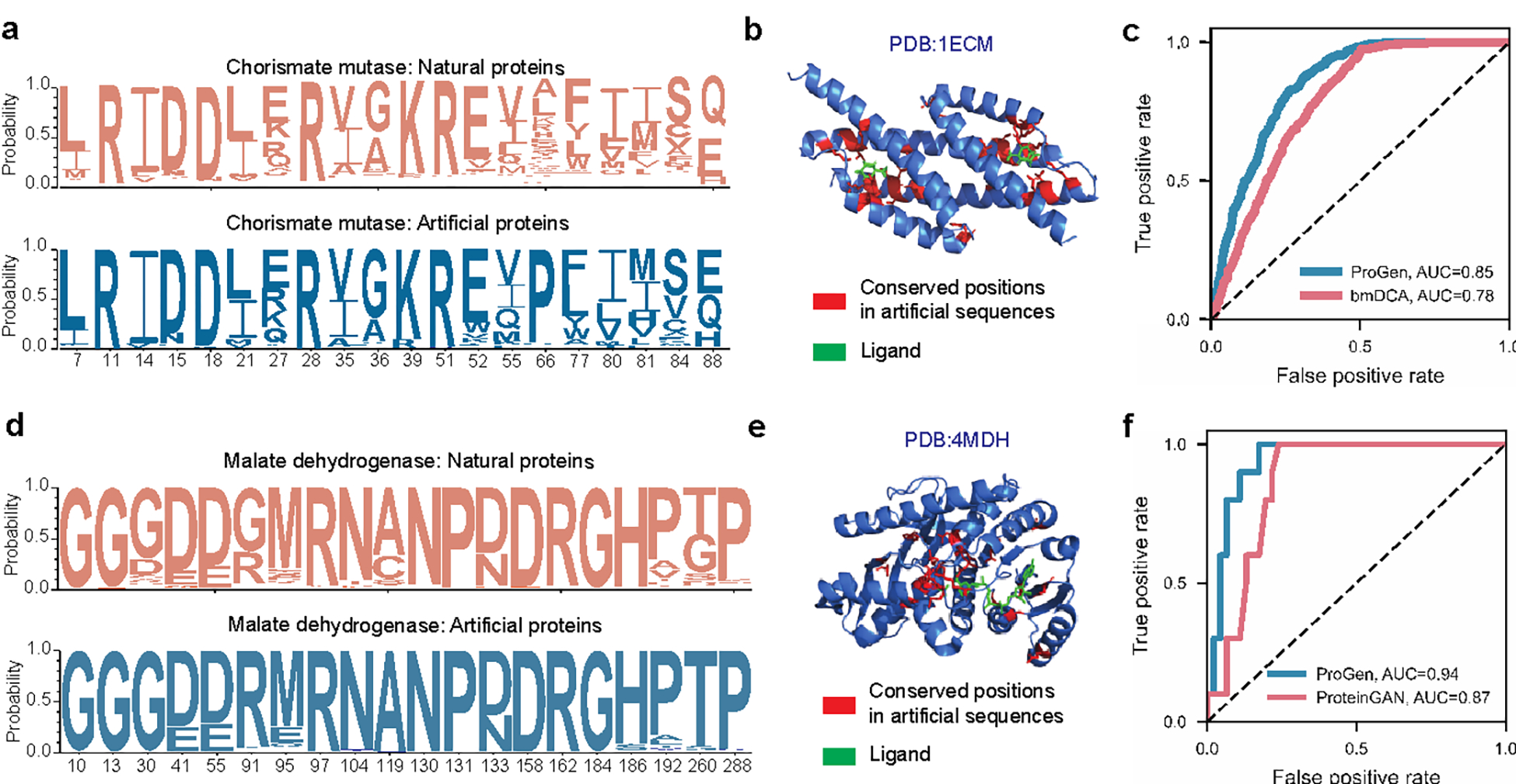
Deep-learning language models have shown promise in various biotechnological applications, including protein design and engineering. Here we describe ProGen, a language model that can generate protein sequences with a predictable function across large protein families, akin to generating grammatically and semantically correct natural language sentences on diverse topics. The model was trained on 280 million protein sequences from >19,000 families and is augmented with control tags specifying protein properties. ProGen can be further fine-tuned to curated sequences and tags to improve controllable generation performance of proteins from families with sufficient homologous samples. Artificial proteins fine-tuned to five distinct lysozyme families showed similar catalytic efficiencies as natural lysozymes, with sequence identity to natural proteins as low as 31.4%. ProGen is readily adapted to diverse protein families, as we demonstrate with chorismate mutase and malate dehydrogenase.
© 2023. The Author(s), under exclusive licence to Springer Nature America, Inc.
Figures
References
-
- Huang P-S, Boyken SE & Baker D The coming of age of de novo protein design. Nature 537, 320–327 (2016). - PubMed
Publication types
MeSH terms
Substances
Grants and funding
LinkOut - more resources
Full Text Sources
Other Literature Sources
