Meta-Analysis
. 2023 Feb;55(2):198-208.
doi: 10.1038/s41588-022-01285-8. Epub 2023 Jan 26.

Genome-wide analyses of ADHD identify 27 risk loci, refine the genetic architecture and implicate several cognitive domains

Ditte Demontis #  1   2   3 G Bragi Walters #  4   5 Georgios Athanasiadis #  6   7   8 Raymond Walters #  9   10 Karen Therrien  11   12   13   14   15   16 Trine Tollerup Nielsen  17   6   18 Leila Farajzadeh  17   6   18 Georgios Voloudakis  11   12   13   14   15 Jaroslav Bendl  11   12   13   15 Biau Zeng  11   12   13   15 Wen Zhang  11   12   13   15 Jakob Grove  17   6   19 Thomas D Als  17   6   18 Jinjie Duan  17   6   18 F Kyle Satterstrom  9   10 Jonas Bybjerg-Grauholm  6   20 Marie Bækved-Hansen  6   20 Olafur O Gudmundsson  4   5 Sigurdur H Magnusson  4 Gisli Baldursson  21 Katrin Davidsdottir  22 Gyda S Haraldsdottir  22 Esben Agerbo  6   23   24 Gabriel E Hoffman  11   12   13   15 Søren Dalsgaard  23   25   26 Joanna Martin  27 Marta Ribasés  28   29   30   31 Dorret I Boomsma  32   33 Maria Soler Artigas  28   29   30   31 Nina Roth Mota  34   35 Daniel Howrigan  9   10 Sarah E Medland  36 Tetyana Zayats  9   10   37 Veera M Rajagopal  17   6   18 ADHD Working Group of the Psychiatric Genomics ConsortiumiPSYCH-Broad ConsortiumMerete Nordentoft  6   38 Ole Mors  6   39 David M Hougaard  6   20 Preben Bo Mortensen  6   23   24 Mark J Daly  9   10   40   41 Stephen V Faraone  42 Hreinn Stefansson  4 Panos Roussos  11   12   13   14   15   43 Barbara Franke  34   35   44 Thomas Werge  6   7 Benjamin M Neale  9   10 Kari Stefansson  4   5 Anders D Børglum  45   46   47
Collaborators, Affiliations
Meta-Analysis

Genome-wide analyses of ADHD identify 27 risk loci, refine the genetic architecture and implicate several cognitive domains

Ditte Demontis et al. Nat Genet. 2023 Feb.

Erratum in

  • Author Correction: Genome-wide analyses of ADHD identify 27 risk loci, refine the genetic architecture and implicate several cognitive domains.
    Demontis D, Walters GB, Athanasiadis G, Walters R, Therrien K, Nielsen TT, Farajzadeh L, Voloudakis G, Bendl J, Zeng B, Zhang W, Grove J, Als TD, Duan J, Satterstrom FK, Bybjerg-Grauholm J, Bækved-Hansen M, Gudmundsson OO, Magnusson SH, Baldursson G, Davidsdottir K, Haraldsdottir GS, Agerbo E, Hoffman GE, Dalsgaard S, Martin J, Ribasés M, Boomsma DI, Soler Artigas M, Roth Mota N, Howrigan D, Medland SE, Zayats T, Rajagopal VM; ADHD Working Group of the Psychiatric Genomics Consortium; iPSYCH-Broad Consortium; Nordentoft M, Mors O, Hougaard DM, Mortensen PB, Daly MJ, Faraone SV, Stefansson H, Roussos P, Franke B, Werge T, Neale BM, Stefansson K, Børglum AD. Demontis D, et al. Nat Genet. 2023 Apr;55(4):730. doi: 10.1038/s41588-023-01350-w. Nat Genet. 2023. PMID: 36859734 No abstract available.

Abstract

Attention-deficit hyperactivity disorder (ADHD) is a prevalent neurodevelopmental disorder with a major genetic component. Here, we present a genome-wide association study meta-analysis of ADHD comprising 38,691 individuals with ADHD and 186,843 controls. We identified 27 genome-wide significant loci, highlighting 76 potential risk genes enriched among genes expressed particularly in early brain development. Overall, ADHD genetic risk was associated with several brain-specific neuronal subtypes and midbrain dopaminergic neurons. In exome-sequencing data from 17,896 individuals, we identified an increased load of rare protein-truncating variants in ADHD for a set of risk genes enriched with probable causal common variants, potentially implicating SORCS3 in ADHD by both common and rare variants. Bivariate Gaussian mixture modeling estimated that 84-98% of ADHD-influencing variants are shared with other psychiatric disorders. In addition, common-variant ADHD risk was associated with impaired complex cognition such as verbal reasoning and a range of executive functions, including attention.


Conflict of interest statement

COMPETING INTERESTS

B.M.N. currently serves as a member of the scientific advisory board at Deep Genomics and Neumora (previously RBNC) and consultant for Camp4 Therapeutics, Takeda Pharmaceutical, and Biogen. All deCODE affiliated authors are employees of deCODE/Amgen. The remaining authors declare no competing interests.

Figures
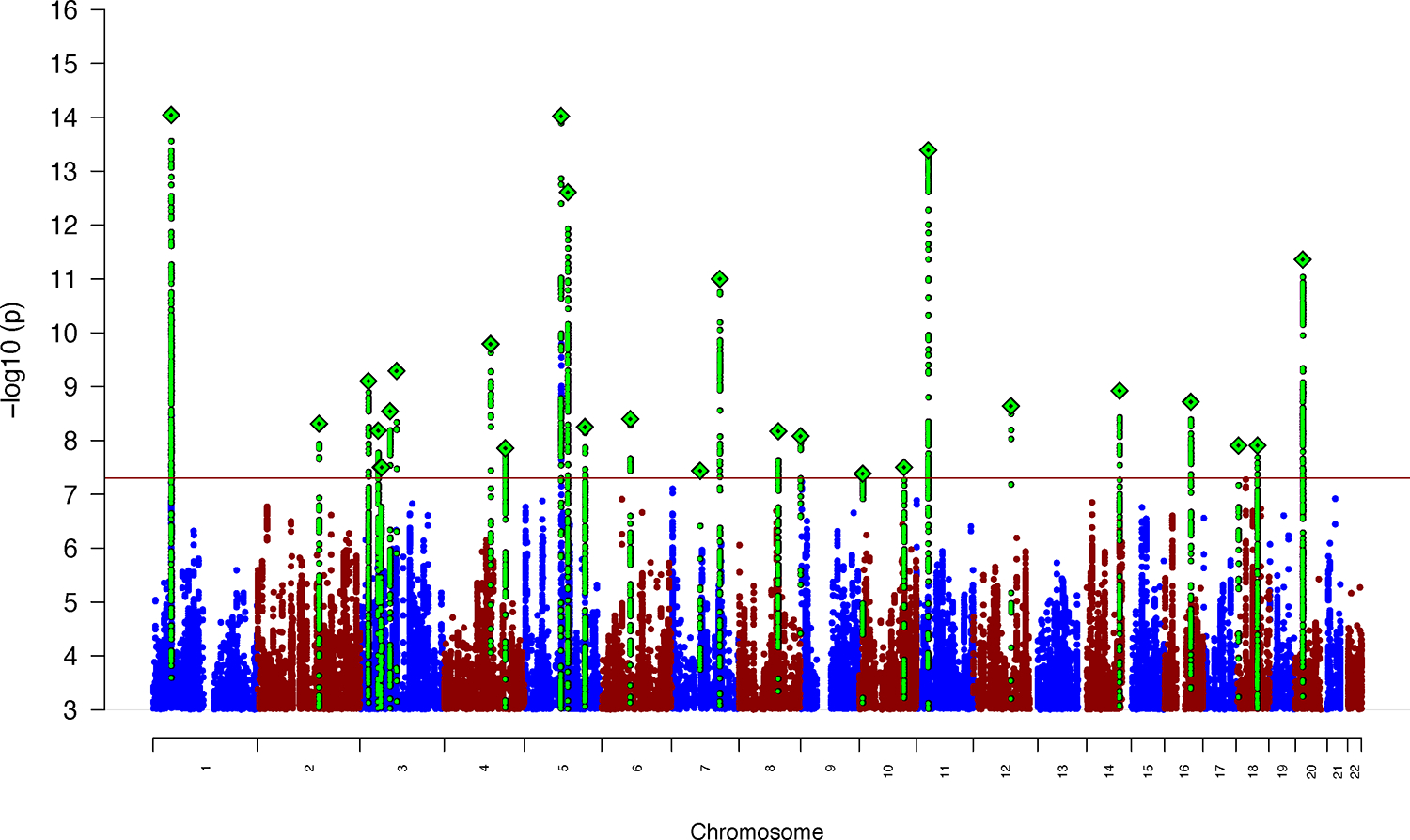
Figure 1 |
Figure 1 |. Results from GWAS meta-analysis of iPSYCH, deCODE and PGC cohorts including 38,899 cases and 186,843 controls in total.
The y-axis represents −log10(two-sided P-values) from meta-analysis using an inverse-variance weighted fixed effects model. Index variants in each of the genome-wide significant loci are marked as a green diamond (note that two loci on chromosome 3, index variants rs7613360 and rs2311059, are located in close proximity and therefore appear as one diamond in the plot). The red horizontal line represents the threshold for genome-wide significant association (P = 5 × 10⁻⁸).
Figure 2 |
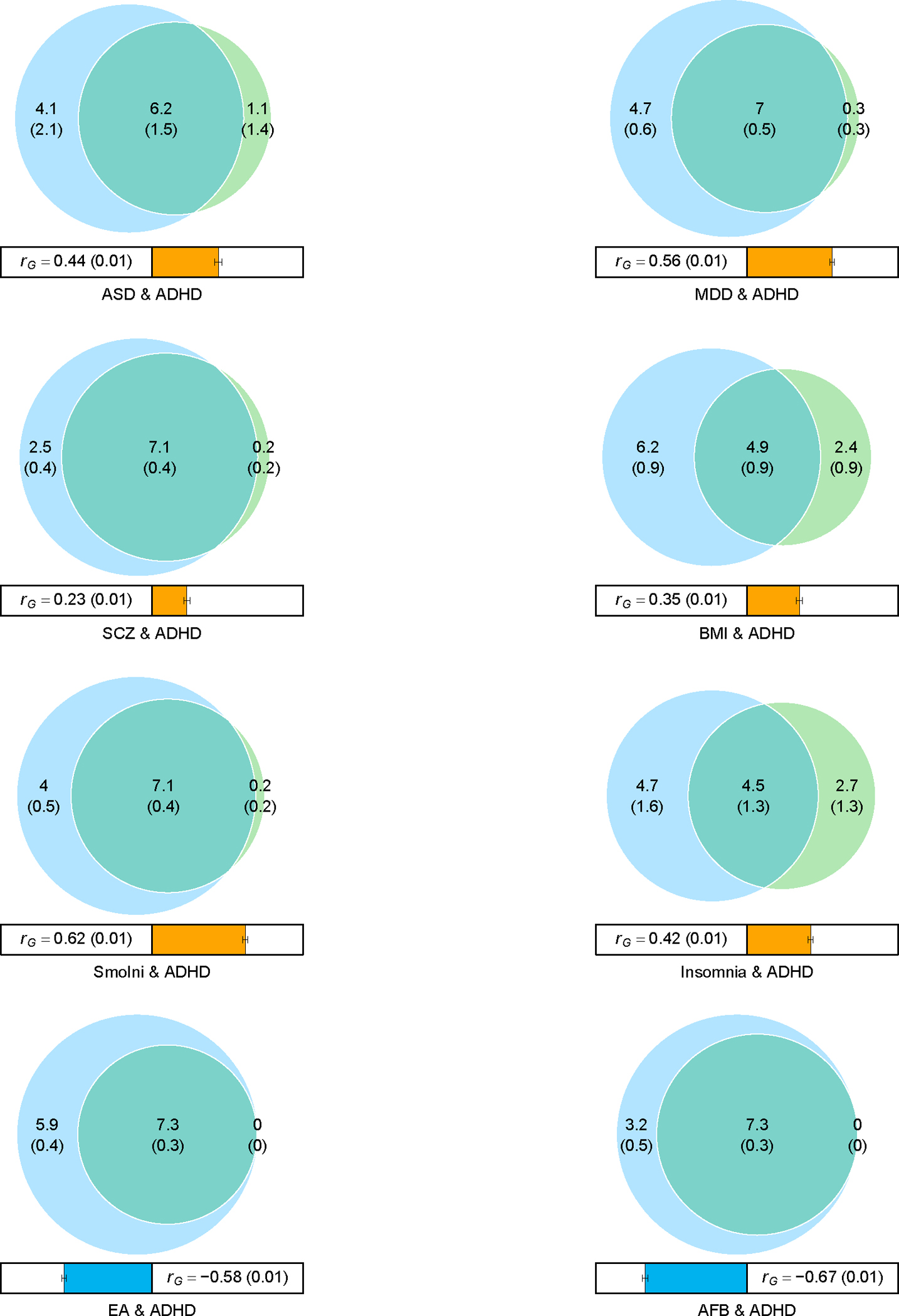
Figure 2 |. Venn diagrams showing MiXeR results of the estimated number of variants shared between ADHD and psychiatric disorders (with significant genetic correlations with ADHD) and phenotypes representing other domains with high genetic correlation with ADHD.
Circles represent shared variants (gray), unique to ADHD (light blue) and unique to the other phenotype of interest (orange). The number of shared variants (and standard deviations) is shown in thousands. The size of the circles reflects the polygenicity of each phenotype, with larger circles corresponding to greater polygenicity. The estimated genetic correlation (rg) between ADHD and each phenotype from LDSC is shown below the corresponding Venn diagram, with an accompanying scale (−1 to +1) with blue and red representing negative and positive genetic correlations, respectively. Bivariate results for ADHD, autism spectrum disorder (ASD), major depressive disorder (MDD), schizophrenia (SCZ), body mass index (BMI), smoking initiation (SmoIni), insomnia, educational attainment (EA) and age at first birth (AFB) are shown (see also Supplementary Table 17).
Figure 3 |
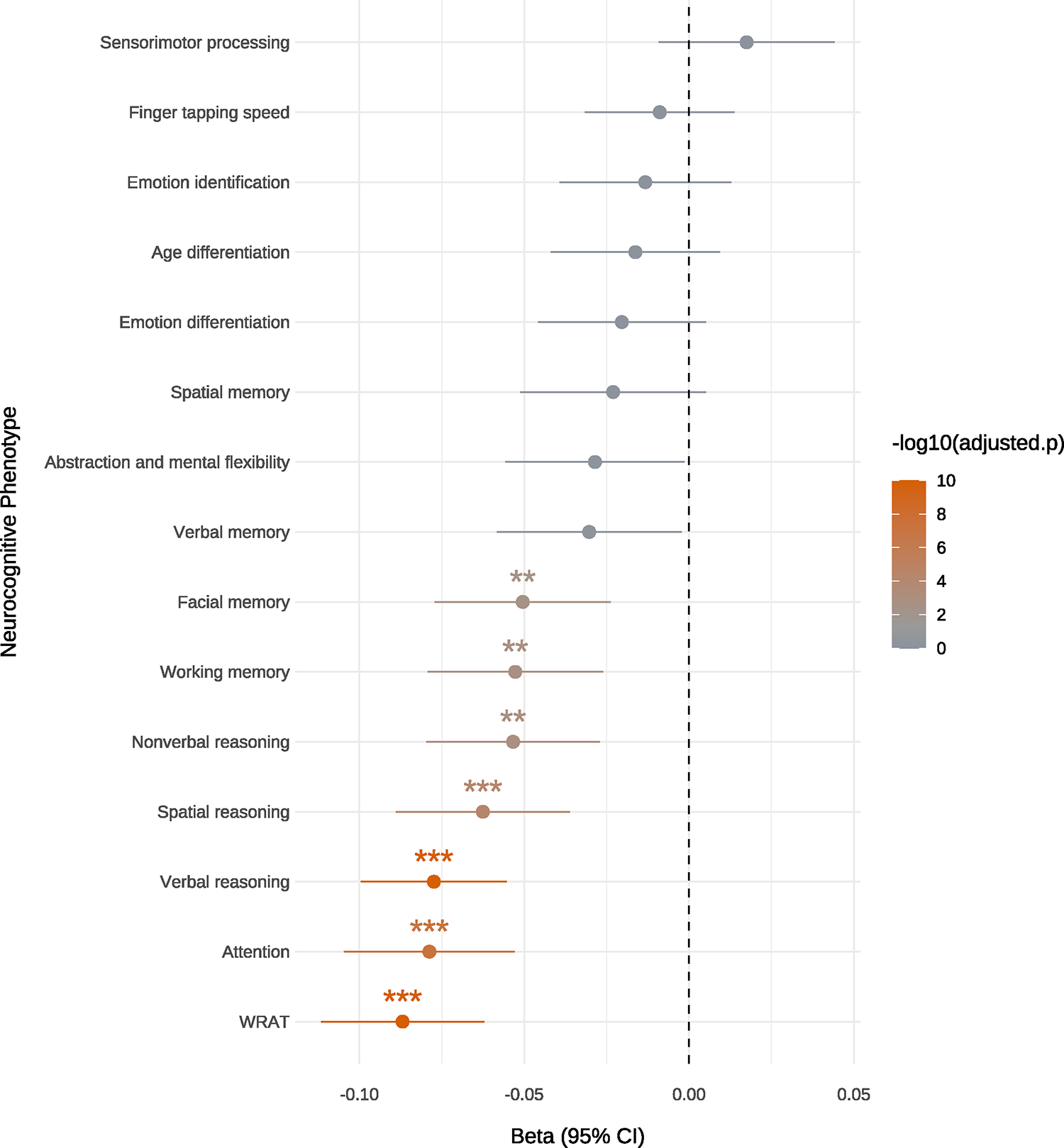
Figure 3 |. Association of ADHD-PGS with measures of cognitive abilities in the PNC cohort (n = 4,973).
Beta values (represented as a dot and standard errors indicated as horizontal bars) from linear regression testing for the association of ADHD-PGS with the 15 neurocognitive measures listed on the y-axis (Wide Range Achievement Test-4 (WRAT). The color bar at the right indicates the −log10(Bonferroni adjusted two-sided P-value) and P-value thresholds are indicated by stars (*P = 0.05; **P = 0.01, ***P = 0.001).

References

    1. Faraone SV et al. Attention-deficit/hyperactivity disorder. Nature Reviews Disease Primers, 15020 (2015). - PubMed
    1. Franke B et al. The genetics of attention deficit/hyperactivity disorder in adults, a review. Mol Psychiatry 17, 960–87 (2012). - PMC - PubMed
    1. Dalsgaard S, Leckman JF, Mortensen PB, Nielsen HS & Simonsen M Effect of drugs on the risk of injuries in children with attention deficit hyperactivity disorder: a prospective cohort study. Lancet Psychiatry 2, 702–9 (2015). - PubMed
    1. Chang Z, Lichtenstein P, D’Onofrio BM, Sjolander A & Larsson H Serious transport accidents in adults with attention-deficit/hyperactivity disorder and the effect of medication: a population-based study. JAMA Psychiatry 71, 319–25 (2014). - PMC - PubMed
    1. Babinski DE, Neely KA, Ba DM & Liu G Depression and Suicidal Behavior in Young Adult Men and Women With ADHD: Evidence From Claims Data. J Clin Psychiatry 81, 19m13130 (2020). - PMC - PubMed

Methods-only references

    1. Bybjerg-Grauholm J et al. The iPSYCH2015 Case-Cohort sample: updated directions for unravelling genetic and environmental architectures of severe mental disorders. medRxiv (2020). - PMC - PubMed
    1. Mors O, Perto GP & Mortensen PB The Danish Psychiatric Central Research Register. Scand J Public Health 39, 54–7 (2011). - PubMed
    1. Lynge E, Sandegaard JL & Rebolj M The Danish National Patient Register. Scand J Public Health 39, 30–3 (2011). - PubMed
    1. Price AL et al. The impact of divergence time on the nature of population structure: an example from Iceland. PLoS Genet 5, e1000505 (2009). - PMC - PubMed
    1. Willer CJ, Li Y & Abecasis GR METAL: fast and efficient meta-analysis of genomewide association scans. Bioinformatics 26, 2190–1 (2010). - PMC - PubMed

Publication types