


Gaze-based attention refocusing training in virtual reality for adult attention-deficit/hyperactivity disorder
- PMID: 36703134
- PMCID: PMC9879564
- DOI: 10.1186/s12888-023-04551-z
Gaze-based attention refocusing training in virtual reality for adult attention-deficit/hyperactivity disorder
Abstract
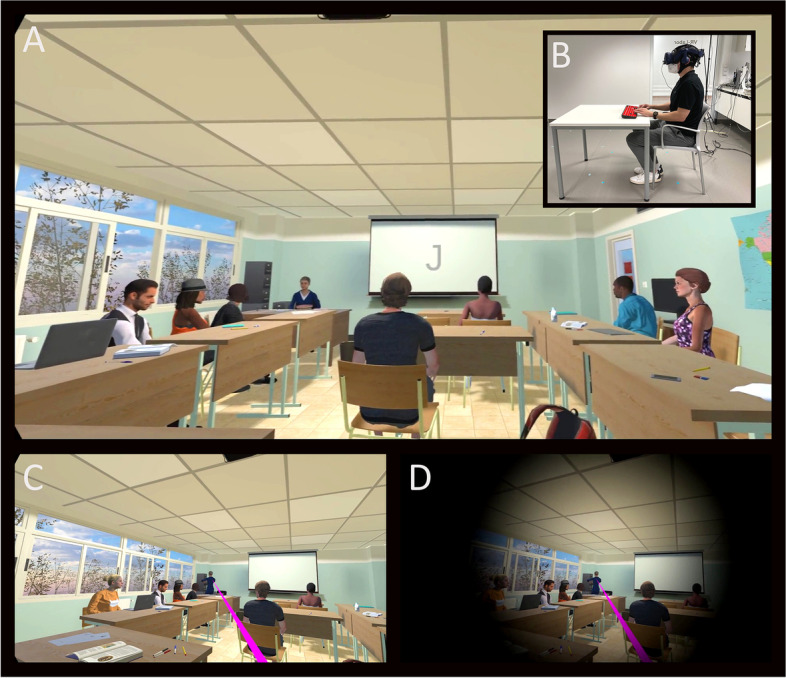
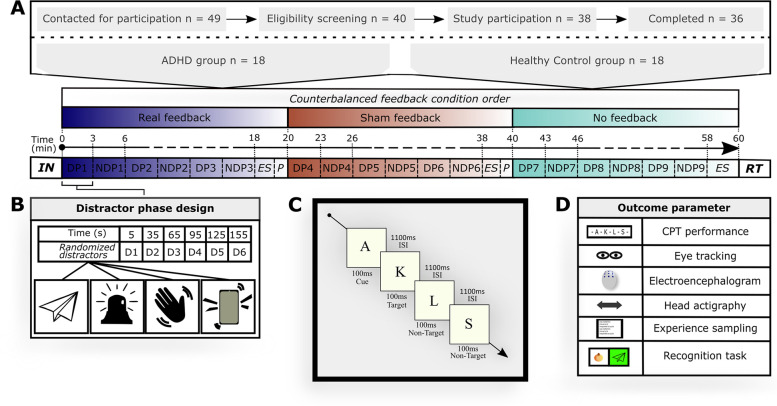
Background: Attention-deficit/hyperactivity disorder (ADHD) is characterized by substantial interindividual heterogeneity that challenges the systematic assessment and treatment. Considering mixed evidence from previous neurofeedback research, we present a novel feedback system that relies on gaze behavior to detect signs of inattention while performing a neuropsychological attention task in a virtual seminar room. More specifically, an audiovisual feedback was given whenever participants averted their gaze from the given task.
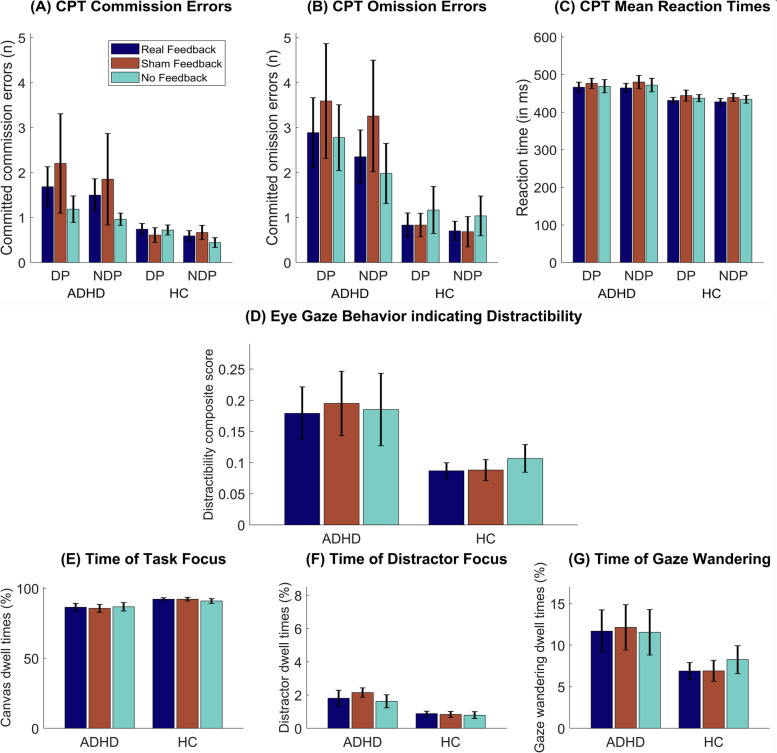
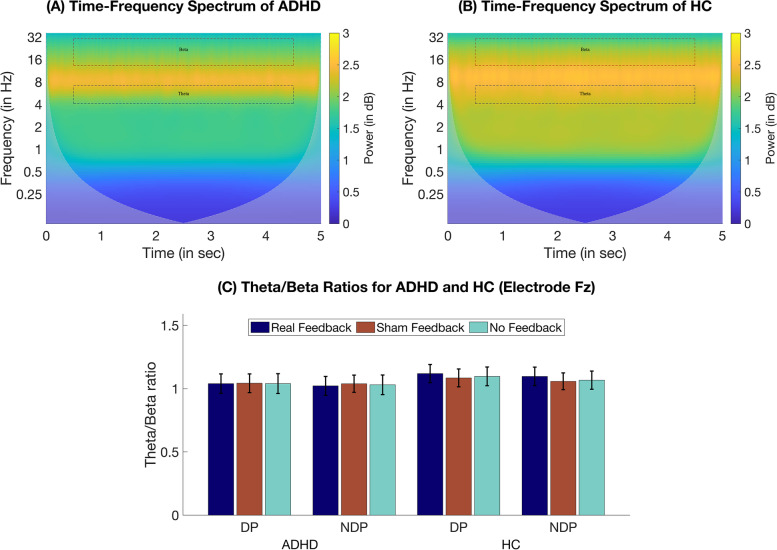
Methods: Eighteen adults with ADHD and 18 healthy controls performed a continuous performance task (CPT) in virtual reality under three counterbalanced conditions in which either gaze-based feedback, sham feedback, or no feedback was provided. In all conditions, phases of high and low virtual distraction alternated. CPT errors and reaction times, proportions of gaze dwell times (e.g., task focus or distraction focus), saccade characteristics, EEG theta/beta ratios, head movements, and an experience sampling of ADHD symptoms were analyzed.
Results: While patients can be discriminated well from healthy controls in that they showed more omission errors, higher reaction times, higher distraction-related dwell times, and more head movements, the feedback did not immediately improve task performance. It was also indicated that sham feedback was rather associated with an aggravation of symptoms in patients.
Conclusions: Our findings demonstrate sufficient suitability and specificity for this holistic ADHD symptom assessment. Regarding the feedback, a single-session training was insufficient to achieve learning effects based on the proposed metacognitive strategies. Future longitudinal, multi-session trials should conclusively examine the therapeutic efficacy of gaze-based virtual reality attention training in ADHD.
Trial registration: drks.de (identifier: DRKS00022370).
Keywords: ADHD; Adults; Attention training; Continuous performance task; Distractors; EEG; Eye-tracking; Metacognition; Self-regulation; Therapy; Treatment; Virtual reality.
© 2023. The Author(s).
Conflict of interest statement
BS, NB received funding from BONFOR and the German Federal Ministry of Education and Research. AW received funding from Medice. Within the past three years, UE has acted as a consultant for Eleusis Ltd. AP is an editorial board member of BMC Psychiatry and, over the past three years, she received funding by the German Federal Ministry of Education and Research, Horizon2020, and DFG; she reports serving on advisory boards for Takeda, Medice, and Boehringer; and delivering lectures sponsored by Medice, Takeda; and being the author of books and articles on psychotherapy. All other authors declare no conflicts of interest.
Figures
References
-
- American Psychiatric Association . Diagnostic and statistical manual of mental disorders: DSM-5. 5. Washington, DC: American Psychiatric Publishing; 2013.
Publication types
MeSH terms
Grants and funding
LinkOut - more resources
Full Text Sources
Medical
