Review
. 2020 Mar 17;3(1):34.
doi: 10.1038/s42004-020-0279-0.

Color polymorphism in organic crystals

Affiliations
Review

Color polymorphism in organic crystals

Bernardo A Nogueira et al. Commun Chem. .

Abstract

Color polymorphism is an interesting property of chemical systems which present crystal polymorphs of different colors. It is a rare phenomenon, with only a few examples reported in the literature hitherto. Nevertheless, systems exhibiting color polymorphism have many potential applications in different domains, such as pigment, sensor, and technology industries. Here, known representative chemical systems showing color polymorphism are reviewed, and the reasons for them to present such property discussed. Also, since some of the concepts related to color polymorphism have been frequently used imprecisely in the scientific literature, this article provides concise, systematic definitions for these concepts.


Conflict of interest statement

The authors declare no competing interests.

Figures
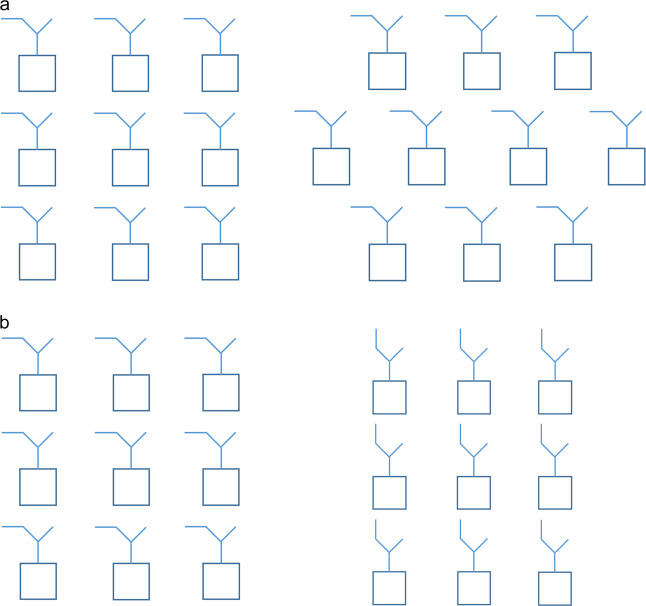
Fig. 1
Fig. 1. Schematic illustration of the two different classes of polymorphism.
a Depiction of packing polymorphism and b depiction of conformational polymorphism.
Fig. 2
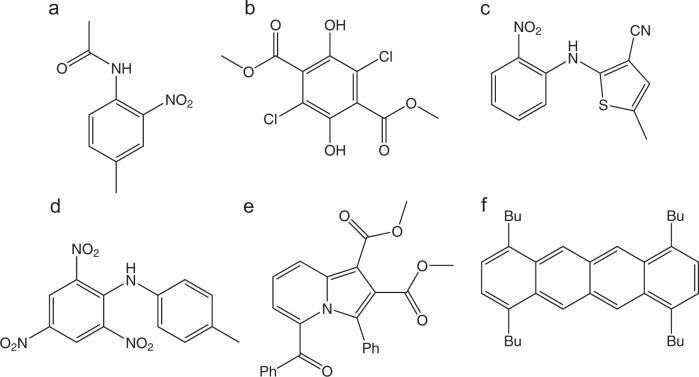
Fig. 2. Structures of the parent molecules that give rise to color polymorphs and that are discussed here.
a N-(4-methyl-2-nitrophenyl)acetamide, b dimethyl 2,5-dichloro-3,6-dihydroxyterephthalate, c 5-methyl-2-((2-nitrophenyl)amino)thiophene-3-carbonitrile (ROY), d 2,4,6-trinitro-N-(p-tolyl)aniline, e dimethyl-5-benzoyl-3-phenylindolizine-1,2-dicarboxylate, and f 1,4,7,10-tetrabutyltetracene. The structures of related compounds that also exhibit color polymorphs are presented in the relevant sections.
Fig. 3
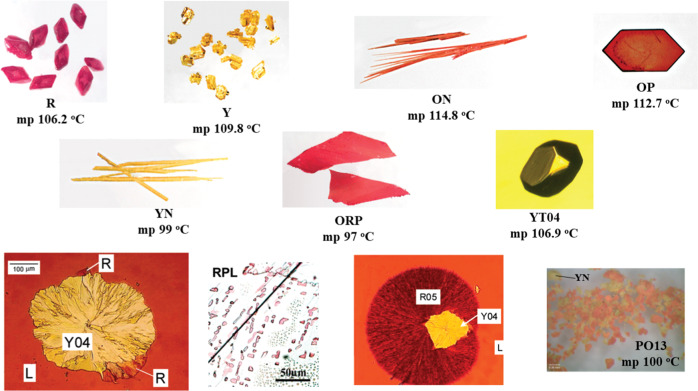
Fig. 3. Polymorphs of 5-methyl-2-((2-nitrophenyl)amino)thiophene-3-carbonitrile and their melting point (m.p.).
Reprinted (adapted) with permission from Acc. Chem. Res. 2010, 43, 9, 1257–1266. Copyright 2010 American Chemical Society and also from CrystEngComm, 2019, 21, 1363.
Fig. 4
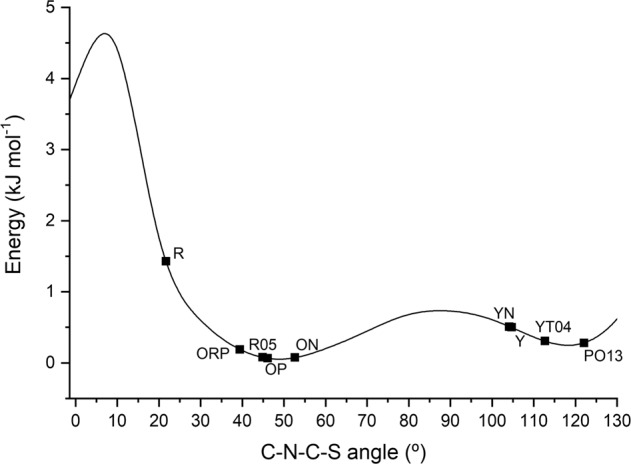
Fig. 4. Relative energy as a function of the C–C–N–S torsion angle (θ) for the 5-methyl-2-((2-nitrophenyl)amino)thiophene-3-carbonitrile monomer.
The values of this torsion angle in the monomers present in each of the polymorphs of the compound are indicated by the solid squares on the energy profile. The calculations were performed at the DFT(B3LYP)/6–311 + G(d,p) level of approximation.
Fig. 5
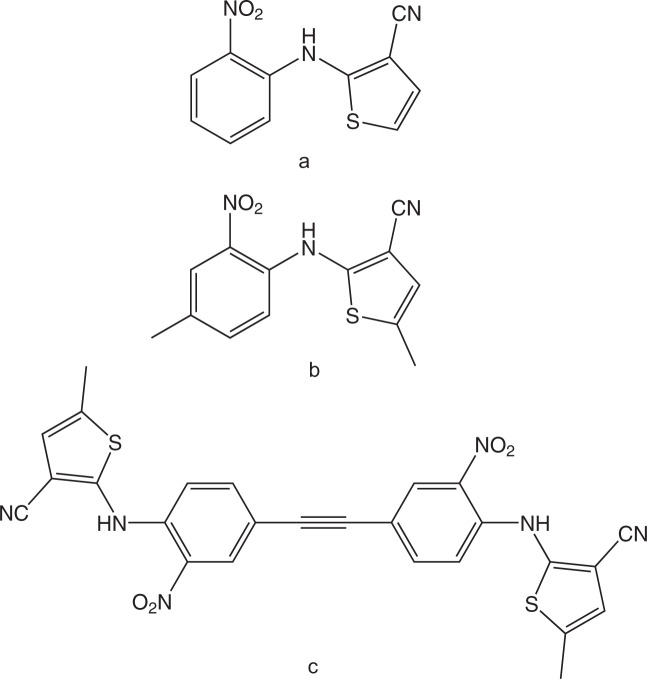
Fig. 5. Structures related to 5-methyl-2-((2-nitrophenyl)amino)thiophene-3-6-carbonitrile (ROY).
a 2-((2-nitrophenyl)amino)thiophene-3-carbonitrile, b 5-methyl-2-((4-methyl-2-nitrophenyl)amino)thiophene-3-carbonitrile, and c 2,2′((ethyne-1,2-diylbis(2-nitro-4,1-phenylene))bis(azanediyl)) bis(5-methylthiophene-3-carbonitrile).
Fig. 6
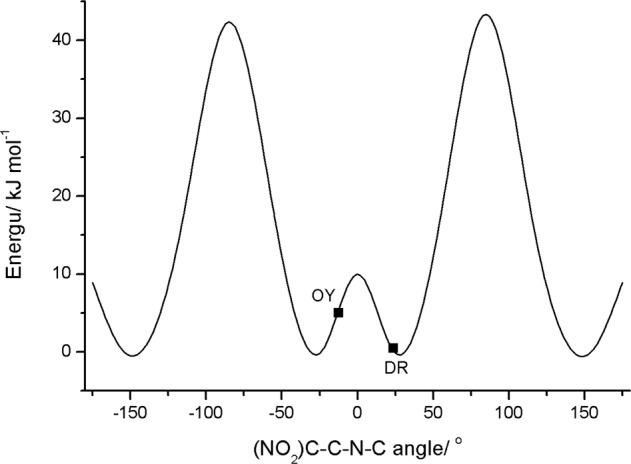
Fig. 6. Relative energy as a function of the (NO2)C–C–N–C torsion angle for the 2,4,6-trinitro-N-(p-tolyl)aniline monomer.
The values of this torsion angle in the monomers present in both dark-red (DR) and orange-yellow (OY) polymorphs of the compound are indicated by the solid squares on the energy profile. The calculations were performed at the DFT(B3LYP)/6–311 + G(d,p) level of approximation.
Fig. 7
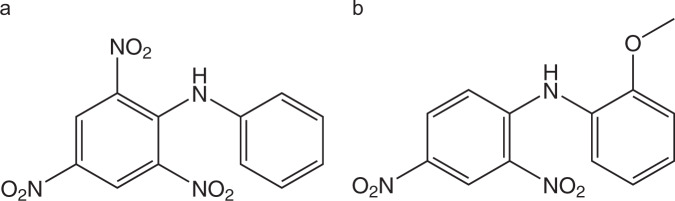
Fig. 7. Structures related to 2,4,6-trinitro-N-(p-tolyl)aniline.
a Picryl aniline and b) N-(2,4-dinitrophenyl)-o-anisidine.

References

    1. Bernstein, J. Polymorphism in Molecular Crystals. Polymorphism in Molecular Crystals, (Oxford University Press, 2010). Ground basis definition of different concepts relevant to the subject were based on this work.
    1. Grepioni F. Themed issue: polymorphism and crystal forms. N. J. Chem. 2008;32:1657–1658. doi: 10.1039/b814474p. - DOI
    1. Desiraju, G. R. Crystal Engineering: The Design of Organic Solids. Elsevier Science (Elsevier, 1989).
    1. Cruz-Cabeza AJ, Bernstein J. Conformational polymorphism. Chem. Rev. 2014;114:2170–2191. doi: 10.1021/cr400249d. - DOI - PubMed
    1. Braga, D., Grepioni, F. & Sabatino, P. On the factors controlling the crystal packing of first-row transition-metal binary carbonyls. J. Chem. Soc. Dalt. Trans. 3137–3142 (1990). This paper is pertinent regarding the issue of packing polymorphism.