


Physical and Rehabilitation Therapy for Overactive Bladder in Women: A Systematic Review and Meta-Analysis
- PMID: 36704247
- PMCID: PMC9833926
- DOI: 10.1155/2023/6758454
Physical and Rehabilitation Therapy for Overactive Bladder in Women: A Systematic Review and Meta-Analysis
Abstract
Objective: To compare the effects of different physical and rehabilitation therapies on women with overactive bladder (OAB).
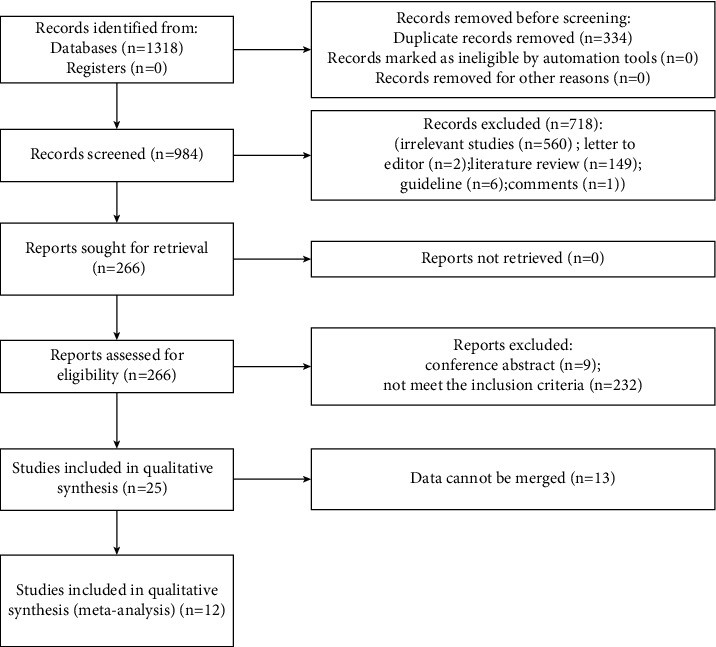
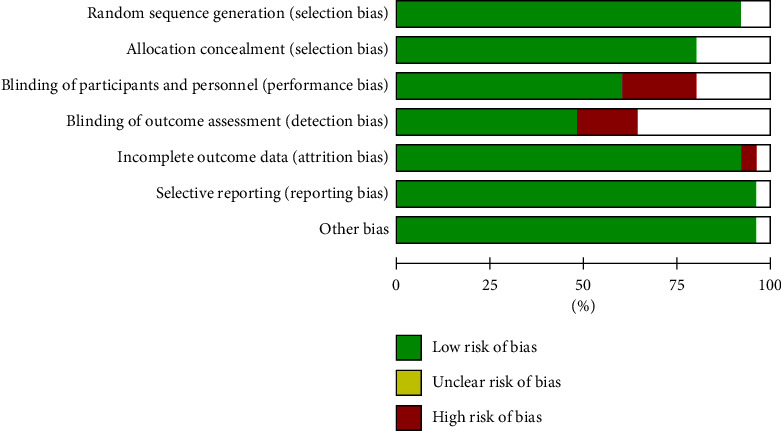
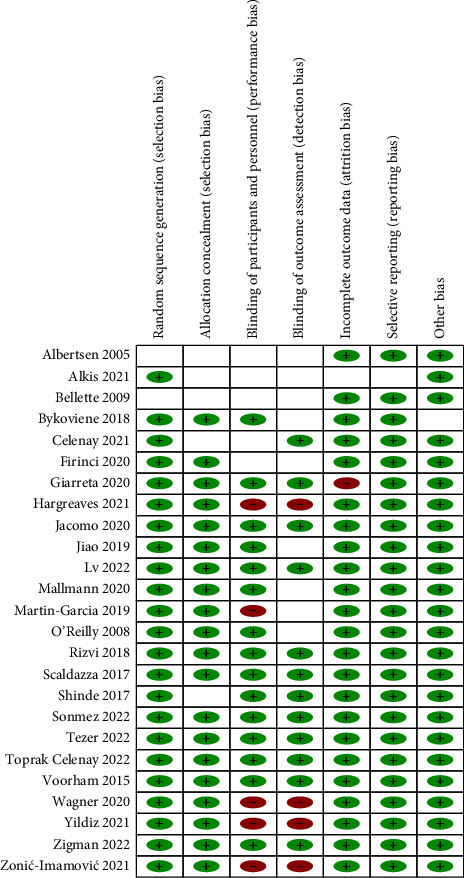
Design: Network meta-analysis. Data source: The Embase, Scopus, and PubMed databases were systematically searched from their inception to June 22, 2022. We included only RCTs, with no language restrictions. Articles in the reference lists and related studies were thoroughly reviewed. Review Methods. This network meta-analysis included related studies on different physical and rehabilitation therapies for OAB. Data were extracted independently from the included randomized controlled trials by two authors, and they used the Cochrane Collaboration's tool to evaluate the risk of bias. We used RevMan to assess the risk assessment of research bias. This network meta-analysis was performed using the Stata software. We completed the review in accordance with the PRISMA items for systematic reviews and meta-analyses statement.
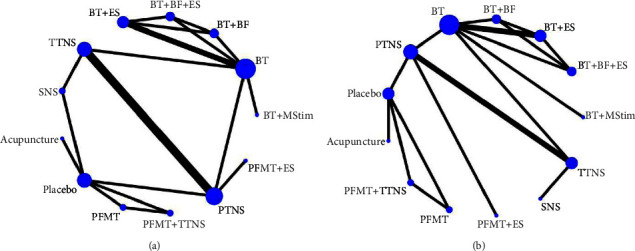
Results: Twelve randomized controlled trials involving 637 patients were included in this meta-analysis. All physical and rehabilitation therapies improved daytime micturition frequency and nocturia frequency in OAB patients. Percutaneous tibial nerve stimulation (PTNS), BT + ES, and BT + BF + ES are better interventions for OAB treatment. There were no significant differences in PTNS, BT + ES, and BT + BF + ES.
Conclusion: All physical and rehabilitation therapies can improve daytime micturition and nocturia frequency in OAB. PTNS, BT + ES, and BT + BF + ES were the priority therapies.
Copyright © 2023 Jingwen Bai et al.
Conflict of interest statement
The authors declare that there are no conflicts of interest in publishing this article.
Figures
References
-
- Haylen B. T., de Ridder D., Freeman R. M., et al. An international urogynecological association (IUGA)/international continence society (ICS) joint report on the terminology for female pelvic floor dysfunction. Neurourology and Urodynamics . 2010;29(1):4–20. doi: 10.1002/nau.20798.19941278 - DOI - PubMed
-
- Moreira E. D., Neves R. C. S., Neto A. F., et al. A population-based survey of lower urinary tract symptoms (LUTS) and symptom-specific bother: results from the Brazilian LUTS epidemiology study (BLUES) World Journal of Urology . 2013;31(6):1451–1458. doi: 10.1007/s00345-013-1057-8.23515960 - DOI - PubMed
Publication types
MeSH terms
LinkOut - more resources
Full Text Sources
Medical
Miscellaneous