


The role of the endolysosomal pathway in α-synuclein pathogenesis in Parkinson's disease
- PMID: 36704248
- PMCID: PMC9871505
- DOI: 10.3389/fncel.2022.1081426
The role of the endolysosomal pathway in α-synuclein pathogenesis in Parkinson's disease
Abstract
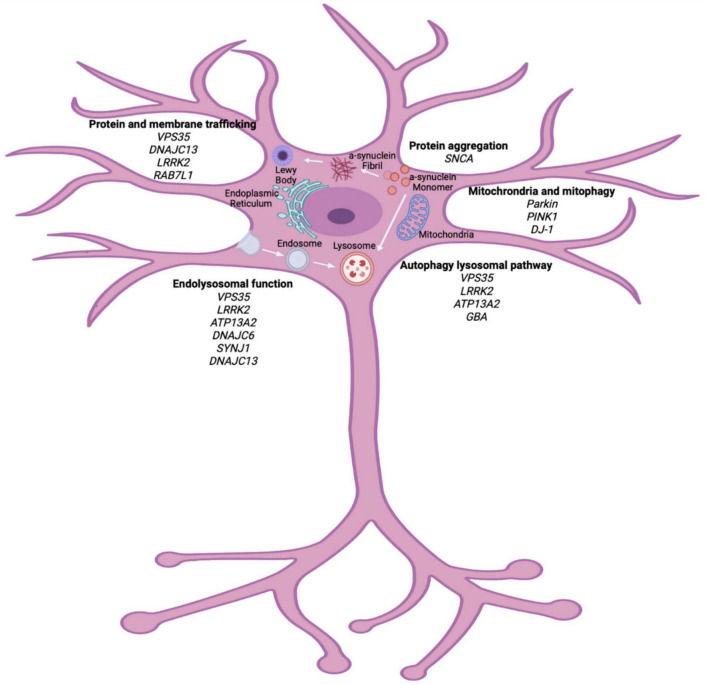
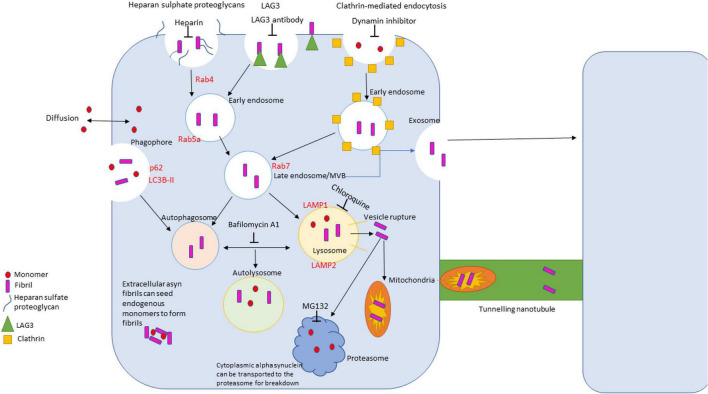
Parkinson's disease (PD) is a chronic neurodegenerative disease that is characterized by a loss of dopaminergic neurons in the substantia nigra pars compacta of the midbrain (SNpc). Extensive studies into genetic and cellular models of PD implicate protein trafficking as a prominent contributor to the death of these dopaminergic neurons. Considerable evidence also suggests the involvement of α-synuclein as a central component of the characteristic cell death in PD and it is a major structural constituent of proteinaceous inclusion bodies (Lewy bodies; LB). α-synuclein research has been a vital part of PD research in recent years, with newly discovered evidence suggesting that α-synuclein can propagate through the brain via prion-like mechanisms. Healthy cells can internalize toxic α-synuclein species and seed endogenous α-synuclein to form large, pathogenic aggregates and form LBs. A better understanding of how α-synuclein can propagate, enter and be cleared from the cell is vital for therapeutic strategies.
Keywords: Parkinson’s disease; endocytosis; endolysosomal; trafficking; α-synuclein.
Copyright © 2023 Smith, Mellick and Sykes.
Conflict of interest statement
The authors declare that the research was conducted in the absence of any commercial or financial relationships that could be construed as a potential conflict of interest.
Figures

References
Publication types
LinkOut - more resources
Full Text Sources
Miscellaneous
