. 2023 Jul;17(4):1085-1120.
doi: 10.1177/19322968221148743. Epub 2023 Jan 26.

Diabetes Technology Meeting 2022

Affiliations

Diabetes Technology Meeting 2022

Jingtong Huang et al. J Diabetes Sci Technol. 2023 Jul.

Abstract

Diabetes Technology Society hosted its annual Diabetes Technology Meeting from November 3 to November 5, 2022. Meeting topics included (1) the measurement of glucose, insulin, and ketones; (2) virtual diabetes care; (3) metrics for managing diabetes and predicting outcomes; (4) integration of continuous glucose monitor data into the electronic health record; (5) regulation of diabetes technology; (6) digital health to nudge behavior; (7) estimating carbohydrates; (8) fully automated insulin delivery systems; (9) hypoglycemia; (10) novel insulins; (11) insulin delivery; (12) on-body sensors; (13) continuous glucose monitoring; (14) diabetic foot ulcers; (15) the environmental impact of diabetes technology; and (16) spinal cord stimulation for painful diabetic neuropathy. A live demonstration of a device that can allow for the recycling of used insulin pens was also presented.

Keywords: continuous glucose monitor; diabetes; digital health; glucose; insulin; ketones.


Conflict of interest statement

The author(s) declared the following potential conflicts of interest with respect to the research, authorship, and/or publication of this article: JH, AMY, ADubord, WL, ADrincic, PP, VCH, AS, JGC, and JJS have nothing to disclose.

WP was employed by Eli Lilly & Co from 2016 to 2021. PGJ is a co-founder, shareholder, and board member of Pacific Diabetes Technologies (this relationship is being managed by the OHSU conflict of interest office). EKS reports that this work was supported in part by a VA MERIT award from the US Department of Veterans Affairs Clinical Sciences Research and Development Service (1I01CX001825). He has received unrestricted research support from Dexcom (to the Baltimore VA Medical Center and to the University of Maryland) for the conduction of clinical trials. JLS is an Advisory Board member for Bigfoot Biomedical, Cecelia Health, Insulet, Medtronic, Vertex, and StartUp Health Diabetes Moonshot. She has also sponsored research for, has been a consultant for, and has received speaker fees from Insulet and Medtronic. She has been a consultant for and has received speaker fees from Lilly. She has received speaker fees from Zealand. AF is a paid consultant for 180 LS, A28, Adocia, Aerami, ALMS, Amolyt, Berg, Biocon, CarThera, Checkpoint, Diamyd, Diasome, Entera Bio, Enterin, Enzychem, Fortress, Glyscend, Hagar NIG, IM Therapeutics, I2o, Innoneo, Mars Symbioscience, Linear Therapies, MMD, Moelis, Northwest University, NuSirt, Oberland, Oramed, Orgenesis, Pano, Portal Insulin, RenovoRx, Rivus, Seraxis, SFC Fluidics, Stalicla, Surf Bio, TixiMED, Tyme, Unify, VeroScience, and Zucara. He is a member of the advisory board for Enterin, Hagar NIG, Oramed, and Pano and a member of the corporate board for Innoneo. TK is an employee and stockholder for Teladoc Health. RAL is a consultant for Abbott, Diabetes Care, Biolinq, Capillary Biomedical, Deep Valley Labs, Gluroo, Tidepool, and PhysioLogic Devices, as well as a member of the Advisory Board for Provention Bio. MF has aided in research for Dexcom (providing devices for NIH-funded study). BHG is a paid consultant for SFC Fluidics. RJG received research support from Novo Nordisk, Eli Lilly, Dexcom, and is a consultant for Sanofi, Eli Lilly, Weight Watchers, Pfizer, and Boehringer. BN received grants from BioSensics, LifeNet, AVAZZIA, EO2 Concepts, and NeuroMetrix. He is a consultant for BioSensics and Mölnlycke. UM was a former consultant for Ryse Health Inc and has received research funding from Clementia Pharmaceuticals. DCK is a consultant to EOFlow, Fractyl Health, Integrity, Lifecare, Rockley Photonics, and Thirdwayv.

Figures
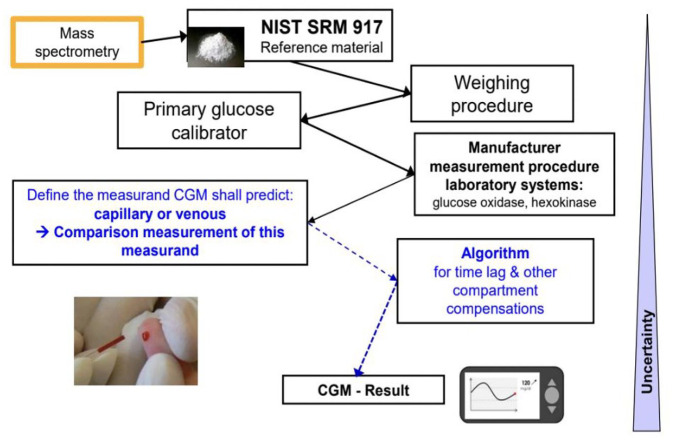
Figure 1.
Figure 1.
A traceability chain demonstrating the standardization process of continuous glucose monitoring. Abbreviations: NIST, National Institute of Standards and Technology; SRM, standard reference material; CGM, continuous glucose monitor. Source: Figure courtesy of Guido Freckmann.
Figure 2.
Figure 2.
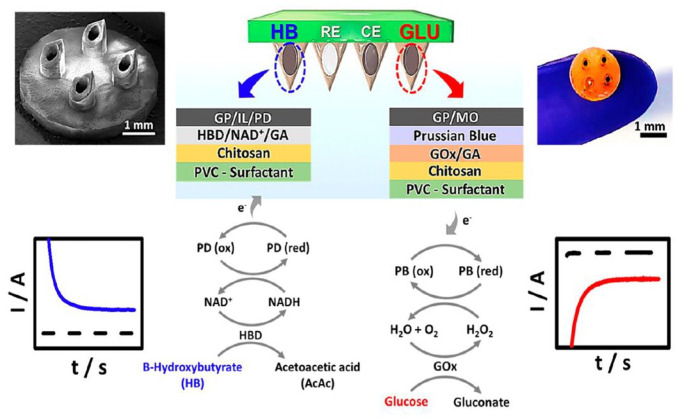
Schematic representation of dual-marker HB/d-(+)-glucose anhydrous (GLU) sensing on microneedle sensor platform. Scanning electron microscope image of the computerized numerical control-fabricated microneedle showing a 2 × 2 array of hollow microneedles. Schematic illustration of the dual-analyte amperometric detection mechanism on multilayer modified sensors for HB (left) and GL (right). Also shown are typical amperograms obtained for HB (left) and GL (right) detection. Abbreviations: HB, β-hydroxybutyrate; GLU, d-(+)-glucose anhydrous; RE, reference electrode; CE, counter electrode; GP, graphite powder; IL, ionic liquid; PD, phenanthroline dione; HBD, β-hydroxybutyrate dehydrogenase; GA, glutaraldehyde; PVC, polyvinyl chloride; MO, mineral oil; AcAc, acetoacetic acid; PB, Prussian blue. Source: Reprinted with permission from Teymourian et al. Copyright 2019 American Chemical Society.
Figure 3.
Figure 3.
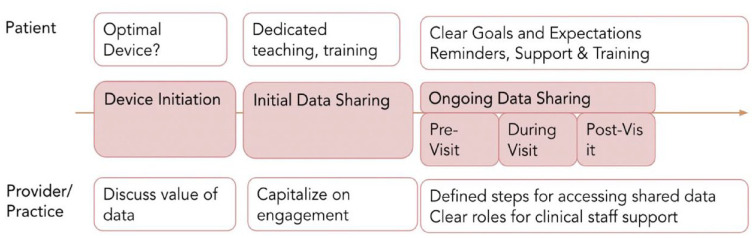
Defined process to support early data sharing with patients to combat clinical inertia. Source: Figure courtesy of Tejaswi Kompala.
Figure 4.
Figure 4.
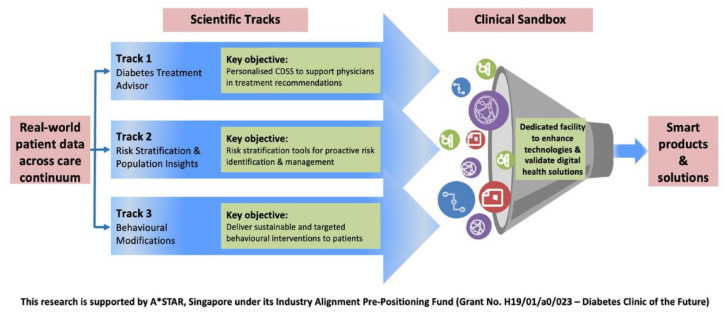
Overview of the diabetes clinic of the future program and platforms. Abbreviations: A*STAR, Agency for Science Technology and Research; CDSS, clinical decision support system. Source: Figure courtesy of A*STAR and SingHealth, Singapore.
Figure 5.
Figure 5.
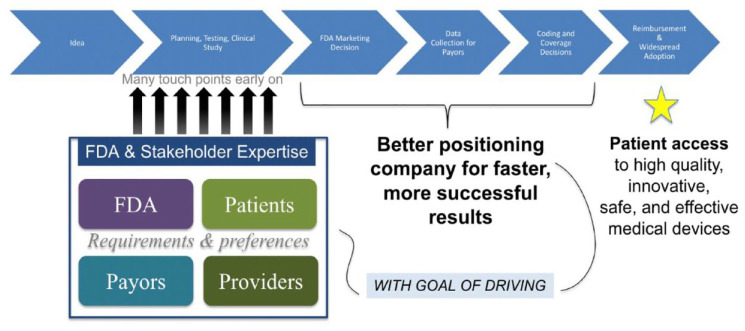
Early, frequent, and coordinated stakeholder interaction speeds up patient access. Abbreviation: FDA, US Food and Drug Administration. Source: Figure courtesy of Jeffrey Shuren.
Figure 6.
Figure 6.
(Left) A GRI grid showing the hyperglycemia component versus the hypoglycemia component for all 225 CGM tracings. The results for each of the four categories of patients are shown with different symbols. We highlighted individual data points for the CGM tracings from two persons (designated P1 and P2) with T1D receiving multiple daily insulin injections. (Right) The GRI over time for five different time periods. Legend: Between times 1 and 2, the TIR worsened by decreasing from 46% to 40%. However, the GRI improved from 90 to 75. For time 1, the hypoglycemia/hyperglycemia components are 16%/26%. For time 2, they are 6%/35%. Adjustments to reduce hypoglycemia could increase hyperglycemia. Abbreviations: CGM, continuous glucose monitor); T1D, type 1 diabetes; TIR, time in range (70-180 mg/dL; 3.9-10.0 mmol/L; GRI, Glycemia Risk Index; MDI, multiple daily insulin injections; Pump, insulin infusion pump; HCL, hybrid closed loop; T2D, type 2 diabetes; Hyper, Hyperglycemia Component; Hypo, Hypoglycemia Component; VHigh, very-high-glucose hyperglycemia (>250 mg/dL; >13.9 mmol/L) (level 2 hyperglycemia); VLow, very-low-glucose hypoglycemia (180-250 mg/dL; >10.0-13.9 mmol/L) (level 1 hyperglycemia). Source: Figure reproduced from Klonoff et al.
Figure 7.
Figure 7.
Opportunities to adopt, adapt, or develop standards and best practices in the CGM data pipeline. Abbreviations: CCD, Continuity of Care Documents; CDA, Clinical Document Architecture; CGM, continuous glucose monitor; CPT, Current Procedural Terminology; EHR, electronic health record; EMPI, Enterprise Master Patient Index; FHIR, Fast Healthcare Interoperability Resources; HIPAA, Health Insurance Portability and Accountability Act; HL7, Health Level 7; ICD-10, International Classification of Diseases 10th Revision; IEEE, Institute of Electrical and Electronics Engineers; LOINC, Logical Observation Identifiers Names and Codes; NIST CSF, National Institute of Standards and Technology Cybersecurity Framework; NPI, National Provider Identifier; OMOP, Observational Medical Outcomes Partnership; SMART, Substitutable Medical Applications, Reusable Technologies; SNOMED, Systemized Nomenclature of Medicine; SOC2, System and Organization Controls type 2 – Trust Services Criteria; UDI, Unique Device Identifier. Source: Figure reproduced from Xu et al.
Figure 8.
Figure 8.
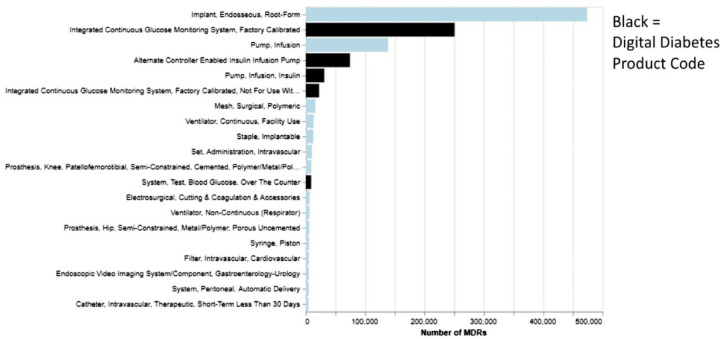
Twenty greatest number of class II product codes in the calendar year 2021 for MDRs. Abbreviation: MDR, medical device report. Source: Figure courtesy of Bradley M. Thompson.
Figure 9.
Figure 9.
Patient engagement: an umbrella concept to innovate health care. Source: Figure reproduced from Graffigna et al under the Creative Commons Attribution-NonCommercial-NoDerivs 3.0 License.
Figure 10.
Figure 10.
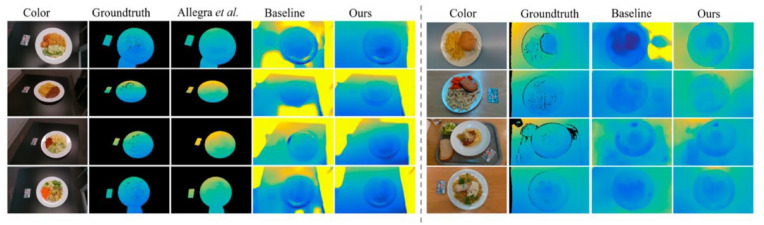
Depth estimation using single red, green, and blue food images. Source: Figure reproduced with permission from Lu et al. Figure reproduced from Naaman et al under a Creative Commons License.
Figure 11.
Figure 11.
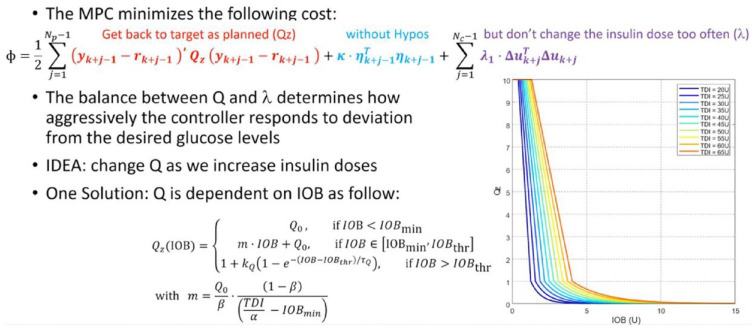
The algorithm balances bringing glucose to the target against frequent insulin dose adjustments. Abbreviations: MPC, model predictive control; IOB, insulin on board; TDI, total daily insulin dose. Source: Figure courtesy of Marc Breton.
Figure 12.
Figure 12.
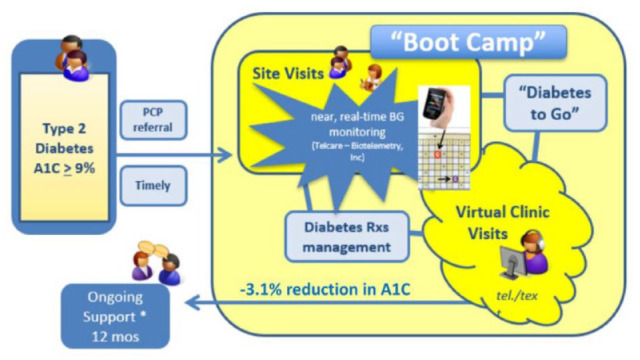
“Diabetes Boot Camp” is a mobile intervention program that incorporates FSBG monitoring. Abbreviations: FSBG, finger-stick blood glucose; PCP, primary care provider; BG, blood glucose. Source: Figure courtesy of Michelle Magee.
Figure 13.
Figure 13.
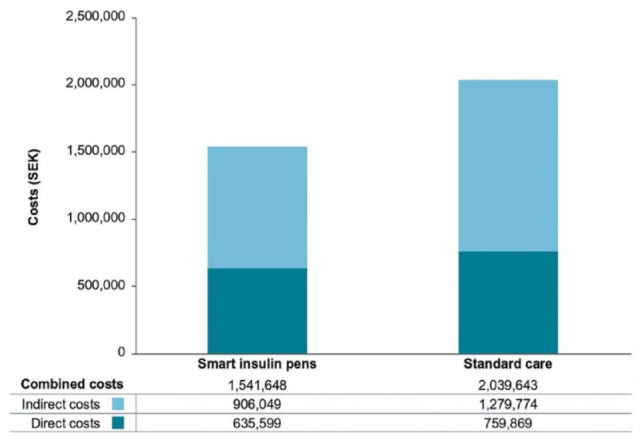
Combined (direct and indirect) costs of smart insulin pens over patients’ lifetimes. Base-case analysis, treatment effects were maintained for patient lifetimes. Abbreviation: SEK, 2018 Swedish krona. Source: Figure reproduced from Jendle et al under the Creative Commons Attribution-Noncommercial 4.0 International License.
Figure 14.
Figure 14.
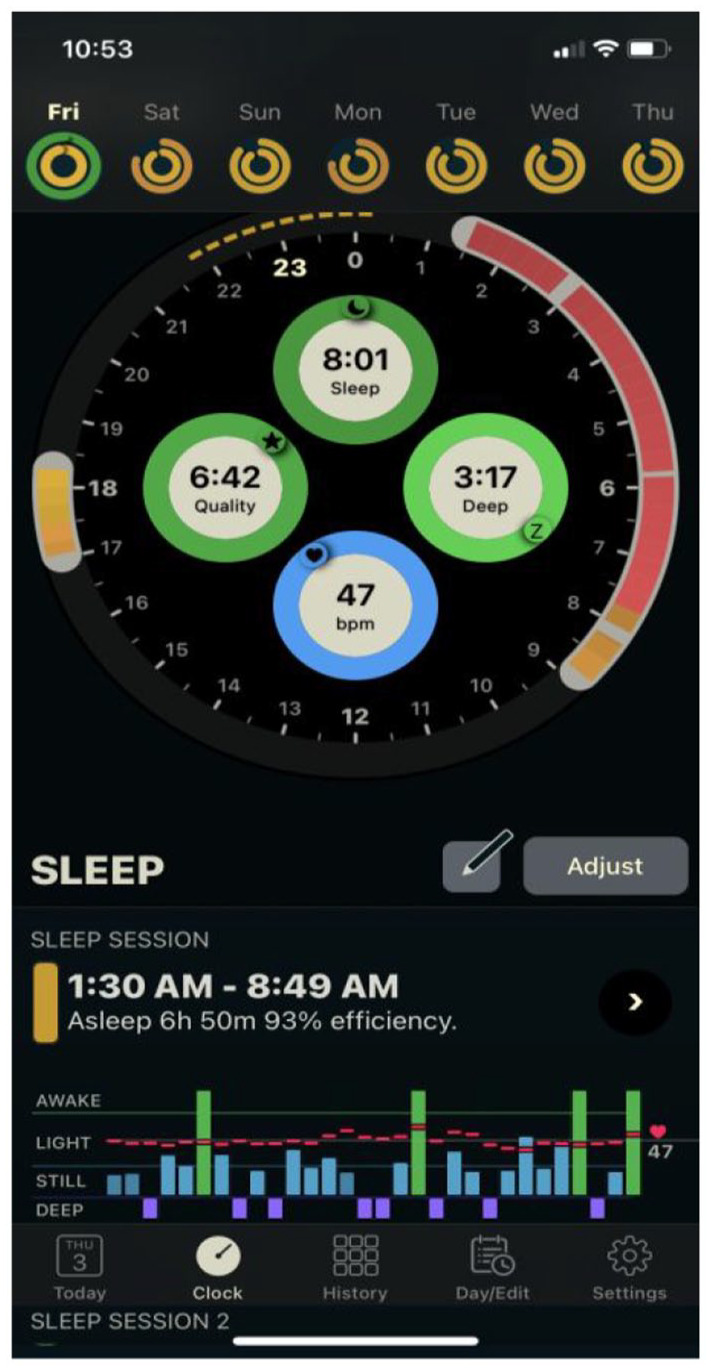
Screen capture from the Autosleep app of sleep data presentation. Qualities of sleep including awake, light, still, and deep sleep are presented in an easily understandable and user-friendly manner. Abbreviation: bpm, beats per minute. Source: Figure courtesy of Ali Cinar.
Figure 15.
Figure 15.
Product concepts of 365-day sensors requiring only weekly calibration. Abbreviations: CGM, continuous glucose monitor; FGM, flash glucose monitor. Source: Figure courtesy of Francine Kaufman.
Figure 16.
Figure 16.
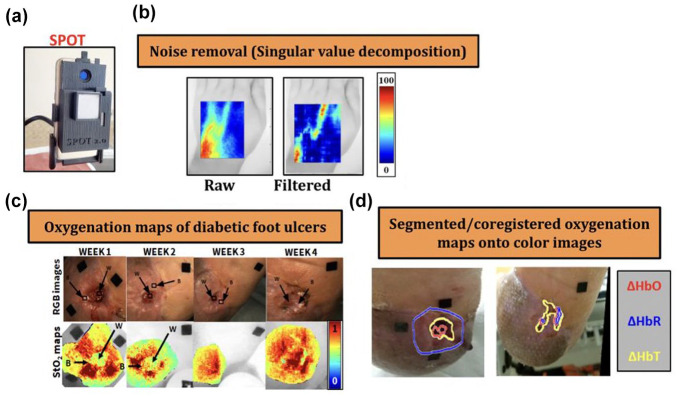
An illustration of the varying features of the SPOT device, (a) the SPOT device, (b) a comparison between the raw and filtered oxygen map imaging, and (c) oxygenation maps of DFUs across a four-week span, (d) segmented and co-registered oxygenation mapped onto color images of a DFU wound healing over time. Collaboration: University of Miami Hospital (Wound Center) & Department of Dermatology, Miami, Florida, Dr. Kirsner & Team. Abbreviations: DFU, diabetic foot ulcer; HbO, oxy-hemoglobin; HbR, deoxy-hemoglobin; HbT, total hemoglobin; SPOT, SmartPhone Oxygenation Tool. Source: Figure (a) adapted from Kaile et al under the Creative Commons Attribution license (https://creativecommons.org/licenses/by/4.0/). Figure (b)-(d) courtesy of Anuradha Godavarty.
Figure 17.
Figure 17.
Clinical evidence comparison for painful diabetic neuropathy. Abbreviations: SCS, spinal cord stimulation; RCT, randomized controlled trial. Source: Figure courtesy of Erika Petersen.
Figure 18.
Figure 18.
Separation of the internal glass cartridge of a used insulin pen using a mechanical handheld device. Source: Figure courtesy of Brian Brandell.

References

    1. Klonoff DC.Postmarket surveillance of blood glucose monitor systems is needed for safety of subjects and accurate determination of effectiveness in clinical trials of diabetes drugs and devices. J Diabetes Sci Technol. 2019;13(3):419-423. doi: 10.1177/1932296819843398. - DOI - PMC - PubMed
    1. Teymourian H, Moonla C, Tehrani F, et al. Microneedle-based detection of ketone bodies along with glucose and lactate: toward real-time continuous interstitial fluid monitoring of diabetic ketosis and ketoacidosis. Anal Chem. 2020;92(2):2291-2300. doi: 10.1021/acs.analchem.9b05109. - DOI - PubMed
    1. Alva S, Castorino K, Cho H, Ou J.Feasibility of continuous ketone monitoring in subcutaneous tissue using a ketone sensor. J Diabetes Sci Technol. 2021;15(4):768-774. doi: 10.1177/19322968211008185. - DOI - PMC - PubMed
    1. Kerr D, Aram M, Crosby KM, Glantz N.A persisting parallel universe in diabetes care within America’s capital. Eclinicalmedicine. 2022;43:101244. doi: 10.1016/j.eclinm.2021.101244. - DOI - PMC - PubMed
    1. Kerr D.Poor numeracy: the elephant in the diabetes technology room. J Diabetes Sci Technol. 2010;4(6):1284-1287. doi: 10.1177/193229681000400601. - DOI - PMC - PubMed

Publication types