


Safety, tolerability, and immunogenicity of the chimpanzee adenovirus type 3-vectored Marburg virus (cAd3-Marburg) vaccine in healthy adults in the USA: a first-in-human, phase 1, open-label, dose-escalation trial
- PMID: 36709074
- PMCID: PMC10127441
- DOI: 10.1016/S0140-6736(22)02400-X
Safety, tolerability, and immunogenicity of the chimpanzee adenovirus type 3-vectored Marburg virus (cAd3-Marburg) vaccine in healthy adults in the USA: a first-in-human, phase 1, open-label, dose-escalation trial
Abstract
Background: WHO has identified Marburg virus as an emerging virus requiring urgent vaccine research and development, particularly due to its recent emergence in Ghana. We report results from a first-in-human clinical trial evaluating a replication-deficient recombinant chimpanzee adenovirus type 3 (cAd3)-vectored vaccine encoding a wild-type Marburg virus Angola glycoprotein (cAd3-Marburg) in healthy adults.
Methods: We did a first-in-human, phase 1, open-label, dose-escalation trial of the cAd3-Marburg vaccine at the Walter Reed Army Institute of Research Clinical Trials Center in the USA. Healthy adults aged 18-50 years were assigned to receive a single intramuscular dose of cAd3-Marburg vaccine at either 1 × 10¹⁰ or 1 × 10¹¹ particle units (pu). Primary safety endpoints included reactogenicity assessed for the first 7 days and all adverse events assessed for 28 days after vaccination. Secondary immunogenicity endpoints were assessment of binding antibody responses and T-cell responses against the Marburg virus glycoprotein insert, and assessment of neutralising antibody responses against the cAd3 vector 4 weeks after vaccination. This study is registered with ClinicalTrials.gov, NCT03475056.
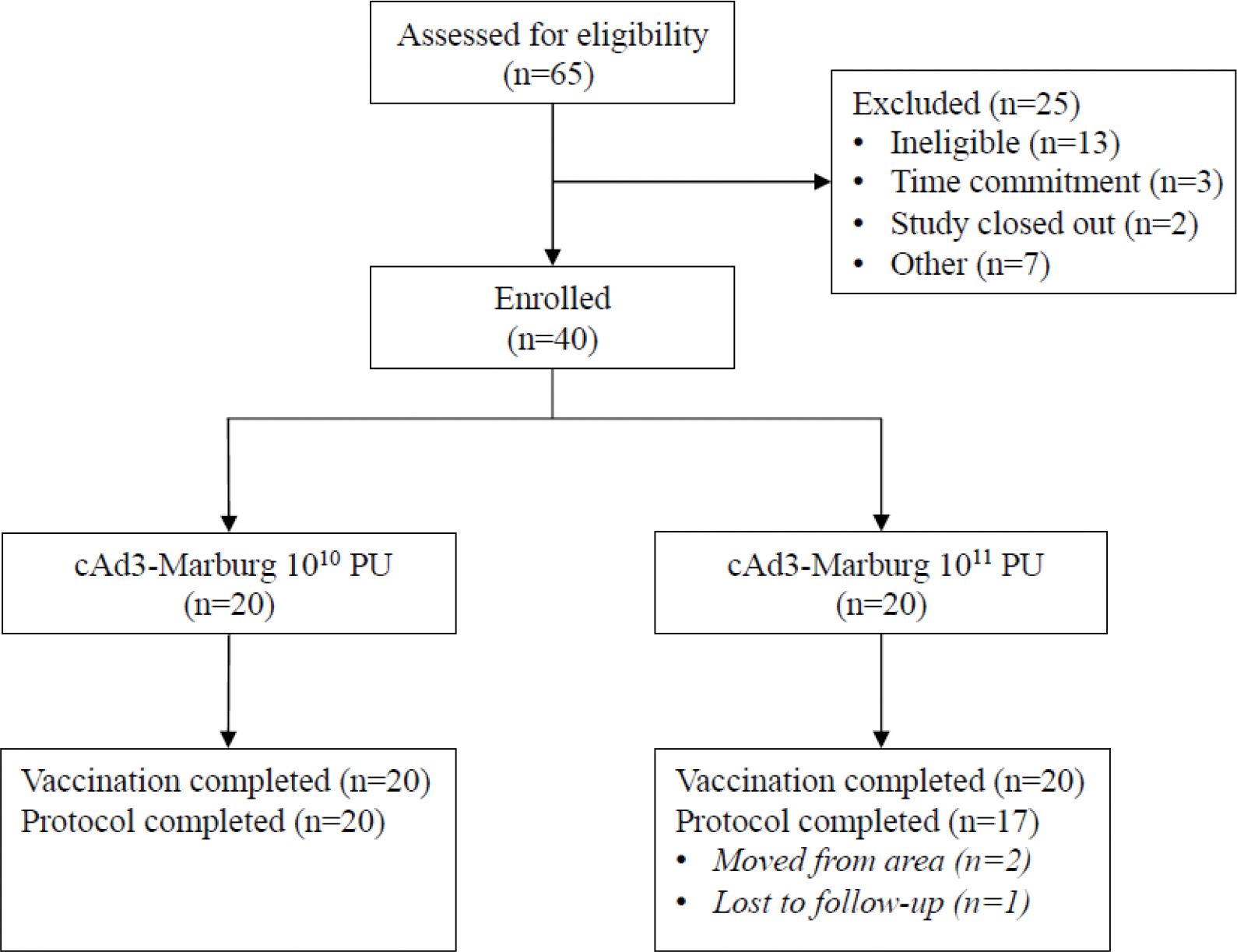
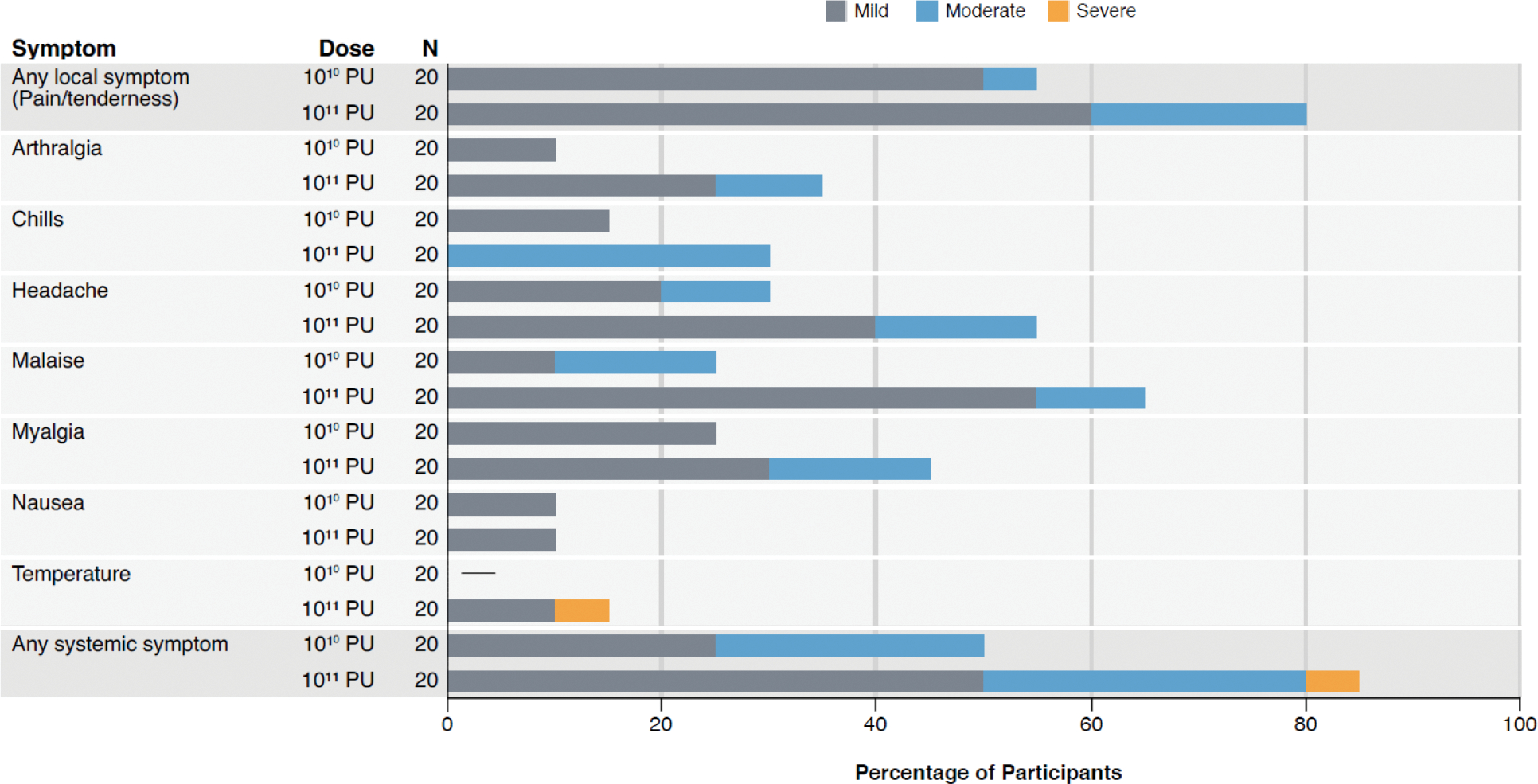
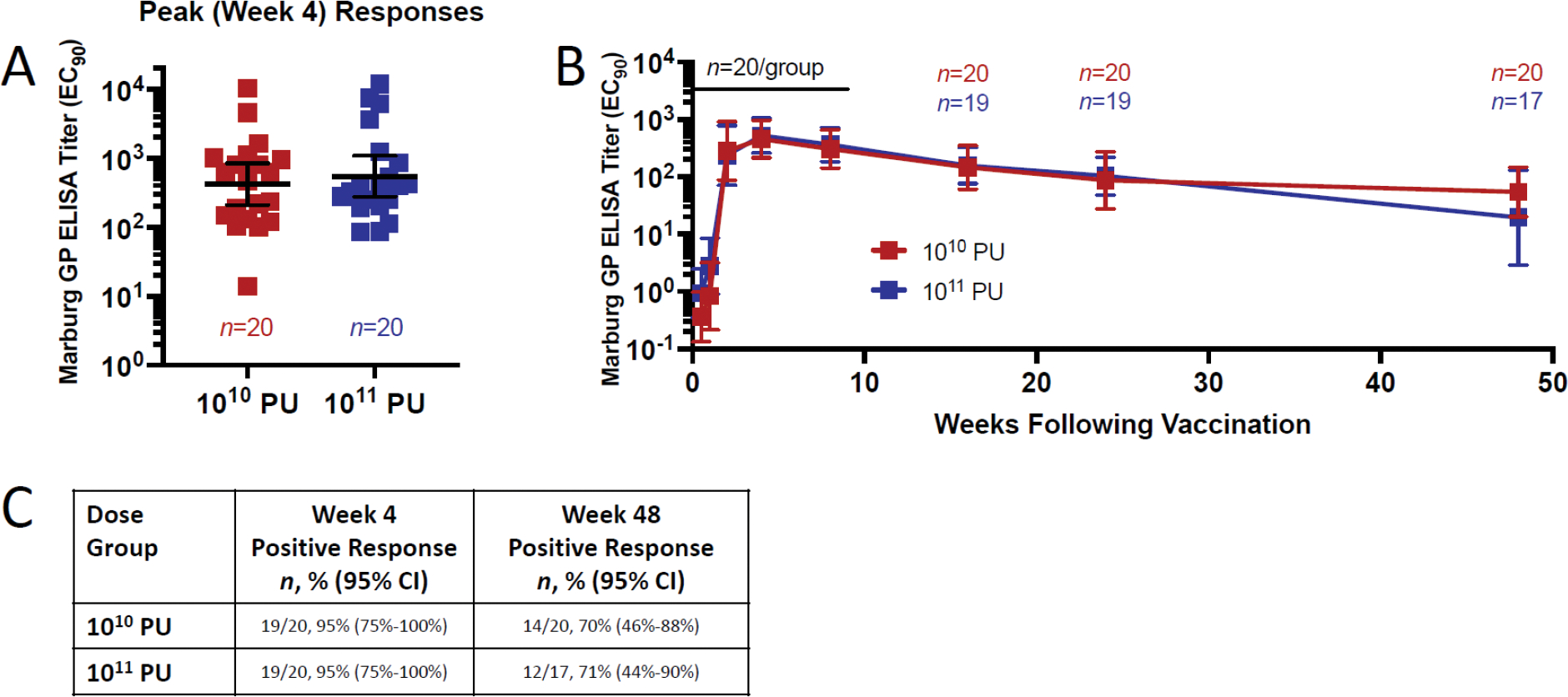
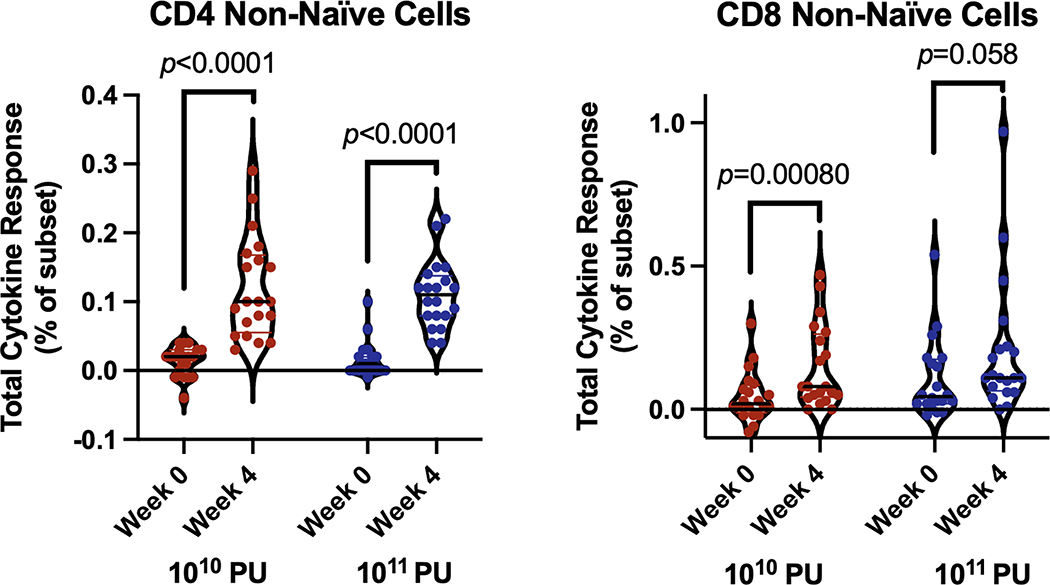
Findings: Between Oct 9, 2018, and Jan 31, 2019, 40 healthy adults were enrolled and assigned to receive a single intramuscular dose of cAd3-Marburg vaccine at either 1 × 10¹⁰ pu (n=20) or 1 × 10¹¹ pu (n=20). The cAd3-Marburg vaccine was safe, well tolerated, and immunogenic. All enrolled participants received cAd3-Marburg vaccine, with 37 (93%) participants completing follow-up visits; two (5%) participants moved from the area and one (3%) was lost to follow-up. No serious adverse events related to vaccination occurred. Mild to moderate reactogenicity was observed after vaccination, with symptoms of injection site pain and tenderness (27 [68%] of 40 participants), malaise (18 [45%] of 40 participants), headache (17 [43%] of 40 participants), and myalgia (14 [35%] of 40 participants) most commonly reported. Glycoprotein-specific antibodies were induced in 38 (95%) of 40 participants 4 weeks after vaccination, with geometric mean titres of 421 [95% CI 209-846] in the 1 × 10¹⁰ pu group and 545 [276-1078] in the 1 × 10¹¹ pu group, and remained significantly elevated at 48 weeks compared with baseline titres (39 [95% CI 13-119] in the 1 ×10¹⁰ pu group and 27 [95-156] in the 1 ×10¹¹ pu group; both p<0·0001). T-cell responses to the glycoprotein insert and neutralising responses against the cAd3 vector were also increased at 4 weeks after vaccination.
Interpretation: This first-in-human trial of this cAd3-Marburg vaccine showed the agent is safe and immunogenic, with a safety profile similar to previously tested cAd3-vectored filovirus vaccines. 95% of participants produced a glycoprotein-specific antibody response at 4 weeks after a single vaccination, which remained in 70% of participants at 48 weeks. These findings represent a crucial step in the development of a vaccine for emergency deployment against a re-emerging pathogen that has recently expanded its reach to new regions.
Funding: National Institutes of Health.
Copyright © 2020 Elsevier Ltd. All rights reserved.
Conflict of interest statement
Declaration of interests NJS is listed on patents involving cAd3-vectored vaccines. All other authors declare no competing interests.
Figures
Comment in
-
Developing a vaccine against Marburg virus disease.Lancet. 2023 Jan 28;401(10373):251-253. doi: 10.1016/S0140-6736(23)00169-1. Lancet. 2023. PMID: 36709065 No abstract available.
References
-
- Bausch DG, Nichol ST, Muyembe-Tamfum JJ, et al. Marburg hemorrhagic fever associated with multiple genetic lineages of virus. N Engl J Med 2006; 355(9): 909–19. - PubMed
Publication types
MeSH terms
Substances
Associated data
Grants and funding
LinkOut - more resources
Full Text Sources
Medical
