. 2023 Jan 13:12:1059168.
doi: 10.3389/fcimb.2022.1059168. eCollection 2022.

Therapeutic effect of oral quercetin in hamsters infected with Leishmania Viannia braziliensis

Affiliations

Therapeutic effect of oral quercetin in hamsters infected with Leishmania Viannia braziliensis

Rosiane Freire Dos Santos et al. Front Cell Infect Microbiol. .

Abstract

Leishmaniasis is a parasitic disease caused by several species of intracellular protozoa of the genus Leishmania that present manifestations ranging from cutaneous ulcers to the fatal visceral form. Leishmania Viannia braziliensis is an important species associated with American tegumentary leishmaniasis and the main agent in Brazil, with variable sensitivity to available drugs. The search for new therapeutic alternatives to treat leishmaniasis is an urgent need, especially for endemic countries. Not only is quercetin well known for its antioxidant activity in radical scavenging but also several other biological effects are described, including anti-inflammatory, antimicrobial, and pro-oxidant activities. This study aimed to investigate the flavonoid quercetin's therapeutic potential in L. (V.) braziliensis infection. Quercetin showed antiamastigote (IC50 of 21 ± 2.5 µM) and antipromastigote (25 ± 0.7 µM) activities and a selectivity index of 22. The treatment of uninfected or L. (V.) braziliensis-infected macrophages with quercetin increased reactive oxygen species (ROS)/H202 generation without altering Nitric Oxide (NO) production. Oral treatment with quercetin of infected hamsters, starting at 1 week of infection for 8 weeks, reduced the lesion thickness (p > 0.01) and parasite load (p > 0.001). The results of this study suggest that the antiamastigote activity of the flavonoid quercetin in vitro is associated, at least in part, with the modulation of ROS production by macrophages. The efficacy of oral quercetin treatment in hamsters infected with L. (V.) braziliensis was presented for the first time and shows its promising therapeutic potential.

Keywords: Leishmania braziliensis; hamsters; oral treatment; quercetin; reactive species of oxygen.


Conflict of interest statement

The authors declare that the research was conducted in the absence of any commercial or financial relationships that could be construed as a potential conflict of interest.

Figures
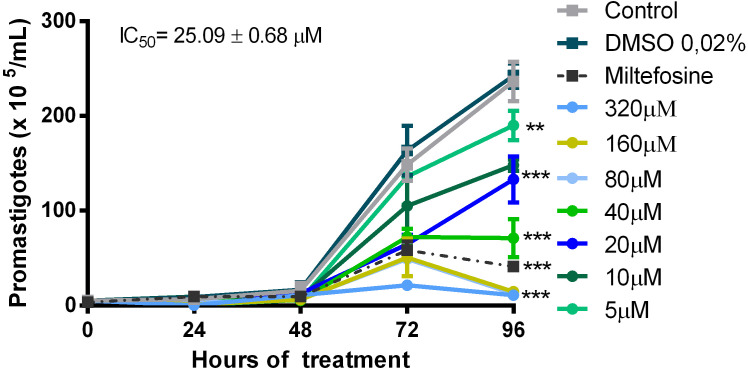
Figure 1
Figure 1
Activity of quercetin on the promastigote of L. (V.) brazilliensis. Promastigotes were cultivated in Schneider’s medium supplemented with 20% fetal bovine serum (FBS) at 27°C for 96 h, in the absence or presence of quercetin (indicated concentrations). The number of parasites was determined daily by counting in a Neubauer chamber. Controls were promastigotes cultured with a vehicle [0.02% dimethylsulfoxide (DMSO)] or 6 µM miltefosine as a reference drug. The data presented are representative of three independent experiments performed in triplicate. Mean ± SD, n = 3. **p < 0.01, ***p < 0.001 (difference compared to DMSO or medium).
Figure 2
Figure 2
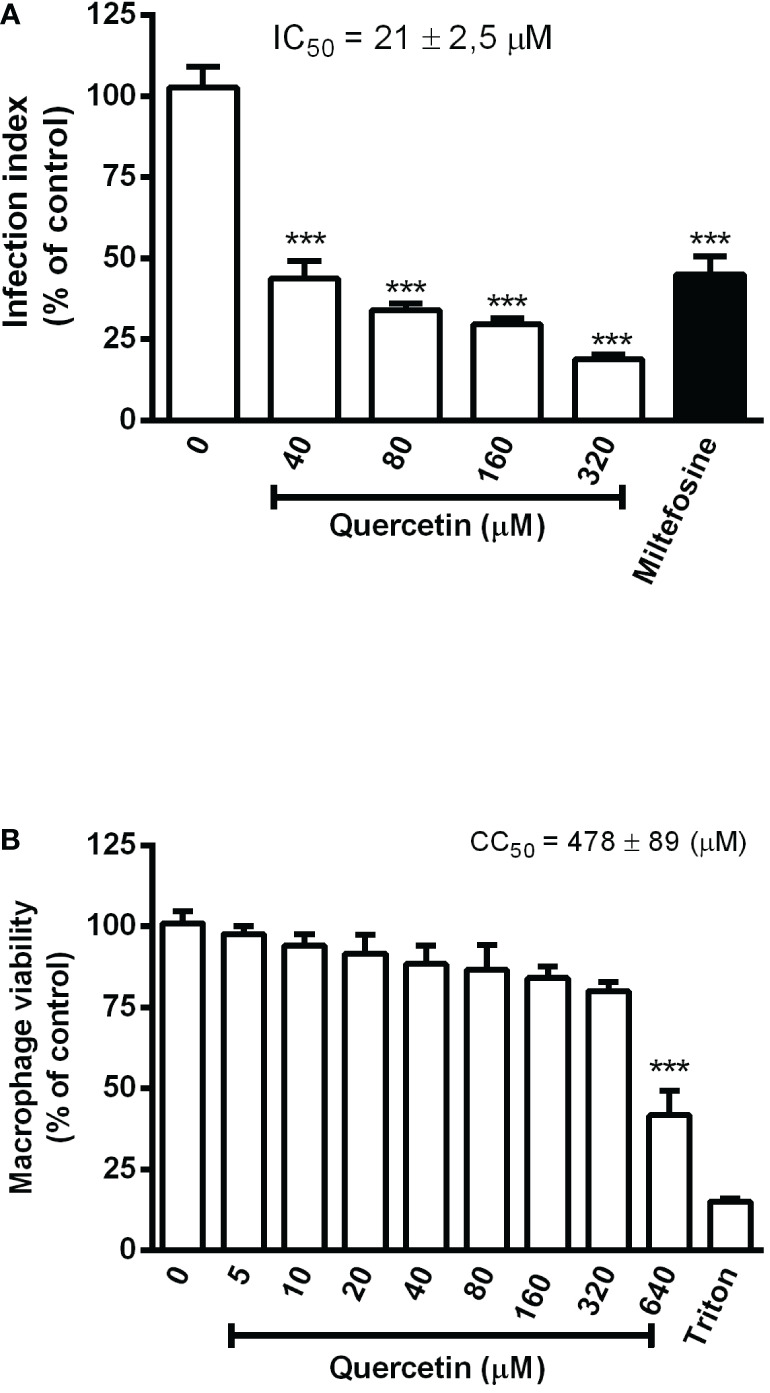
Effect of quercetin on the intracellular amastigotes of L. (V.) braziliensis and macrophage toxicity. (A) Monolayers of hamster peritoneal macrophages infected with L. (V.) braziliensis (5:1 ratio) were treated with the indicated concentrations of quercetin for 48 h. Controls were treated with a 0.02% DMSO vehicle or 3 µM miltefosine. After treatment, macrophage monolayers were stained with Giemsa and the infection index was established by counting at least 200 cells on each coverslip in triplicate. (B) Hamster peritoneal macrophage monolayers were incubated in triplicate with quercetin for 48 h, and cell viability was measured using the 3-(4, 5-dimethyl- 2-thiazol)-2, 5-diphenyl-2H-tetrazolium bromide) assay. Controls were vehicle (DMSO) or 0.1% Triton X-100 as a positive toxicity control for reduced cell viability. Values presented represent the mean ± SD of three independent experiments and are expressed as a percentage of control. ***p < 0.001 (difference compared to DMSO).
Figure 3
Figure 3
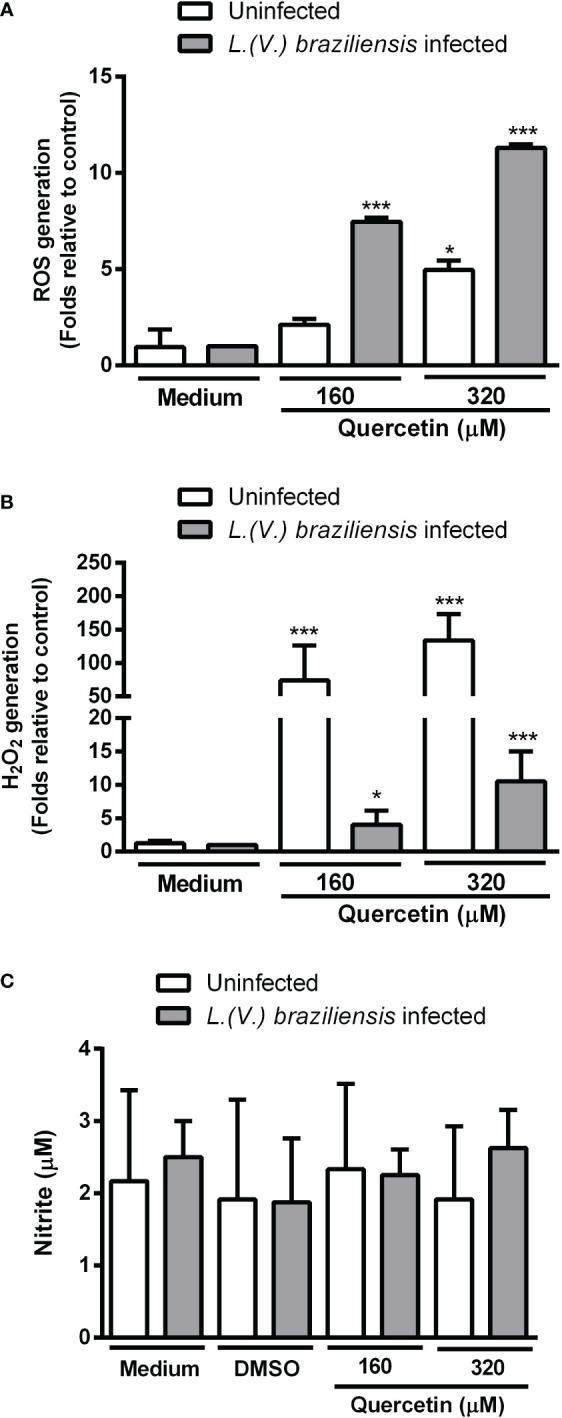
Production of toxic radicals by macrophages. Monolayers of peritoneal macrophages were infected or not with L. (V.) braziliensis and incubated in the presence or absence of quercetin for 48 h. (A) Reactive oxygen species (ROS) generation was measured using the fluorescent probe 2´, 7´-dichlorodihydrofluorescein diacetate, (B) H2O2 was measured by the Amplexred probe. Data were expressed as a fold increase in ROS production relative to control. (C) Nitric oxide production was evaluated by the Griess method and the results expressed as nitrite concentration. The values shown represent the mean ± SD of three independent experiments. *p < 0.05, ***p <0.001 (difference compared to DMSO or medium).
Figure 4
Figure 4
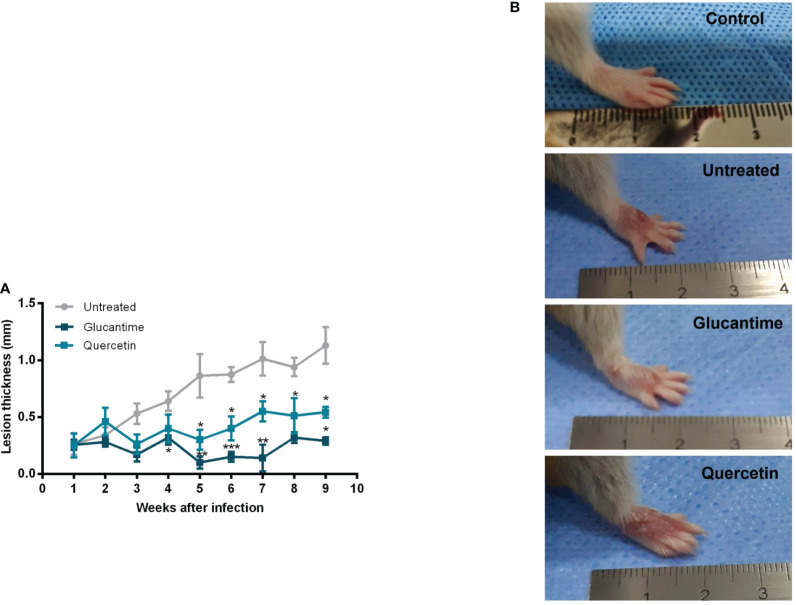
Therapeutic effect of quercetin by the oral route on hamster infected with L. (V.) braziliensis. Hamsters (six-to-eight animals per group) were infected in the dorsal hindpaw with 5 × 10⁶ promastigotes of L. (V.) braziliensis and treated from the seventh day of infection for eight weeks with oral quercetin (20 mg/kg; five times a week) or glucantime (80 mg/kg; three times a week) intraperitoneally. (A) The thickness of the lesions was measured weekly and expressed as mean + standard error. (B) Representative images of the lesion of the animals of each experimental group and of an uninfected animal for reference. These results are representative of two independent experiments. *p < 0.05, **p < 0.01, and ***p < 0.001 (difference compared to the untreated group).
Figure 5
Figure 5
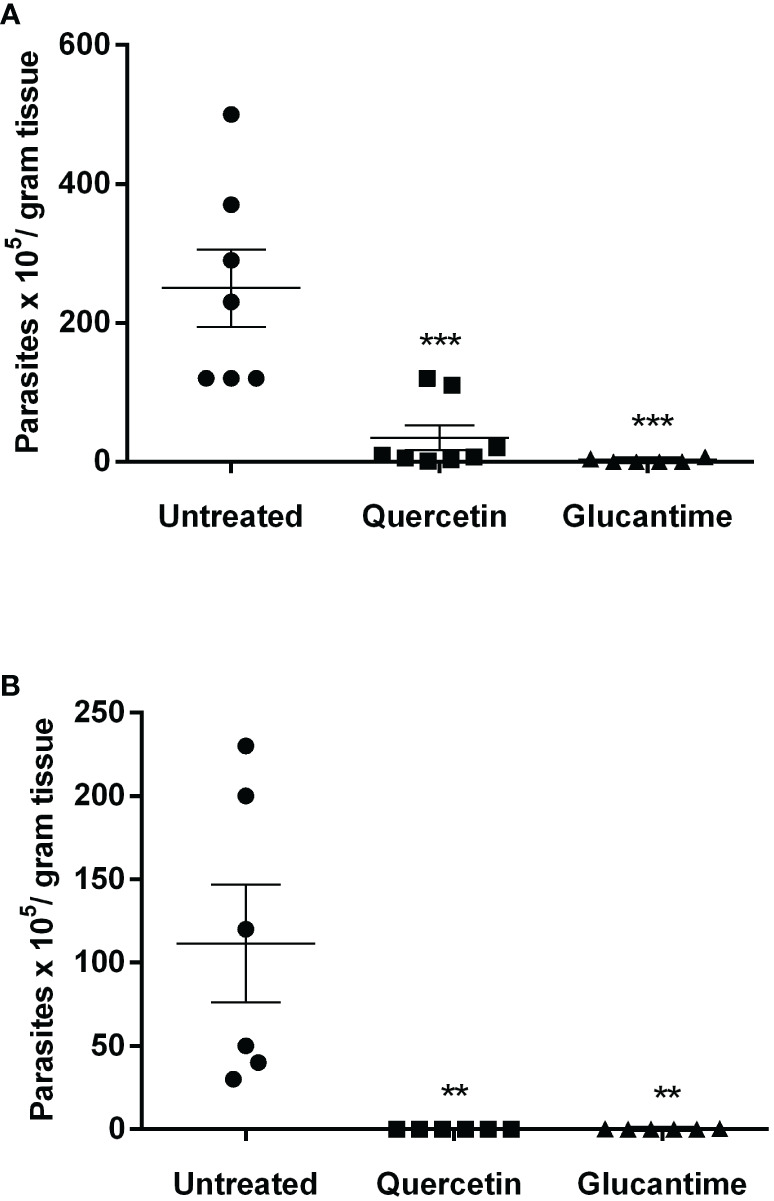
Parasitic load in the lesion and draining lymph nodes. The animals were euthanized, and the parasitic load was determined by the limiting dilution assay in the paw lesion (A) and the draining lymph nodes (B) 1 week after the end of treatment (9 weeks of infection). Each point represents one animal, and the horizontal bars express the mean values. The data are representative of two independent experiments. **p < 0.01, and ***p < 0.001 (difference compared to the untreated group).
Figure 6
Figure 6
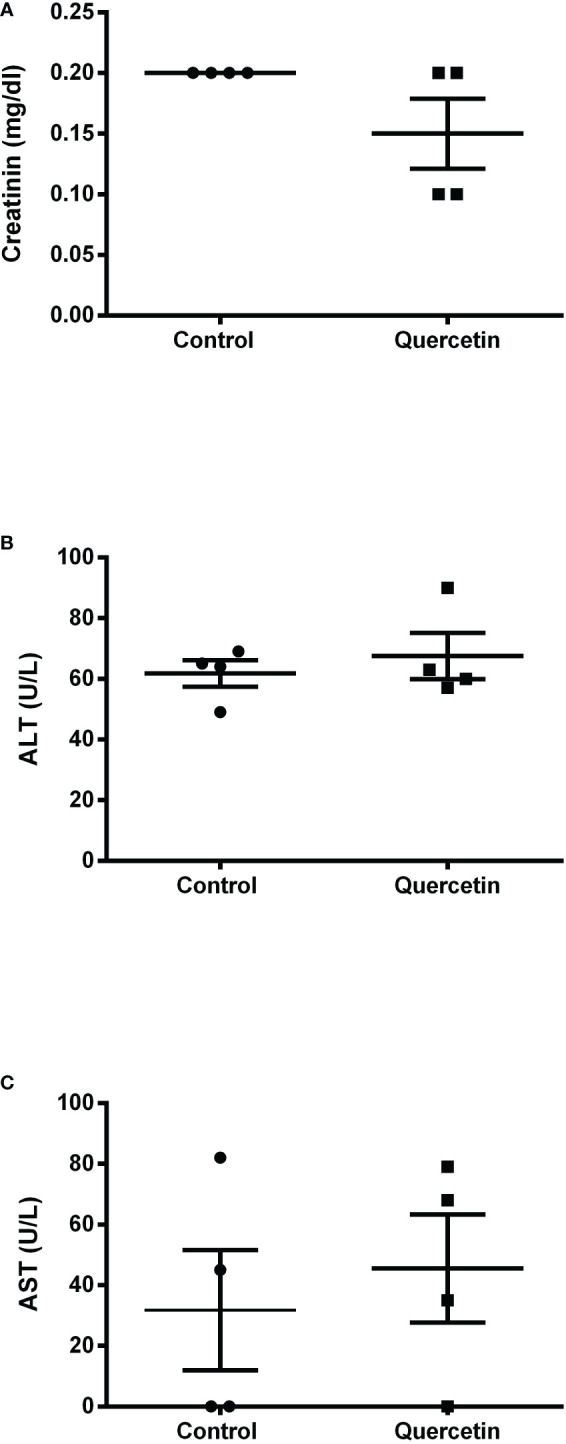
Serum toxicological analysis. At the end of treatment, serum samples were collected from the animals (n = 4) for the colorimetric determination of creatinine (A), alanine transaminase (B) and aspartate transaminase (C) concentrations, as toxicity parameters for the liver and kidneys. Each point represents one animal, and the horizontal bars express the mean values.

References

    1. Abbaszadeh S., Rashidipour M., Khosravi P., Shahryarhesami S., Ashrafi B., Kaviani M., et al. . (2020). Biocompatibility, cytotoxicity, antimicrobial and epigenetic effects of novel chitosan-based quercetin nanohydrogel in human cancer cells. Int. J. Nanomed 15, 5963–5975. doi: 10.2147/IJN.S263013 - DOI - PMC - PubMed
    1. Amato V. S., Tuon F. F., Bacha H. A., Neto V. A., Nicodemo A. C. (2008). Mucosal leishmaniasis. current scenario and prospects for treatment. Acta Trop. 105, 1–9. doi: 10.1016/j.actatropica.2007.08.003 - DOI - PubMed
    1. Anversa L., Tiburcio M. G. S., Richini-Pereira V., Ramirez L. E. (2018). Human leishmaniasis in Brazil: A general review. Rev. Assoc. Med. Bras. 64, 281–289. doi: 10.1590/1806-9282.64.03.281 - DOI - PubMed
    1. Behling E. B., Sendão M. C., Francescato H. D. C., Antunes L. M. G., Bianchi M. D. L. P. (2004). Flavonóide Quercetina : Aspectos gerais e. Alimentos e Nutrição - Braz. J. Food Nutr. 15, 285–292.
    1. Benjamin M., Rall M.J.S., Davis Glen F. (2017). Activity of quercetin and kaemferol against streptococcus mutans biofilm yan. Physiol. Behav. 176, 139–148. doi: 10.1016/j.physbeh.2017.03.040 - DOI - PMC - PubMed

Publication types

LinkOut - more resources