[Preprint]. 2023 Jan 21:2023.01.20.524923.
doi: 10.1101/2023.01.20.524923.

Dasatinib Resensitizes MAPK Inhibitor Efficacy in Standard-of-Care Relapsed Melanomas

Affiliations

Dasatinib Resensitizes MAPK Inhibitor Efficacy in Standard-of-Care Relapsed Melanomas

Vito W Rebecca et al. bioRxiv. .

Abstract

Resistance to combination BRAF/MEK inhibitor (BRAFi/MEKi) therapy arises in nearly every patient with BRAFV600E/K melanoma, despite promising initial responses. Achieving cures in this expanding BRAFi/MEKi-resistant cohort represents one of the greatest challenges to the field; few experience additional durable benefit from immunotherapy and no alternative therapies exist. To better personalize therapy in cancer patients to address therapy relapse, umbrella trials have been initiated whereby genomic sequencing of a panel of potentially actionable targets guide therapy selection for patients; however, the superior efficacy of such approaches remains to be seen. We here test the robustness of the umbrella trial rationale by analyzing relationships between genomic status of a gene and the downstream consequences at the protein level of related pathway, which find poor relationships between mutations, copy number amplification, and protein level. To profile candidate therapeutic strategies that may offer clinical benefit in the context of acquired BRAFi/MEKi resistance, we established a repository of patient-derived xenograft models from heavily pretreated patients with resistance to BRAFi/MEKi and/or immunotherapy (R-PDX). With these R-PDXs, we executed in vivo compound repurposing screens using 11 FDA-approved agents from an NCI-portfolio with pan-RTK, non-RTK and/or PI3K-mTOR specificity. We identify dasatinib as capable of restoring BRAFi/MEKi antitumor efficacy in ~70% of R-PDX tested. A systems-biology analysis indicates elevated baseline protein expression of canonical drivers of therapy resistance (e.g., AXL, YAP, HSP70, phospho-AKT) as predictive of MAPKi/dasatinib sensitivity. We therefore propose that dasatinib-based MAPKi therapy may restore antitumor efficacy in patients that have relapsed to standard-of-care therapy by broadly targeting proteins critical in melanoma therapy escape. Further, we submit that this experimental PDX paradigm could potentially improve preclinical evaluation of therapeutic modalities and augment our ability to identify biomarker-defined patient subsets that may respond to a given clinical trial.


Figures
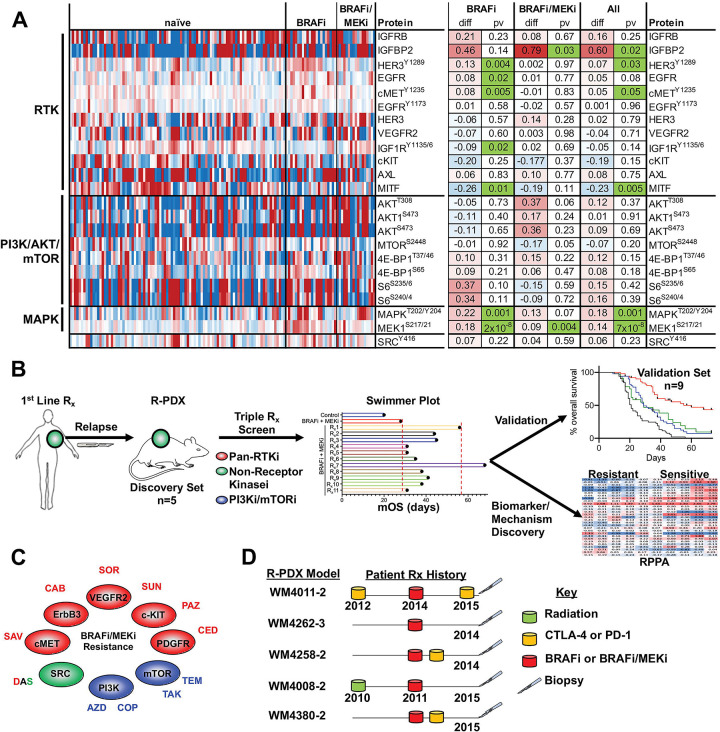
FIGURE 1:
FIGURE 1:. BRAFi/MEKi resistant tumors display elevated RTK/MAPK/PI3K/mTOR activity.
(A) Differential total- and phospho-protein expression analysis between therapy naïve PDX, BRAFi-R PDX and BRAFi/MEKi-R PDX models. (B) Graphical summary of the experimental strategy of this manuscript. (C) Targets of the 11 FDA-approved compounds used in our repurposing screen. (D) Therapy history of the 5 patients whose tumors were used to establish R-PDX that were subsequently screened against 11 BRAFi/MEKi-based triple combinations.
FIGURE 2:
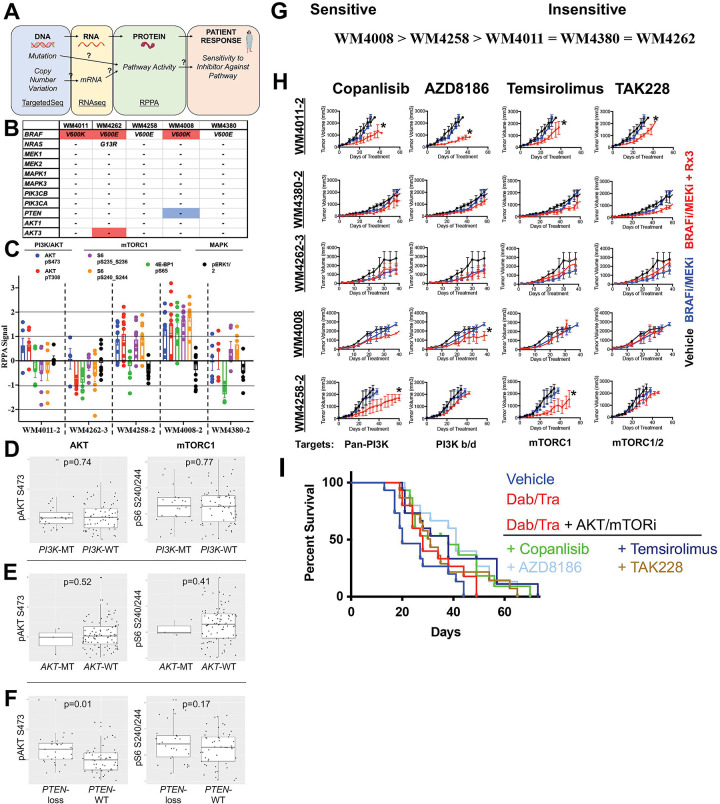
FIGURE 2:. Protein expression nor genetic status of the PI3K/-mTOR pathway robustly predict efficacy of PI3K/mTOR pathway inhibitors.
(A) Schematic for the role of the central dogma theory in clinical practice. “?”s denote assumptions with poor validation in the melanoma literature. (B) Mutational and CNV analysis of PI3K/AKT pathway nodes across the R-PDX models in the discovery screen. (C) RPPA analysis of PI3K/AKT pathway nodes across the R-PDX models in the discovery screen. (D) Analysis of the relationship between AKT/mTOR protein activation status and PI3K mutations (E) AKT mutations, and (F) PTEN copy number loss in cutaneous melanoma patients in the TCGA. (G) Therapy sensitivity prediction analysis based on the unique genomic and/or proteomic signature of each R-PDX and the protein targets of a given agent. (H) Tumor volumes for NSG mice implanted with 1 of the 5 R-PDX organized by row and treated with vehicle (black line), BRAFi/MEKi (blue line), or BRAFi/MEKi plus a third agent (red line) as labeled. (I) Overall survival plots of R-PDX bearing mice treated with the therapies as shown. * signifies p<0.05.
FIGURE 3:
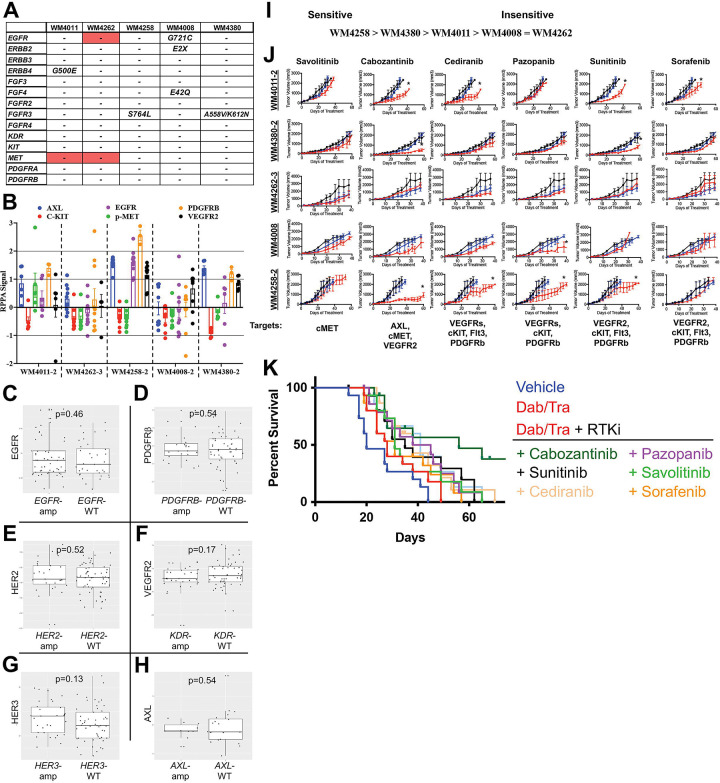
FIGURE 3:. Protein expression, not genetic status, of RTKs partially predicts efficacy of pan-RTK inhibitors.
(A) Mutational and CNV analysis of RTK nodes across the R-PDX models in the discovery screen. (B) RPPA analysis of RTK nodes across the R-PDX models in the discovery screen. (C) Analysis of the relationship between RTK protein expression and gene copy number gains in EGFR, (D) PDGFRβ, (E) HER2, (F) VEGFR2, (G) HER3, (H) AXL. (I) Therapy sensitivity prediction analysis based on the unique genomic and/or proteomic signature of each R-PDX and the protein targets of a given agent. (J) Tumor volumes for NSG mice implanted with 1 of the 5 R-PDX organized by row and treated with vehicle (black line), BRAFi/MEKi (blue line), or BRAFi/MEKi plus a third agent (red line) as labeled. (K) Overall survival plots of R-PDX bearing mice treated with the therapies as shown. * signifies p<0.05.
FIGURE 4:
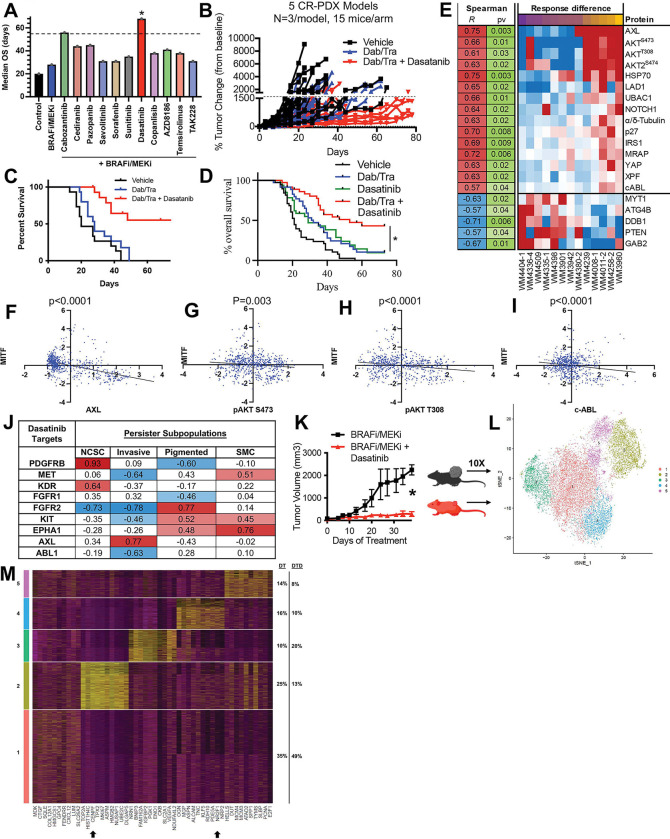
FIGURE 4:. Dasatinib resensitizes R-PDX models with high expression of canonical melanoma therapy resistance mechanisms.
(A) Waterfall plots depicting median overall survival for the R-PDX treated with the 11 BRAFi/MEKi-based triple combinations. (B) Spider plot for discovery set of R-PDX bearing mice treated with vehicle (black line), BRAFi/MEKi (blue line), or BRAFi/MEKi plus dasatinib (red line). (C) Overall survival plots of discovery set of R-PDX bearing mice treated with the therapies as shown. (D) Overall survival plots of expanded validation set of 9 additional R-PDX bearing mice treated as shown. (E) Differential total- and phospho-protein correlation analysis with sensitivity with BRAFi/MEKi plus dasatinib. (F) Paired protein expression analysis of MITF with AXL, (G) phospho-AKT S473, (H) phospho-AKT T308, and (I) c-ABL. (J) Correlation analysis of dasatinib targets and distinct melanoma populations dominant in minimal residual disease in scRNAseq data from melanoma patients (Tirosh et al, Science 2016). (K) NSG mice implanted with the R-PDX WM4258 and treated as shown once tumors were palpable. (L) t-SNE plot of scRNAseq data from WM4258 tumor cells treated in vivo with BRAFi/MEKi plus or minus dasatinib from (K). (M) Top gene markers for melanoma subpopulations that are enriched (clusters 1 and 3) or depleted (clusters 2, 4, and 5) following the addition of dasatinib to BRAFi/MEKi. * signifies p<0.05.

References

    1. Rambow F, Rogiers A, Marin-Bejar O, Aibar S, Femel J, Dewaele M, Karras P, Brown D, Chang YH, Debiec-Rychter M, Adriaens C, Radaelli E, Wolter P, Bechter O, Dummer R, Levesque M, Piris A, Frederick DT, Boland G, Flaherty KT, van den Oord J, Voet T, Aerts S, Lund AW, Marine JC. Toward Minimal Residual Disease-Directed Therapy in Melanoma. Cell. 2018;174(4):843–55.e19. Epub 2018/07/19. doi: 10.1016/j.cell.2018.06.025. - DOI - PubMed
    1. Baron M, Tagore M, Hunter MV, Kim IS, Moncada R, Yan Y, Campbell NR, White RM, Yanai I. The Stress-Like Cancer Cell State Is a Consistent Component of Tumorigenesis. Cell Syst. 2020;11(5):536–46.e7. Epub 2020/09/11. doi: 10.1016/j.cels.2020.08.018. - DOI - PMC - PubMed
    1. Deng W, Gopal YN, Scott A, Chen G, Woodman SE, Davies MA. Role and therapeutic potential of PI3K-mTOR signaling in de novo resistance to BRAF inhibition. Pigment Cell Melanoma Res. 2012;25(2):248–58. Epub 2011/12/17. doi: 10.1111/j.1755-148X.2011.00950.x. - DOI - PubMed
    1. Hirata E, Girotti MR, Viros A, Hooper S, Spencer-Dene B, Matsuda M, Larkin J, Marais R, Sahai E. Intravital imaging reveals how BRAF inhibition generates drug-tolerant microenvironments with high integrin beta1/FAK signaling. Cancer Cell. 2015;27(4):574–88. Epub 2015/04/16. doi: 10.1016/j.ccell.2015.03.008. - DOI - PMC - PubMed
    1. Vultur A, Villanueva J, Krepler C, Rajan G, Chen Q, Xiao M, Li L, Gimotty PA, Wilson M, Hayden J, Keeney F, Nathanson KL, Herlyn M. MEK inhibition affects STAT3 signaling and invasion in human melanoma cell lines. Oncogene. 2014;33(14):1850–61. Epub 2013/04/30. doi: 10.1038/onc.2013.131. - DOI - PMC - PubMed

Publication types