


Prevalence, risk factor and outcome in middle-aged and elderly population affected by hemiplegic shoulder pain: An observational study
- PMID: 36712437
- PMCID: PMC9879055
- DOI: 10.3389/fneur.2022.1041263
Prevalence, risk factor and outcome in middle-aged and elderly population affected by hemiplegic shoulder pain: An observational study
Abstract
Background: Hemiplegic shoulder pain is the most common complication after stroke. It usually occurs during the critical period of stroke recovery and hinders the rehabilitation of upper extremity motor function. However, there are few studies on the risk factors, the development and prognosis of shoulder pain after stroke.
Objectives: This study aimed to observe the prevalence of post-stroke shoulder pain in the middle-aged and elderly population, find out the risk factors for post-stroke shoulder pain, and explore its effect on stroke outcome.
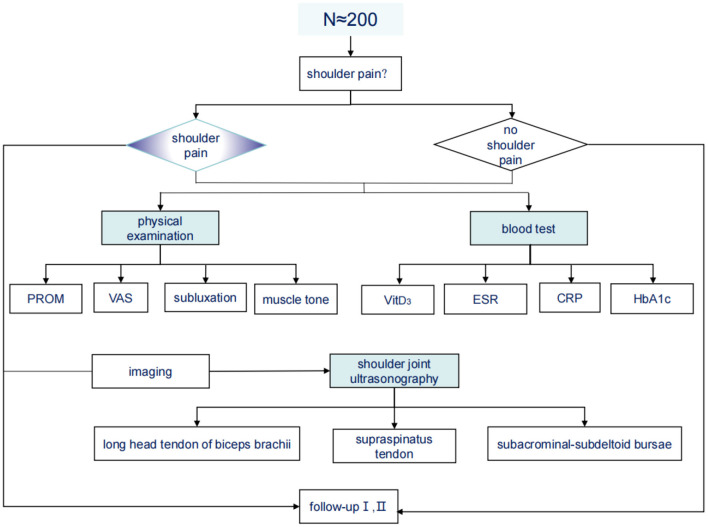
Methods: Eligible patients with hemiplegic shoulder pain in the rehabilitation unit were recruited and followed up at 2 and 4 months. The basic clinical information including age, gender, hypertension and atrial fibrillation history, stroke types, stroke location was recorded. Range of motion for shoulder, glenohumeral subluxation, muscle tension, activity of daily living of upper limb were measured. Data from blood test and shoulder ultrasonography were collected.
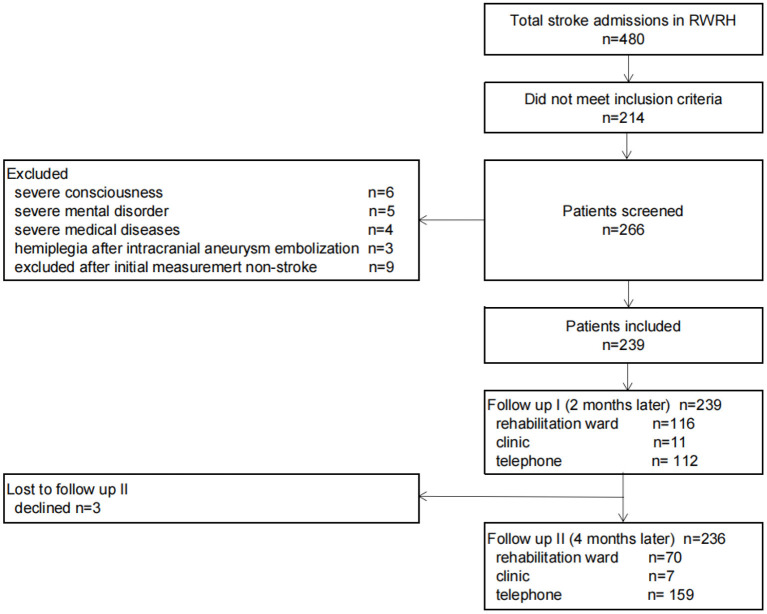
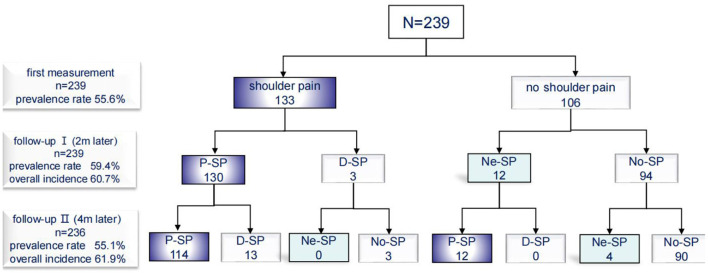
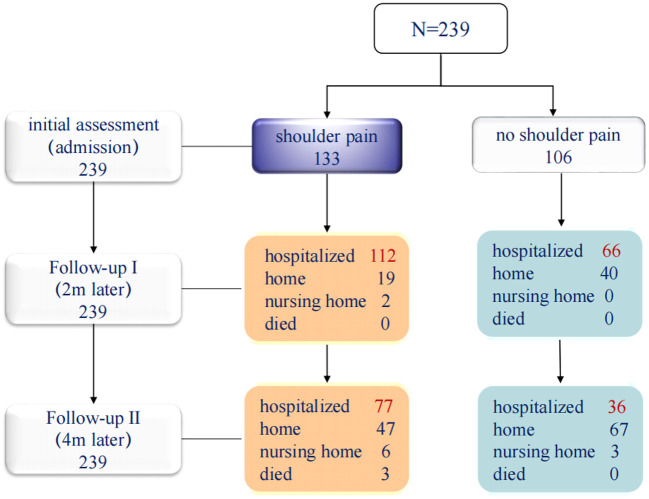
Results: 480 stroke patients were screened within 1 year, and 239 patients were included in the statistical analysis. The prevalence of hemiplegic shoulder pain was 55.6% (133/239) at admission, 59.4% (142/239) after 2 months, and 55.1% (130/236) after 4 months. We found that shoulder pain was more likely to occur in women, patients with large-area stroke, increased tension of biceps brachii or triceps brachii, subluxation and limited passive range of motion of the shoulder. And the ability of daily living of patients with shoulder pain was significantly lower than that of patients without shoulder pain. Shoulder ultrasonography showed that the most common lesion in patients with shoulder pain was supraspinatus tendon thickening, and the thickness of supraspinatus tendon in the hemiplegic side of patients with shoulder pain was significantly higher than that of unaffected side. In addition, the hospitalization rate of patients with shoulder pain after 2 months and 4 months was significantly higher than that without shoulder pain.
Conclusions: Hemiplegic shoulder pain has a high prevalence and can last for several months. Multiple risk factors are involved. Moreover, hemiplegic shoulder pain affects the readmission rate of patients. Therefore, we should pay more attention to this problem in our clinical work. The application of various means to relieve shoulder pain will be conducive to the recovery of upper limb motor function and shorten the in-hospital rehabilitation time.
Keywords: functional outcomes; hemiplegic shoulder pain; rehabilitation; risk factors; stroke.
Copyright © 2023 Li, Yang, Cui, Bao, Gu, Pan, Wang and Xie.
Conflict of interest statement
The authors declare that the research was conducted in the absence of any commercial or financial relationships that could be construed as a potential conflict of interest.
Figures
References
LinkOut - more resources
Full Text Sources
