


Antibody titer levels and the effect on subsequent SARS-CoV-2 infection in a large US-based cohort
- PMID: 36712916
- PMCID: PMC9862663
- DOI: 10.1016/j.heliyon.2023.e13103
Antibody titer levels and the effect on subsequent SARS-CoV-2 infection in a large US-based cohort
Abstract
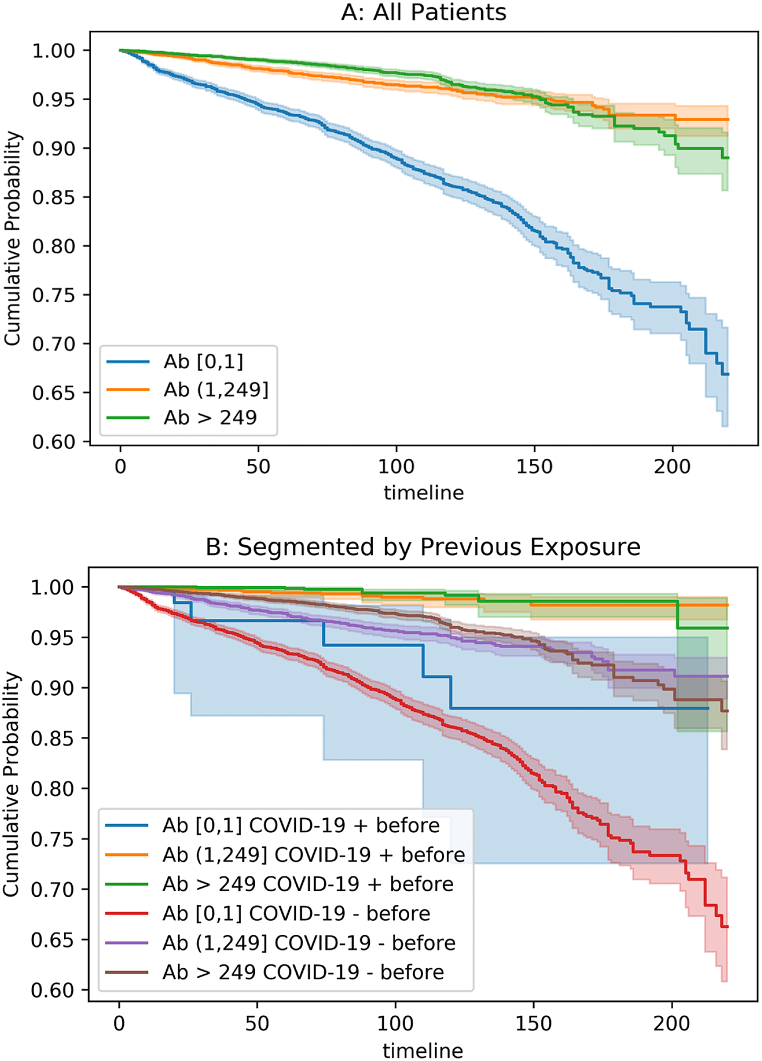
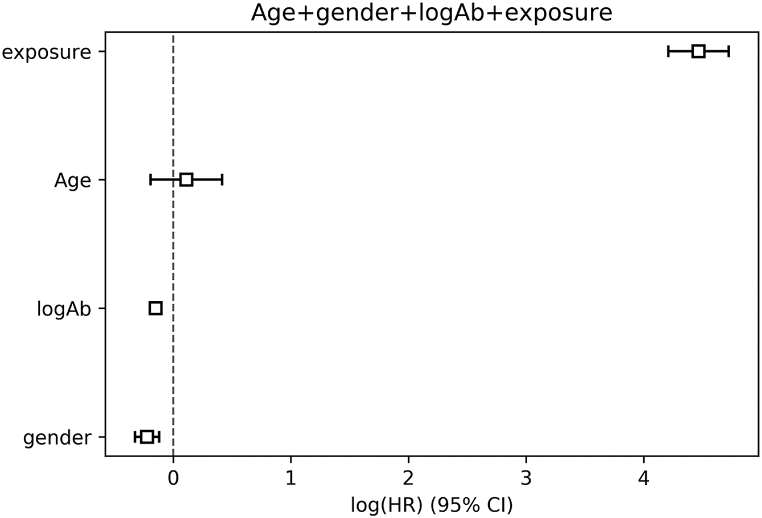
Despite a growing amount of data around the kinetics and durability of the antibody response induced by vaccination and previous infection, there is little understanding of whether or not a given quantitative level of antibodies correlates to protection against SARS-CoV-2 infection or reinfection. In this study, we examine SARS-CoV-2 anti-spike receptor binding domain (RBD) antibody titers and subsequent SARS-CoV-2 reverse transcription polymerase chain reaction (RT-PCR) tests in a large cohort of US-based patients. We analyzed antibody test results in a cohort of 22,204 individuals, 6.8% (n = 1,509) of whom eventually tested positive for SARS-CoV-2 RNA, suggesting infection or reinfection. Kaplan-Meier curves were plotted to understand the effect of various levels of anti-spike RBD antibody titers (classified into discrete ranges) on subsequent RT-PCR positivity rates. Statistical analyses included fitting a Cox proportional hazards model to estimate the age-, sex- and exposure-adjusted hazard ratios for S antibody titer, using zip-code positivity rates by week as a proxy for COVID-19 exposure. It was found that the best models of the temporally associated infection risk were those based on log antibody titer level (HR = 0.836 (p < 0.05)). When titers were binned, the hazard ratio associated with antibody titer >250 Binding Antibody Units (BAU) was 0.27 (p < 0.05, 95% CI [0.18, 0.41]), while the hazard ratio associated with previous infection was 0.20 (p < 0.05, 95% CI [0.10, 0.39]). Fisher exact odds ratio (OR) for Ab titers <250 BAU showed OR = 2.84 (p < 0.05; 95% CI: [2.30, 3.53]) for predicting the outcome of a subsequent PCR test. Antibody titer levels correlate with protection against subsequent SARS-CoV-2 infection or reinfection when examining a cohort of real-world patients who had the spike RBD antibody assay performed.
Keywords: AUC, Area Under the Curve; Antibody; BAU, Binding Antibody Units; COVID-19; HR, Hazard Ratio; IQR, Interquartile Range; Nucleocapsid; OR, Odds Ratio; RBD, Receptor Binding Domain; ROC, Receiver operating characteristic; RT-PCR, Reverse Transcription Polymerase Chain Reaction; SARS-CoV-2; Seroprevalence; Spike.
© 2023 The Authors.
Conflict of interest statement
The authors declare no conflict of interest.
Figures
References
LinkOut - more resources
Full Text Sources
Miscellaneous
