


Trends in contraceptive method mix among adolescents and youth aged 15-24 in low- and middle-income countries
- PMID: 36713979
- PMCID: PMC9875564
- DOI: 10.3389/fgwh.2022.1061648
Trends in contraceptive method mix among adolescents and youth aged 15-24 in low- and middle-income countries
Abstract
Background: Method mix - the percent distribution of contraceptive use by method among contraceptive users - reflects both client choice of method and method availability. In a country where clients have access to a wide range of methods at an affordable price, method mix is a strong proxy for method choice. In contrast, where access is limited by numerous factors - method availability, cost, or provider attitudes - method mix may not capture method choice well. Given that method mix can be measured reliably from population-based surveys, it is useful in exploring method choice. While the method mix for all women of reproductive age (15-49 years) has been described previously, the method mix for adolescents and young women aged 15-24 remains unexplored despite this population's high risk for unintended pregnancy.
Objectives: This study investigates the contraceptive method mix for women aged 15-24 in low- and middle-income countries (LMICs) with national survey data and describes how the method mix differs by age group, geographic region, and marital status for women.
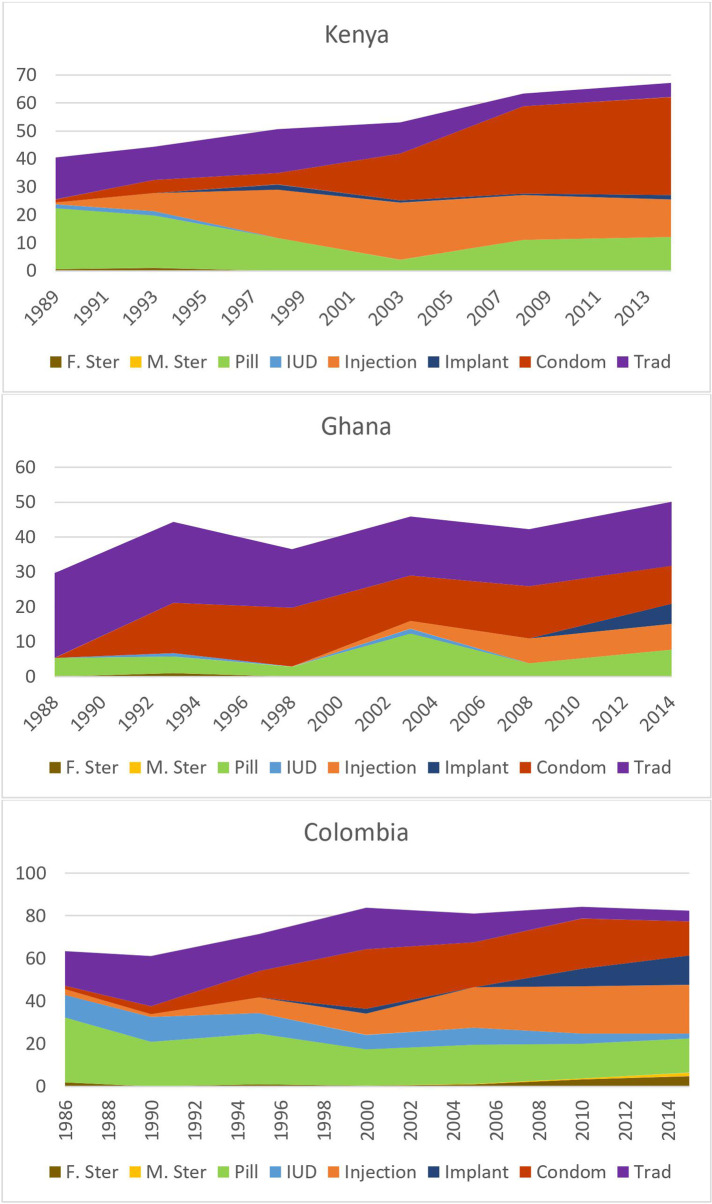
Methods: Using data from the Demographic and Health (DHS) Surveys, the contraceptive method mix among women aged 15-24 across 64 LMICs is analyzed by age, marital status, and region, with measures of skew and average deviation. Three case studies are presented in which the trend over time in the method mix is examined.
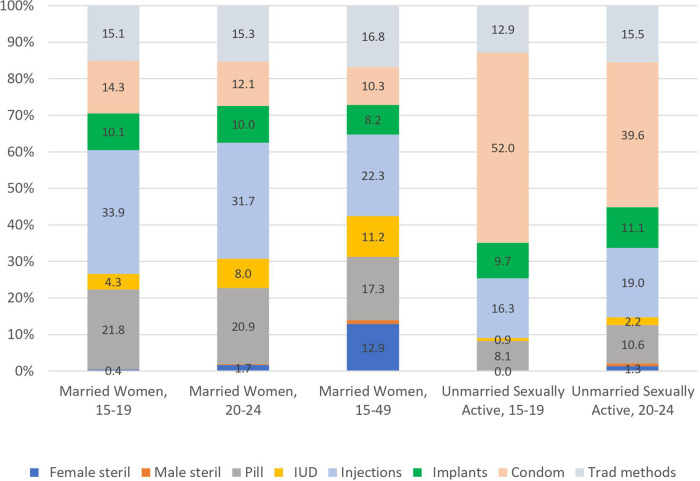
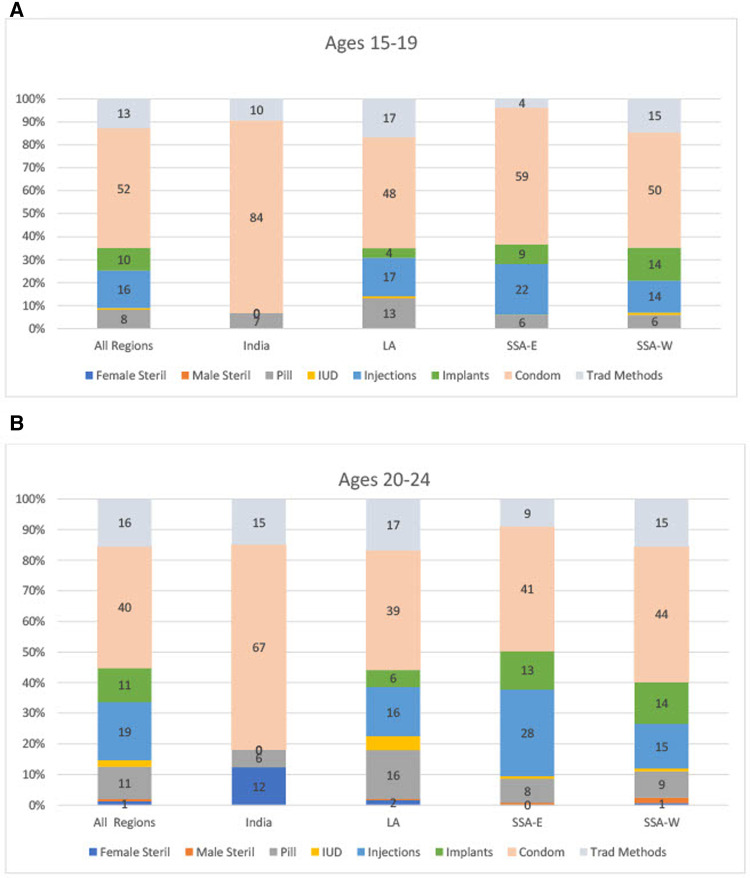
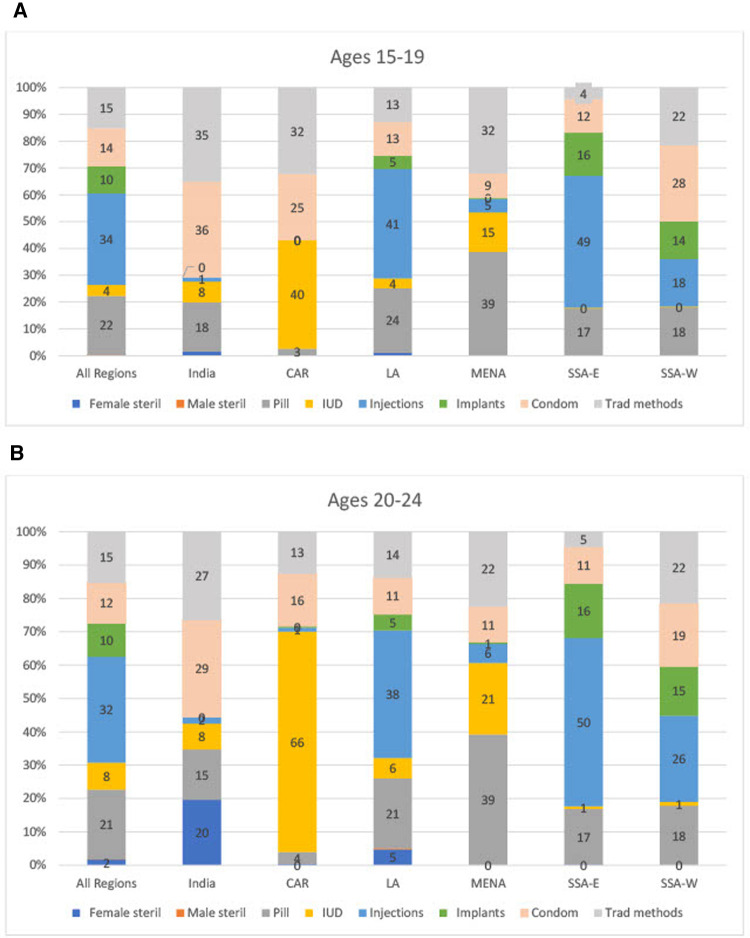
Results: There are large variations in method mixes across regions, which reflect their differences in various supply and demand constraints. However, there is consistently high usage of short-acting methods among both age groups, 15-19 and 20-24, compared to the full population of all women of reproductive age. Male condoms overwhelmingly predominate as the method used by women 15-24 in all regions.
Conclusion: The marked differences found by marital status, region, and age show the need for programs to be tailored to local circumstances. Additionally, the large unmet need for contraception signals the ongoing urgency for strengthened programmatic efforts, and for a wider offering of methods to enlarge the choices available to young women. Unmarried women in particular deserve attention, as well as young married women who wish to postpone a pregnancy.
Keywords: adolescents; family planning; method choice; method mix; method skew; youth.
© 2023 Bertrand, Ross and Sauter.
Conflict of interest statement
JR received consultancy fees from Avenir Health. The remaining authors declare that the research was conducted in the absence of any commercial or financial relationships that could be construed as a potential conflict of interest.
Figures
References
-
- USAID. GH/PRH Priorities for 2014–2020. United States Agency for International Development (USAID); (2014).
-
- Yeakey MP, Gilles KP. EXPANDING CONTRACEPTIVE METHOD CHOICE FOR SUCCESSFUL FAMILY PLANNING PROGRAMS. Population Reference Bureau; Available at: https://thepaceproject.org/wp-content/uploads/2018/03/PRB-_PolicyBrief_M...
-
- Vernon R. Increasing women's use of the IUD for family planning. Population Council; 2008 [cited 2022 Aug 15]. Available at: https://knowledgecommons.popcouncil.org/departments_sbsr-rh/1267
LinkOut - more resources
Full Text Sources
