


Computer analysis of regulation of hepatocarcinoma marker genes hypermethylated by HCV proteins
- PMID: 36714033
- PMCID: PMC9840909
- DOI: 10.18699/VJGB-22-89
Computer analysis of regulation of hepatocarcinoma marker genes hypermethylated by HCV proteins
Abstract
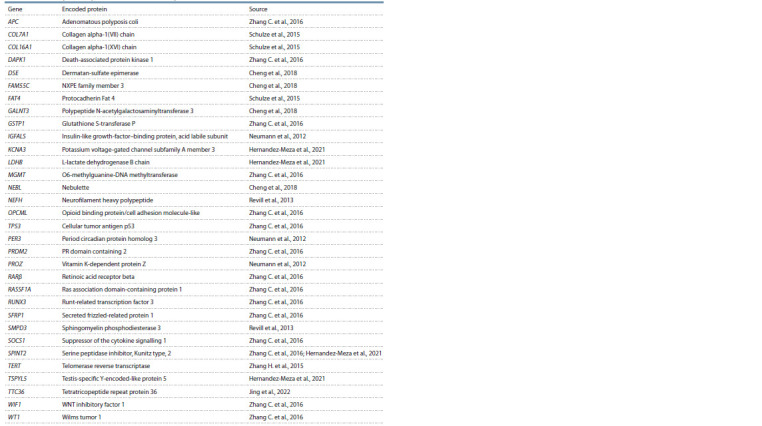
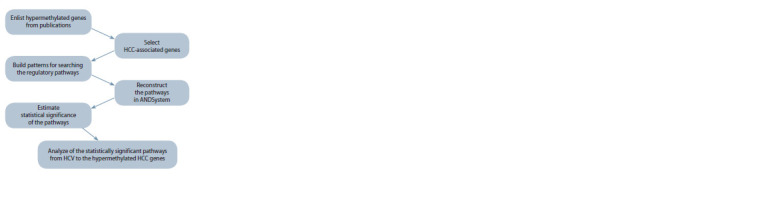
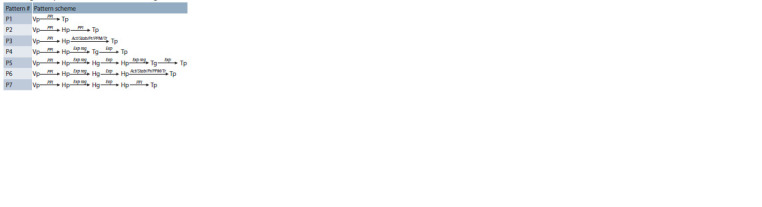
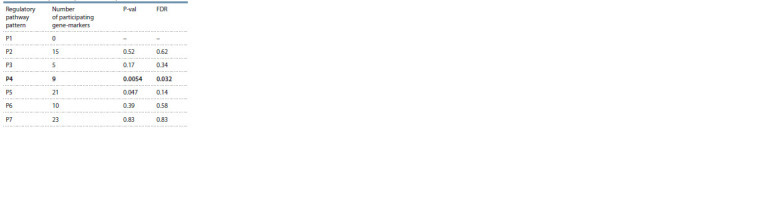
Hepatitis C virus (HCV) is a risk factor that leads to hepatocellular carcinoma (HCC) development. Epigenetic changes are known to play an important role in the molecular genetic mechanisms of virus-induced oncogenesis. Aberrant DNA methylation is a mediator of epigenetic changes that are closely associated with the HCC pathogenesis and considered a biomarker for its early diagnosis. The ANDSystem software package was used to reconstruct and evaluate the statistical significance of the pathways HCV could potentially use to regulate 32 hypermethylated genes in HCC, including both oncosuppressor and protumorigenic ones identified by genome-wide analysis of DNA methylation. The reconstructed pathways included those affecting protein-protein interactions (PPI), gene expression, protein activity, stability, and transport regulations, the expression regulation pathways being statistically significant. It has been shown that 8 out of 10 HCV proteins were involved in these pathways, the HCV NS3 protein being implicated in the largest number of regulatory pathways. NS3 was associated with the regulation of 5 tumor-suppressor genes, which may be the evidence of its central role in HCC pathogenesis. Analysis of the reconstructed pathways has demonstrated that following the transcription factor inhibition caused by binding to viral proteins, the expression of a number of oncosuppressors (WT1, MGMT, SOCS1, P53) was suppressed, while the expression of others (RASF1, RUNX3, WIF1, DAPK1) was activated. Thus, the performed gene-network reconstruction has shown that HCV proteins can influence not only the methylation status of oncosuppressor genes, but also their transcriptional regulation. The results obtained can be used in the search for pharmacological targets to develop new drugs against HCV-induced HCC.
Вирус гепатита С (ВГС) считается фактором риска для возникновения гепатоцеллюлярной карциномы (ГЦК). Известно, что большую роль в молекулярно-генетических механизмах вирус-индуцированного онкогенеза играют эпигенетические изменения. Аберрантное метилирование ДНК служит медиатором эпигенетических изменений, которые тесно связаны с патогенезом ГЦК, и признано биомаркером для его ранней диагностики. С помощью ANDSystem проведены реконструкция и оценка статистической значимости путей потенциальной регуляции вирусными белками ВГС 32 генов человека, гиперметилированных при ГЦК. Среди исследованных генов были как онкосупрессоры, так и проопухолевые гены, идентифицированных по данным полногеномного анализа метилирования ДНК. Реконструированы регуляторные пути, включающие белок-белковые взаимодействия, регуляцию экспрессии генов, регуляцию активности, стабильности и транспорта белков. Среди статистически значимых оказались пути регуляции экспрессии. Показано, что восемь из десяти белков ВГС являются участниками данных путей. Белок ВГС NS3 был вовлечен в наибольшее число регуляторных путей. NS3 связан с регуляцией пяти генов-онкосупрессоров, что может свидетельствовать о его центральной роли в патогенезе ГЦК. Анализ реконструированных путей показал, что при ингибировании транскрипционных факторов в результате связывания с вирусными белками, экспрессия ряда онкосупрессоров (WT1, MGMT, SOCS1, P53) подавлялась, тогда как экспрессия других (RASF1, RUNX3, WIF1, DAPK1) активировалась. Таким образом, с помощью реконструкции генных сетей показано, что вирусные белки гепатита С способны влиять не только на статус метилирования генов-онкосупрессоров, но и на их транскрипционную регуляцию. Полученные результаты могут быть использованы при поиске фармакологических мишеней для разработки новых средств против ГЦК, индуцированной ВГС.
Keywords: bioinformatics; expression regulation; gene networks; hepatitis C virus; hepatocellular carcinoma; methylation; regulatory pathways.
Copyright © AUTHORS.
Figures
LinkOut - more resources
Full Text Sources
Research Materials
Miscellaneous