


Optimizing Surgeon Well-Being: A Review and Synthesis of Best Practices
- PMID: 36714393
- PMCID: PMC9872854
- DOI: 10.1097/AS9.0000000000000029
Optimizing Surgeon Well-Being: A Review and Synthesis of Best Practices
Abstract
Through a systematic review and mixed-methods meta-synthesis of the existing literature on surgeon well-being, we sought to identify the specific elements of surgeon well-being, examine factors associated with suboptimal well-being, and highlight opportunities to promote well-being.
Background: Suboptimal surgeon well-being has lasting and substantial impacts to the individual surgeon, patients, and to society as a whole. However, most of the existing literature focuses on only 1 aspect of well-being-burnout. While undoubtedly a crucial component of overall well-being, the mere absence of burnout does not fully consider the complexities of being a surgeon.
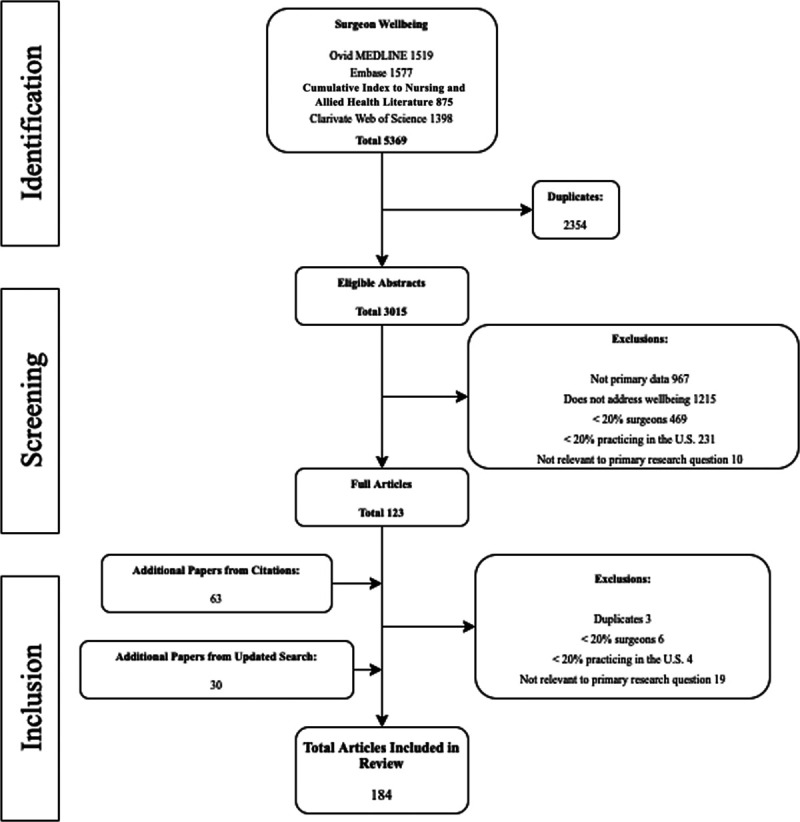
Methods: We performed a literature search within Ovid Medline, Elsevier Excerpta Medica dataBASE, EBSCOhost Cumulative Index to Nursing and Allied Health Literature, and Clarivate Web of Science from inception to May 7, 2020, in accordance with Preferred Reporting Items for Systematic Reviews and Meta-Analyses guidelines. Studies with primary data examining surgeon well-being were included. Using a predetermined instrument, data were abstracted from each study and compared using thematic analysis.
Results: A total of 5369 abstracts were identified and screened, with 184 full articles (172 quantitative, 3 qualitative, 9 mixed methods) selected for analysis. Among these, 91 articles measured burnout, 82 examined career satisfaction, 95 examined work-related stressors, 44 explored relationships and families, and 85 assessed emotional and physical health. Thematic analysis revealed 4 themes: professional components, personal components, work-life balance, and impacts to well-being.
Conclusions: Surgeon well-being is complex and multifaceted. This nuanced examination of surgeon well-being highlights the critical need to develop and provide more long-term support to surgeons-with interventions being tailored based on individual, institutional, and systemic factors.
Keywords: surgeon burnout; surgeon career satisfaction; surgeon well-being.
Copyright © 2021 The Author(s). Published by Wolters Kluwer Health, Inc.
Conflict of interest statement
Disclosure: The authors declare that they have nothing to disclose.
Figures


References
-
- Brigham T, Barden C, Legreid Dopp A, et al. A Journey to Construct an All-Encompassing Conceptual Model of Factors Affecting Clinician Well-Being and Resilience. 2018. National Academy of Medicine. Available at: https://nam.edu/journey-construct-encompassing-conceptual-model-factors-.... Accessed September 5, 2020
-
- Sargent MC, Sotile W, Sotile MO, et al. Quality of life during orthopaedic training and academic practice. Part 1: orthopaedic surgery residents and faculty. J Bone Joint Surg Am. 2009; 91:2395–2405 - PubMed
-
- Firth-Cozens J, Greenhalgh J.Doctors’ perceptions of the links between stress and lowered clinical care. Soc Sci Med. 1997; 44:1017–1022 - PubMed
-
- Shanafelt TD, Bradley KA, Wipf JE, et al. Burnout and self-reported patient care in an internal medicine residency program. Ann Intern Med. 2002; 136:358–367 - PubMed
-
- Maher Z, Milner R, Cripe J, et al. Stress training for the surgical resident. Am J Surg. 2013; 205:169–174 - PubMed
Grants and funding
LinkOut - more resources
Full Text Sources
