Estimating the Number of Men Living with Metastatic Prostate Cancer in the United States
- PMID: 36716178
- PMCID: PMC10159917
- DOI: 10.1158/1055-9965.EPI-22-1038
Estimating the Number of Men Living with Metastatic Prostate Cancer in the United States
Abstract
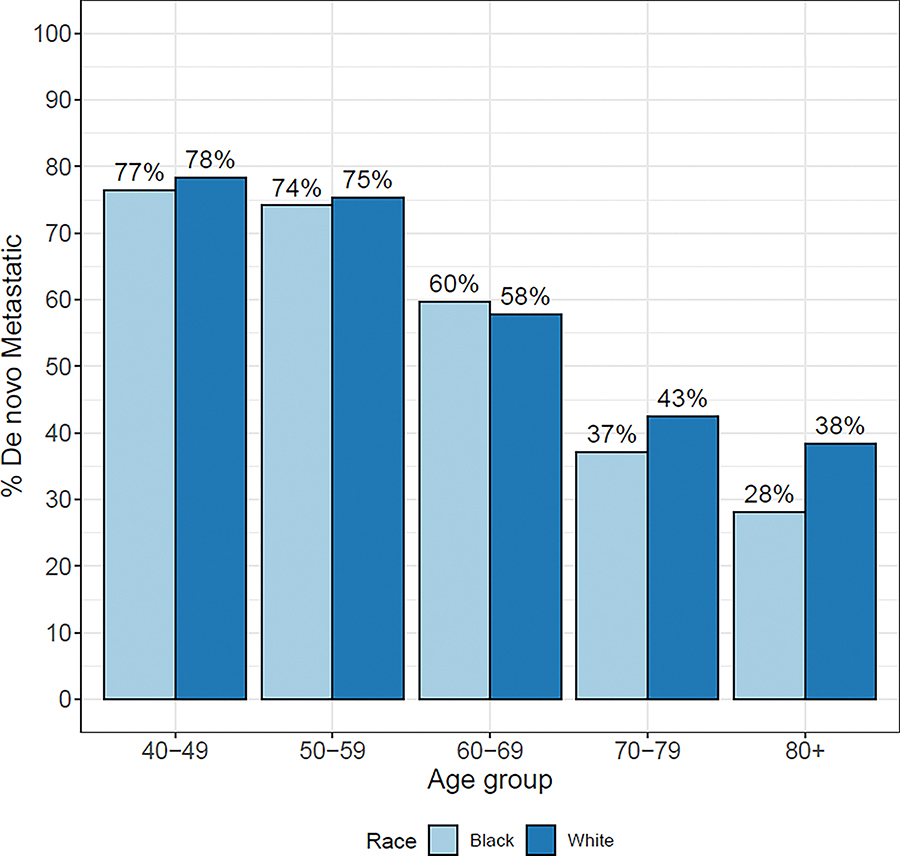
Background: Metastatic prostate cancer (MPC) includes metastases detected at diagnosis (de novo) and those occurring after diagnosis with early-stage disease (recurrent). Cancer registries collect data only on de novo MPC, providing a partial picture of the burden of MPC. We use cancer registry data to estimate the number of men living with MPC in the United States including both de novo and recurrent cases.
Methods: We apply a back-calculation method to estimate MPC incidence and prevalence from U.S. prostate cancer mortality and de novo MPC relative survival for cases diagnosed between 2000 and 2017 in 18 Surveillance, Epidemiology, and End Results registries. We hold overall prostate cancer mortality and MPC survival constant for future prevalence projections.
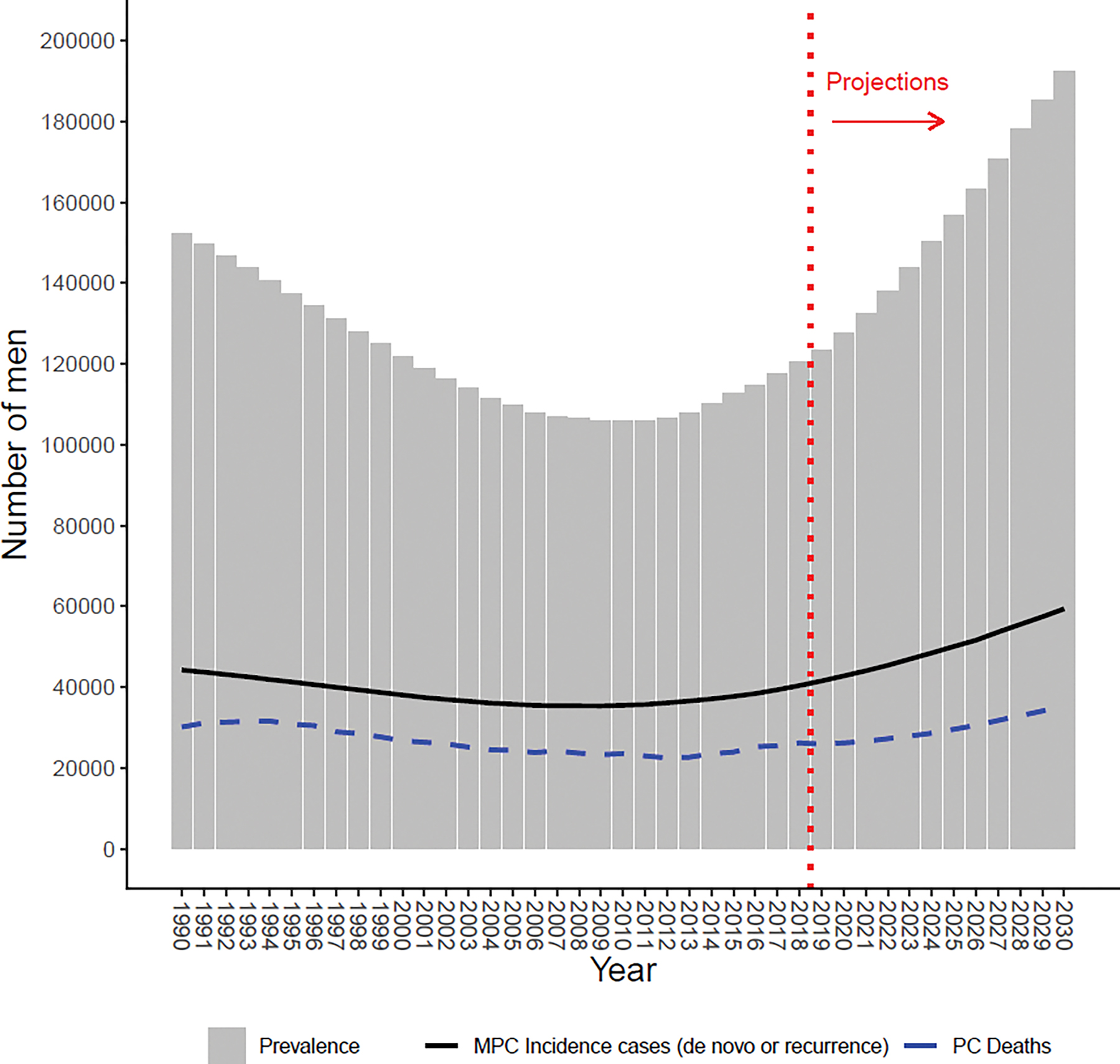
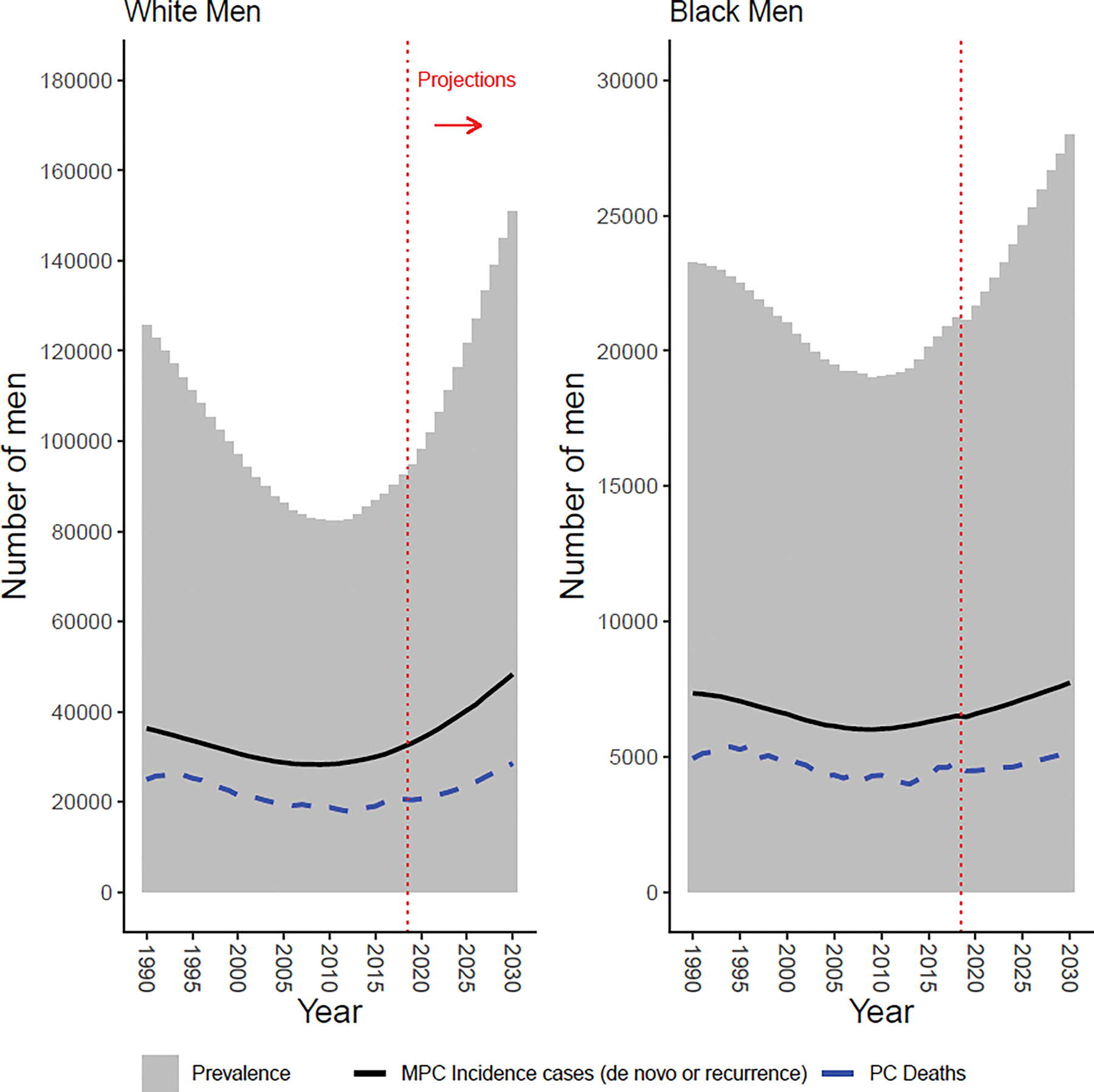
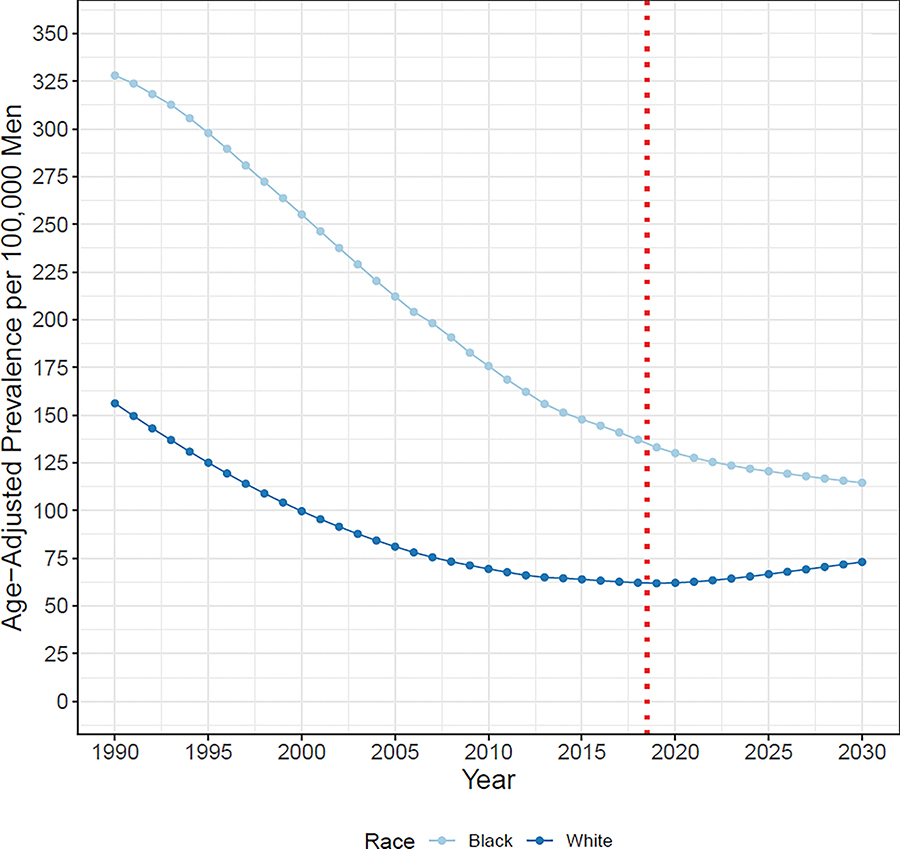
Results: On January 1, 2018, we estimated 120,400 U.S. men living with MPC (45% de novo, 55% recurrent). The age-adjusted prevalence in 2018 for Black men was over double that of White men (137.1 vs. 62.2 per 100,000 men). By 2030, 192,500 men are expected to be living with MPC, with the increase being driven by population growth projections.
Conclusions: The number of men living with MPC in the United States exceeds 100,000 and represents a small fraction of the >3 million men living with a prior diagnosis of prostate cancer.
Impact: Relatively similar fractions of de novo and recurrent MPC among prevalent cases highlight opportunities for management of localized disease in reducing the MPC burden. Changes in diagnostic technologies could lead to greater growth in MPC cases in the United States than projected. See related commentary by Stopsack et al., p. 585.
©2023 American Association for Cancer Research.
Conflict of interest statement
Figures
Comment in
-
The Imperative for Population-based Cancer Registration of All Metastatic Cancers.Cancer Epidemiol Biomarkers Prev. 2023 May 1;32(5):585-587. doi: 10.1158/1055-9965.EPI-23-0115. Cancer Epidemiol Biomarkers Prev. 2023. PMID: 37125486
References
-
- SEER*Explorer: An interactive website for SEER cancer statistics [Internet]. Surveillance Research Program, National Cancer Institute. [Cited 2021 September 27]. Available from https://seer.cancer.gov/statistics-network/explorer/.
Publication types
MeSH terms
Grants and funding
LinkOut - more resources
Full Text Sources
Medical