


The Sapap3-/- mouse reconsidered as a comorbid model expressing a spectrum of pathological repetitive behaviours
- PMID: 36717540
- PMCID: PMC9886949
- DOI: 10.1038/s41398-023-02323-7
The Sapap3-/- mouse reconsidered as a comorbid model expressing a spectrum of pathological repetitive behaviours
Abstract
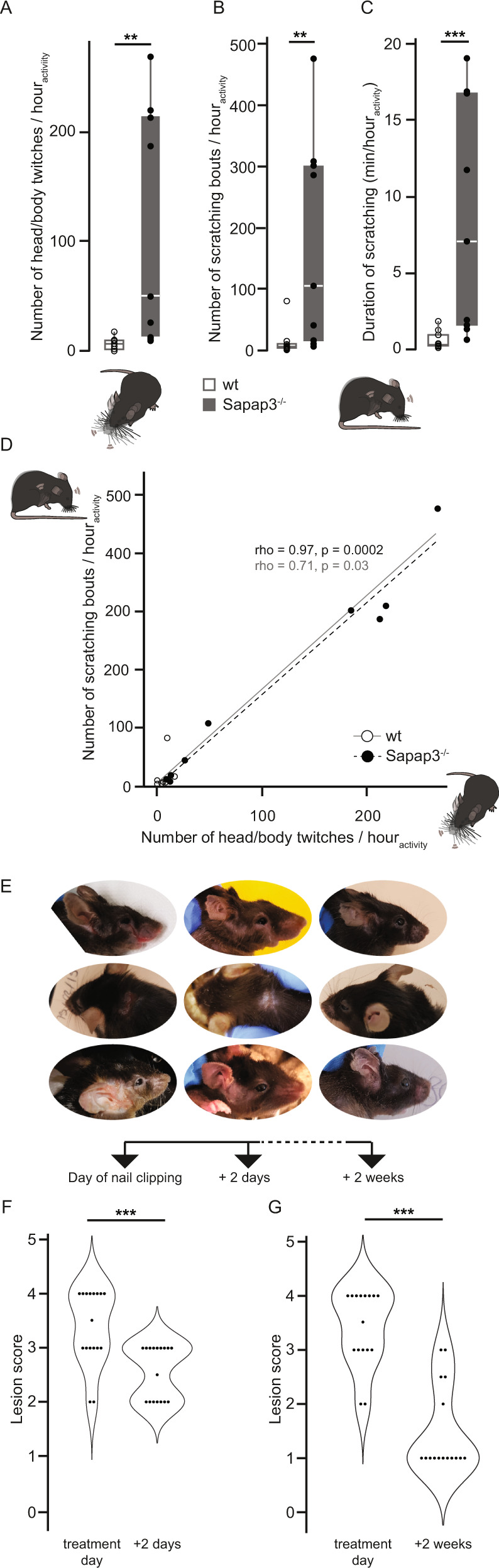
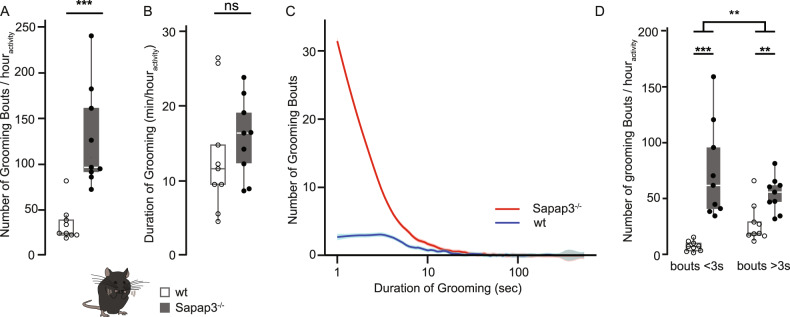
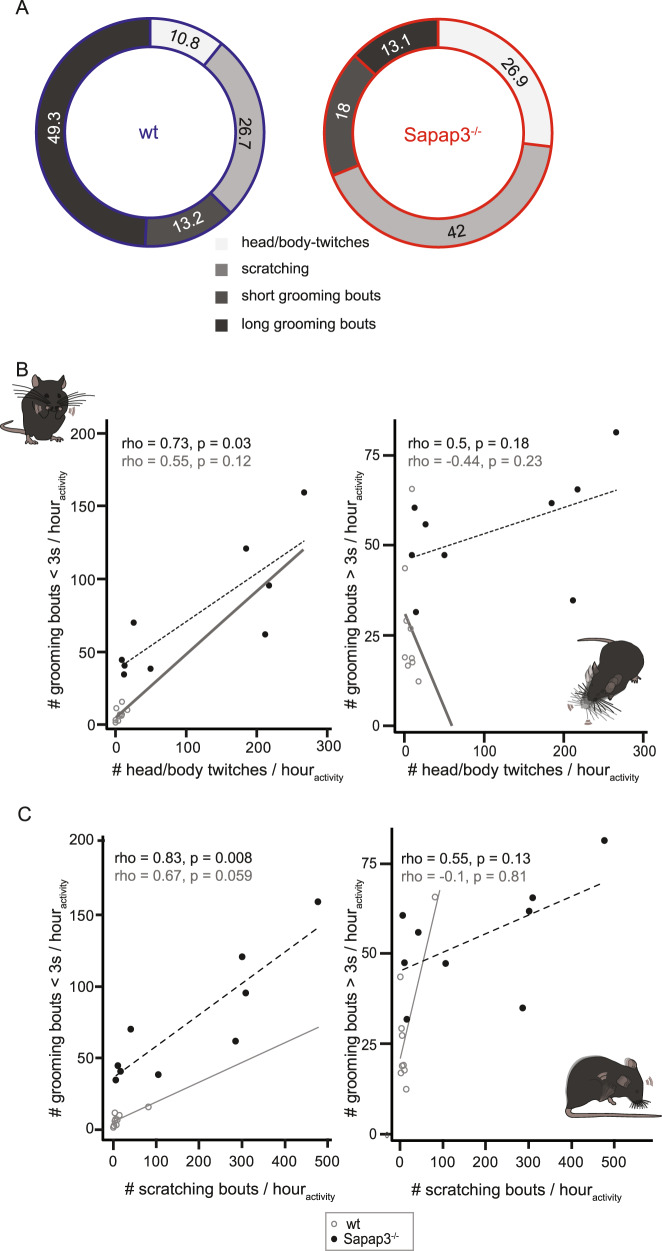
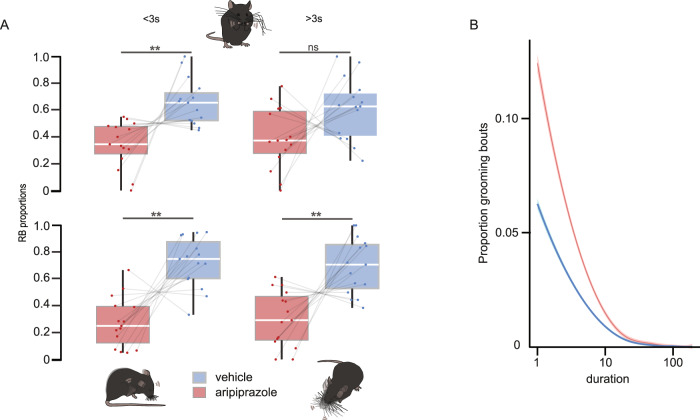
Symptom comorbidity is present amongst neuropsychiatric disorders with repetitive behaviours, complicating clinical diagnosis and impeding appropriate treatments. This is of particular importance for obsessive-compulsive disorder (OCD) and Tourette syndrome. Here, we meticulously analysed the behaviour of Sapap3 knockout mice, the recent rodent model predominantly used to study compulsive-like behaviours, and found that its behaviour is more complex than originally and persistently described. Indeed, we detected previously unreported elements of distinct pathologically repetitive behaviours, which do not form part of rodent syntactic cephalo-caudal self-grooming. These repetitive behaviours include sudden, rapid body and head/body twitches, resembling tic-like movements. We also observed that another type of repetitive behaviour, aberrant hindpaw scratching, might be responsible for the flagship-like skin lesions of this mouse model. In order to characterise the symptomatological nature of observed repetitive behaviours, we pharmacologically challenged these phenotypes by systemic aripiprazole administration, a first-line treatment for tic-like symptoms in Tourette syndrome and trichotillomania. A single treatment of aripiprazole significantly reduced the number of head/body twitches, scratching, and single-phase grooming, but not syntactic grooming events. These observations are in line with the high comorbidity of tic- and compulsive-like symptoms in Tourette, OCD and trichotillomania patients.
© 2023. The Author(s).
Conflict of interest statement
The authors declare no competing interests.
Figures
References
-
- Freeman RD, Soltanifar A, Baer S. Stereotypic movement disorder: easily missed. Dev Med Child Neurol. 2010;52:733–8. - PubMed
-
- Jiujias M, Kelley E, Hall L. Restricted, repetitive behaviors in autism spectrum disorder and obsessive–compulsive disorder: a comparative review. Child Psychiatry Hum Dev. 2017;48:944–59. - PubMed
-
- American Psychiatric Association, American Psychiatric Association (editors). Diagnostic and statistical manual of mental disorders: DSM-5. 5th ed. Washington, DC: American Psychiatric Association; 2013.
Publication types
MeSH terms
Substances
LinkOut - more resources
Full Text Sources
Medical
Molecular Biology Databases
