


In silico profiling of nonsynonymous SNPs of fat mass and obesity-associated gene: possible impacts on the treatment of non-alcoholic fatty liver disease
- PMID: 36717943
- PMCID: PMC9885621
- DOI: 10.1186/s12944-023-01782-7
In silico profiling of nonsynonymous SNPs of fat mass and obesity-associated gene: possible impacts on the treatment of non-alcoholic fatty liver disease
Abstract
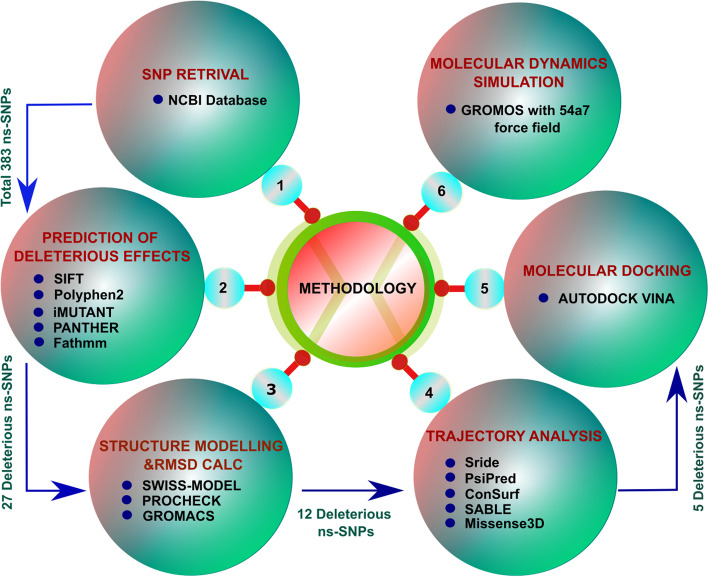
Background: Nonalcoholic fatty liver, or NAFLD, is the most common chronic liver ailment. It is characterized by excessive fat deposition in hepatocytes of individuals who consume little or no alcohol and are unaffected by specific liver damaging factors. It is also associated with extrahepatic manifestations such as chronic kidney disease, cardiovascular disease, and sleep apnea. The global burden of NAFLD is increasing at an alarming rate. However, no pharmacologically approved drugs against NAFLD are available owing to their complex pathophysiology. Genome-wide association studies have uncovered SNPs in the fat mass and obesity-associated gene (FTO) that are robustly associated with obesity and higher BMI. The prevalence of NAFLD increases in parallel with the increasing prevalence of obesity. Since FTO might play a crucial role in NAFLD development, the current study identified five potentially deleterious mutations from 383 ns-SNPs in the human FTO gene using various in silico tools.
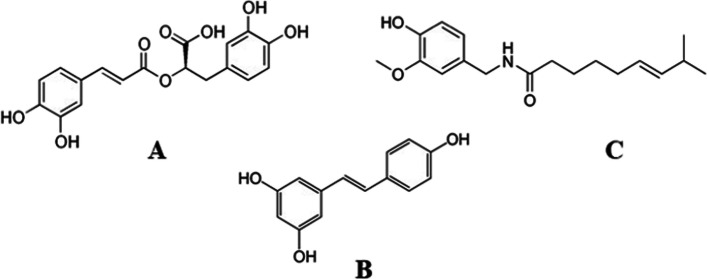
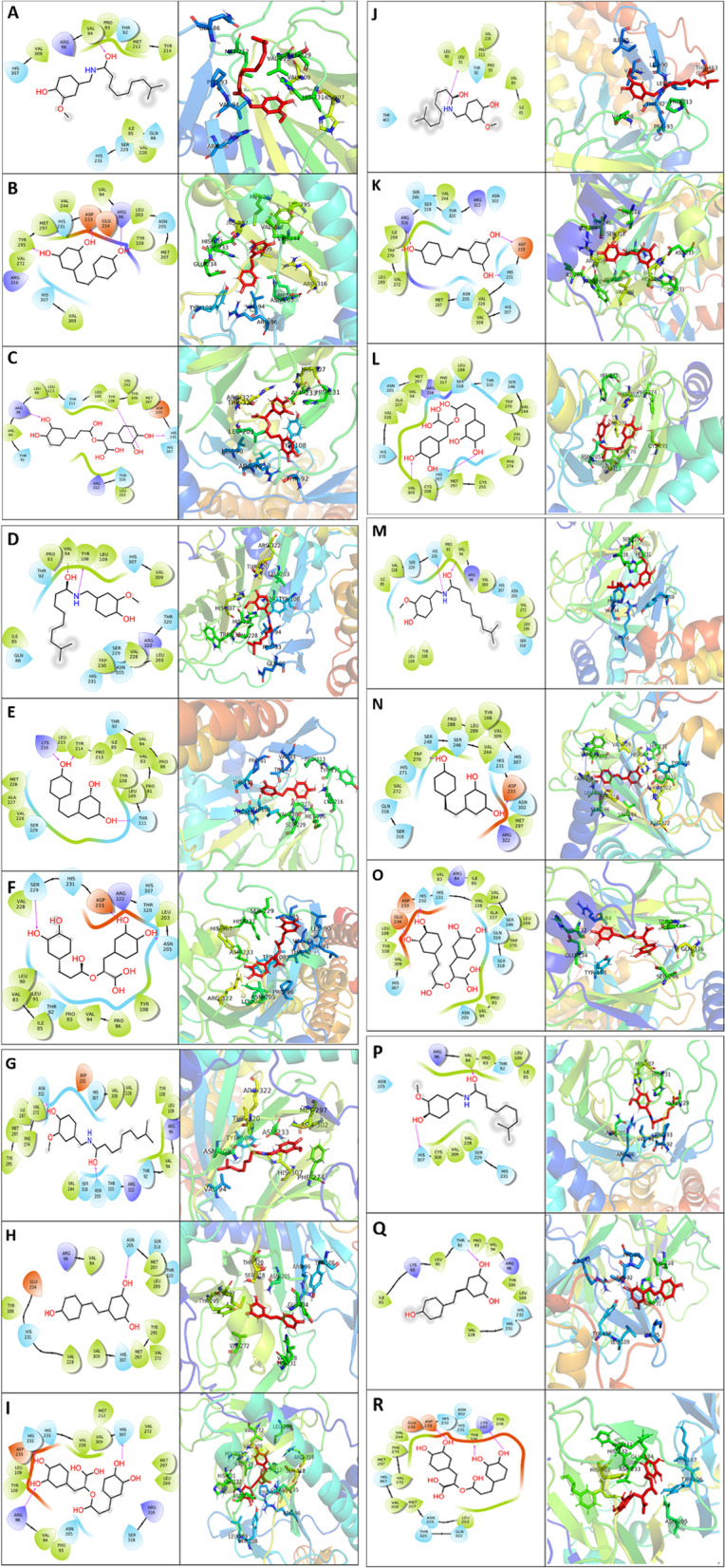
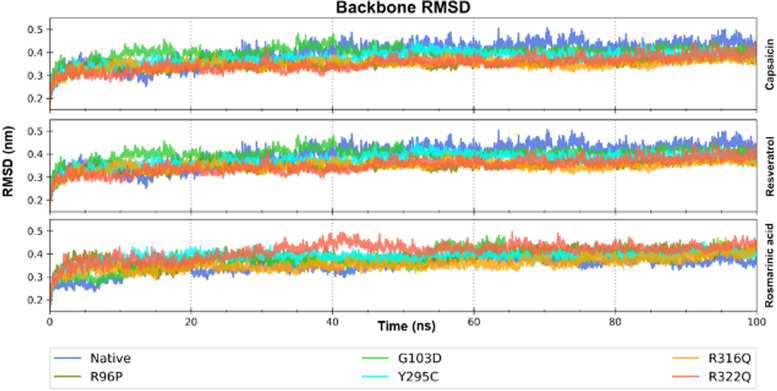
Methods: This study aims to identify potentially deleterious nonsynonymous SNPs (ns-SNPs) employing various in silico tools. Additionally, molecular modeling approaches further studied the structural changes caused by identified SNPs. Moreover, molecular dynamics studies finally investigated the binding potentials of the phytochemicals resveratrol, rosmarinic acid, and capsaicin with different mutant forms of FTO.
Results: The current investigation has five potentially deleterious mutations from 383 ns-SNPs in the human FTO gene using various in silico tools. The present study identified five nsSNPs of the human gene FTO, Gly103Asp, Arg96Pro, Tyr295Cys, and Arg322Gln, with an apparent connection to the disease condition. Modulation of demethylation activity by phytomolecule scanning explains the hepatoprotective action of molecules. The current investigation also suggested that predicted mutations did not affect the binding ability of three polyphenols: rosamarinic acid, resveratrol, and capsaicin.
Conclusion: This study showed that the predicted mutations in FTO did not affect the binding of three polyphenols. Thus, these three molecules can significantly aid drug development against FTO and NAFLD.
Keywords: FTO ns-SNPs; Fat mass and obesity-associated gene (FTO); Genetic polymorphism; Lipogenesis; Nonalcoholic fatty liver disease (NAFLD); Nonalcoholic steatohepatitis (NASH).
© 2023. The Author(s).
Conflict of interest statement
The authors declare no competing interests.
Figures
References
-
- Hardy T, Oakley F, Anstee QM, Day CP. Non-alcoholic fatty liver disease: pathogenesis and disease spectrum. Annu Rev Pathol: Mech Dis. 2016;11:451–496. - PubMed
-
- Eslam M, George J. Genetic contributions to NAFLD: leveraging shared genetics to uncover systems biology. Nat Rev Gastroenterol Hepatol. 2020;17(1):40–52. - PubMed
MeSH terms
Substances
LinkOut - more resources
Full Text Sources
Medical
Miscellaneous
