


The impact of delaying surgery during the COVID-19 pandemic in Alberta: a qualitative study
- PMID: 36720492
- PMCID: PMC9894654
- DOI: 10.9778/cmajo.20210330
The impact of delaying surgery during the COVID-19 pandemic in Alberta: a qualitative study
Abstract
Background: The COVID-19 pandemic overwhelmed health care systems, leading many jurisdictions to reduce surgeries to create capacity (beds and staff) to care for the surge of patients with COVID-19; little is known about the impact of this on patients whose surgery was delayed. The objective of this study was to understand the patient and family/caregiver perspective of having a surgery delayed during the COVID-19 pandemic.
Methods: Using an interpretative descriptive approach, we conducted interviews between Sept. 20 and Oct. 8, 2021. Adult patients who had their surgery delayed or cancelled during the COVID-19 pandemic in Alberta, Canada, and their family/caregivers were eligible to participate. Trained interviewers conducted semistructured interviews, which were iteratively analyzed by 2 independent reviewers using an inductive approach to thematic content analysis.
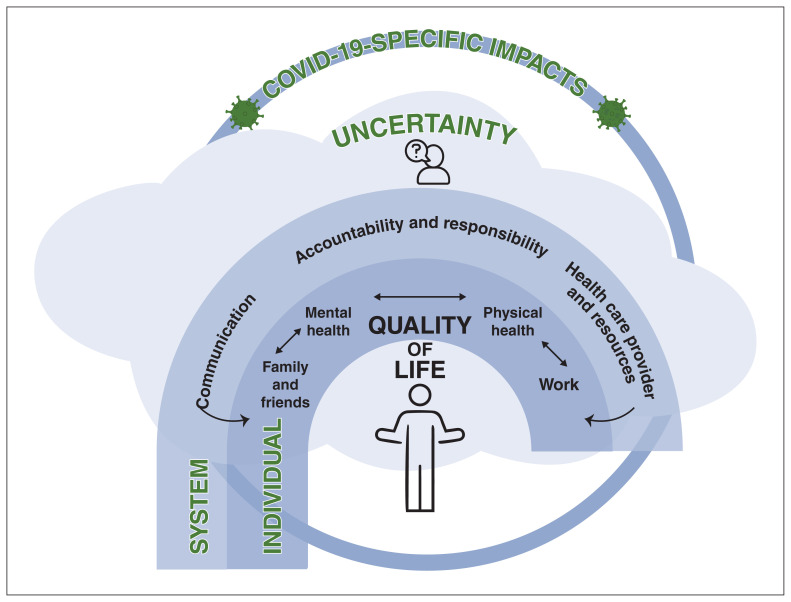
Results: We conducted 16 interviews with 15 patients and 1 family member/caregiver, ranging from 27 to 75 years of age, with a variety of surgical procedures delayed. We identified 4 interconnected themes: individual-level impacts on physical and mental health, family and friends, work and quality of life; system-level factors related to health care resources, communication and perceived accountability within the system; unique issues related to COVID-19 (maintaining health and isolation); and uncertainty about health and timing of surgery.
Interpretation: Although the decision to delay nonurgent surgeries was made to manage the strain on health care systems, our study illustrates the consequences of these decisions, which were diffuse and consequential. The findings of this study highlight the need to develop and adopt strategies to mitigate the burden of waiting for surgery during and after the COVID-19 pandemic.
© 2023 CMA Impact Inc. or its licensors.
Conflict of interest statement
Competing interests: Mary Brindle reports a grant from the Canadian Institutes of Health Research to explore how the Surgical Safety Checklist could be improved, a grant from Maternal Newborn Child & Youth to explore the effectiveness of a neonatal Enhanced Recovery After Surgery (ERAS) protocol, honoraria for speaking at Hong Kong University Department of Surgery and the University of Manitoba (both < $1000), an unpaid role on the Data and Safety Monitoring Board for a US randomized controlled trial on ERAS in pediatric patients and an unpaid position as secretary of the ERAS Society. No other competing interests were declared.
Figures
References
-
- Timeline: WHO’s COVID-19 response. Geneva: World Health Organization; [accessed 2022 Sept. 12]. Available https://www.who.int/emergencies/diseases/novel-coronavirus-2019/interact....
-
- Prin M, Guglielminotti J, Mtalimanja O, et al. Emergency-to-elective surgery ratio: a global indicator of access to surgical care. World J Surg. 2018;42:1971–80. - PubMed
Publication types
MeSH terms
Grants and funding
LinkOut - more resources
Full Text Sources
Medical
