Review
. 2023 Apr;72(4):772-786.
doi: 10.1136/gutjnl-2022-328970. Epub 2023 Jan 31.

Microbial transmission, colonisation and succession: from pregnancy to infancy

Affiliations
Review

Microbial transmission, colonisation and succession: from pregnancy to infancy

Liwen Xiao et al. Gut. 2023 Apr.

Abstract

The microbiome has been proven to be associated with many diseases and has been used as a biomarker and target in disease prevention and intervention. Currently, the vital role of the microbiome in pregnant women and newborns is increasingly emphasised. In this review, we discuss the interplay of the microbiome and the corresponding immune mechanism between mothers and their offspring during the perinatal period. We aim to present a comprehensive picture of microbial transmission and potential immune imprinting before and after delivery. In addition, we discuss the possibility of in utero microbial colonisation during pregnancy, which has been highly debated in recent studies, and highlight the importance of the microbiome in infant development during the first 3 years of life. This holistic view of the role of the microbial interplay between mothers and infants will refine our current understanding of pregnancy complications as well as diseases in early life and will greatly facilitate the microbiome-based prenatal diagnosis and treatment of mother-infant-related diseases.

Keywords: infant gut; intestinal development; intestinal microbiology.


Conflict of interest statement

Competing interests: None declared.

Figures
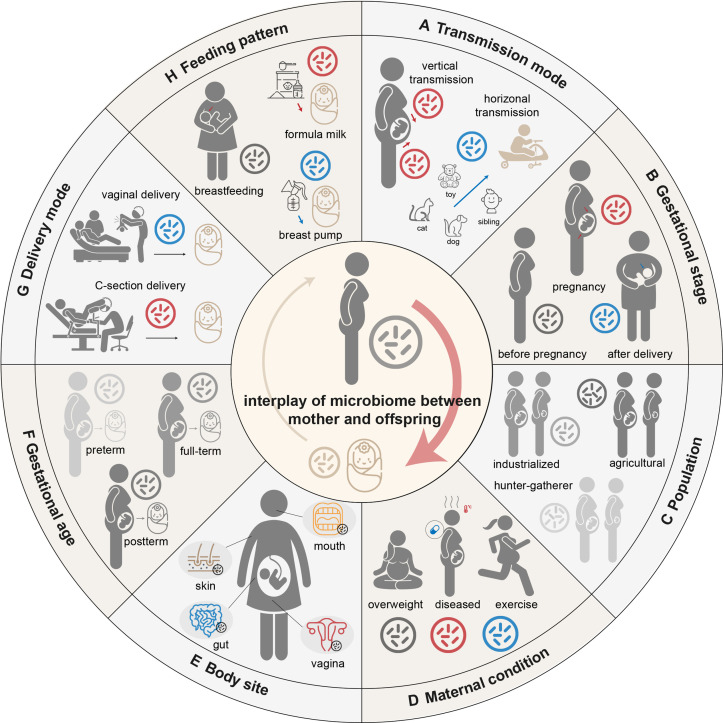
Figure 1
Figure 1
Interplay of the microbiome between mothers and offspring. Intergenerational transmission of the microbiome in different (A) transmission modes, (B) gestational stages, (C) populations, (D) maternal conditions, (E) body sites, (F) gestational ages, (G) delivery modes and (H) feeding patterns.
Figure 2
Figure 2
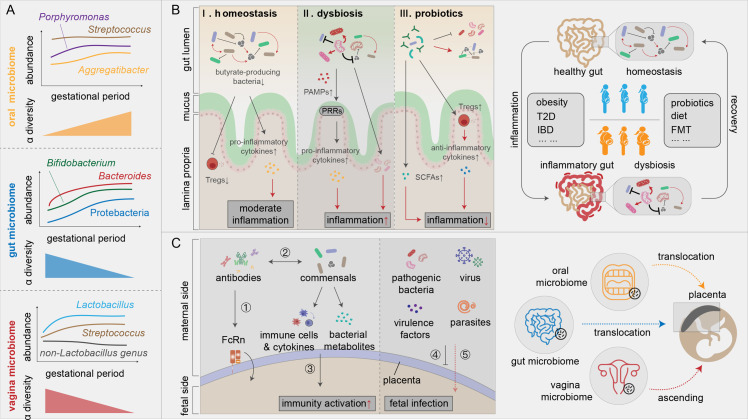
Microbial variation and transmission during pregnancy. (A) Variation in the abundance of representative bacteria in the maternal oral cavity, gut and vagina during pregnancy. (B). Host–microbe interaction in the maternal gut. Under healthy conditions, the gut microbiome and immune response of pregnant women is similar to that in individuals with metabolic syndromes, characterised by decreasing butyrate-producing bacteria and increasing proinflammatory cytokines, inducing moderate inflammation (I). When mothers have conditions such as T2D, obesity or IBD, deviation of the gut microbiome associated with alteration of the immune response is observed during pregnancy, increasing the risk of inflammatory diseases and gut leakage. Increased intestinal permeability allows the entry of bacterial toxins into the systemic circulation and induces multiple diseases (II and the left panel). Some interventions, such as probiotic, anti-inflammatory diet or FMT interventions, may restore dysbiosis of the gut microbiome and reduce inflammatory responses (III and the left panel). (C) Maternal–fetal interface communication during pregnancy. Maternal antibodies such as IgG are transferred to the fetus via FcRn (case 1). Some bacterial molecules are bound to maternal IgG and are transferred to the offspring (case 2). Such vertical transmission provides protection to the fetus. Fetal immune responses can also be activated by bacterial components or bacterial metabolites from mothers (case 3). Other substances, such as viruses, pathogenic bacteria, virulence factors and parasites that are harmful to the fetus are usually unable to cross the placenta (case 4, black lines with flat ends), except in situations of maternal infections (case 5, red dotted arrows). Translocation of the microbiome between maternal body sites (oral cavity, gut and vagina) and the fetus was observed. Whether the detection of microbes in the placenta is derived from contamination is highly debated, and thus, dotted lines are used for microbial translocation (the left panel). FcRn, neonatal Fc receptor; IBD, inflammatory bowel disease; PAMPs, pathogen-associated molecular patterns; PRRs, pattern reorganisation receptors; SCFAs, short-chain fatty acids; Tregs, regulatory T cells; T2D, type 2 diabetes.
Figure 3
Figure 3
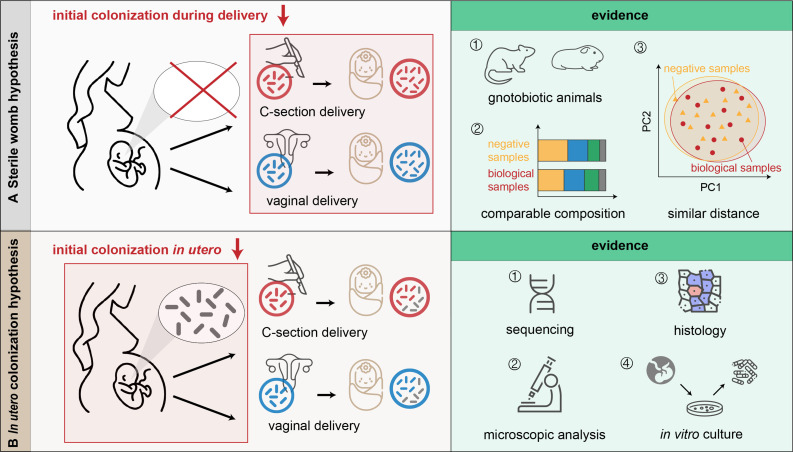
The debate regarding the prenatal microbiome. (A) The sterile womb hypothesis regards that the womb is sterile and that microbial colonisation in infants only starts during delivery. The evidence comprises (1) the generation of gnotobiotic animals; (2) similar microbial composition and (3) insignificant differences between biological samples and negative control samples. (B) The in utero colonisation hypothesis claims that microbial colonisation in infants occurs before birth. The supporting evidence includes (1) the sequencing of bacterial DNA fragments in placental or uterine tissues; (2) the detection of bacteria under a microscope; (3) the identification of bacteria using histological methods and (4) clinical cultures of live bacteria in vitro.
Figure 4
Figure 4
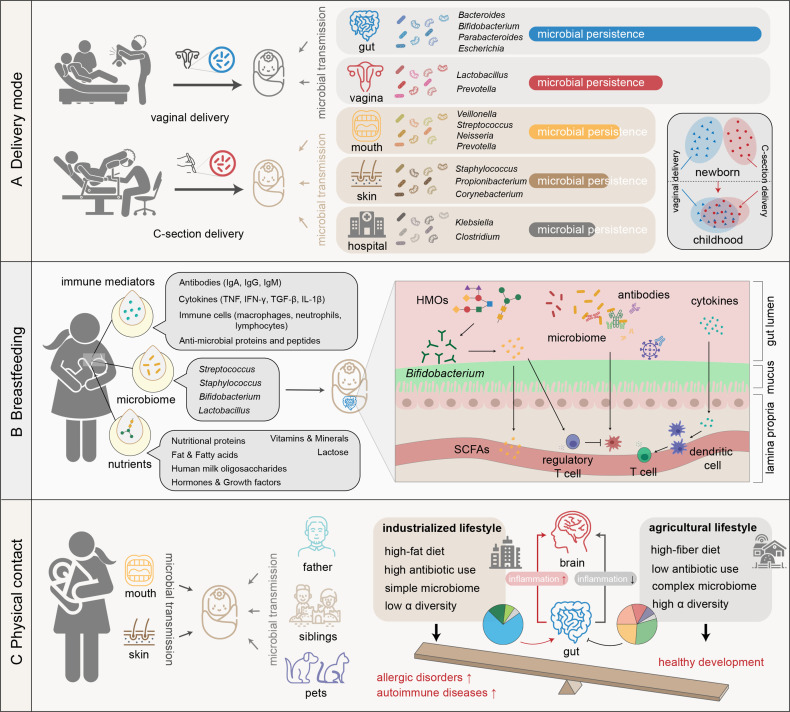
Microbial transmission during and after delivery. (A) Different transmission patterns between vaginal and C-section deliveries. The microbiome from the maternal gut persists much longer in the infant gut than those from other sources. Microbial divergence between different birth modes decreases with the growth of infants. (B) Transmission during breast feeding. Microbes in maternal breast milk benefit the establishment of the infant gut community. Other bioactive components, such as HMOs, antibodies, immune cells and cytokines, are largely involved in the regulation of the neonatal immune system. (C). Transmission during physical contact. Microbes from different sources contribute to the colonisation of the neonatal microbiome in early life. A wider range of microbial exposure (eg, living on farms) is associated with decreased inflammation and a low risk of autoimmune diseases. HMOs, human milk oligosaccharides.
Figure 5
Figure 5
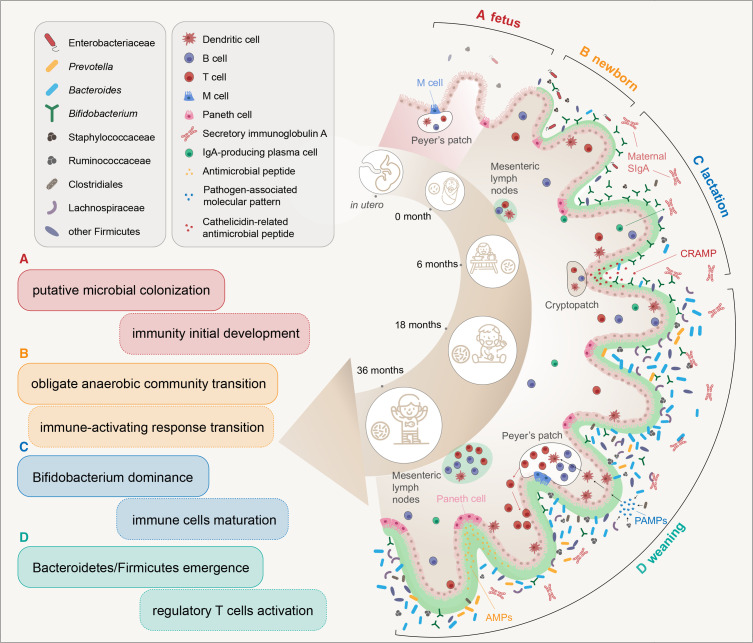
Microbial and immune development during the first 3 years of life. (A) Before birth, the ontogenesis of the immune system begins with stimulation by maternal factors. A few recent studies have indicated that early colonisation occurs during this period. Nevertheless, considering the low biomass in placental or uterine samples, whether the detected signal is associated with contamination needs further exploration. (B) After delivery, the gut microbiome transitions from a facultative anaerobic community to an obligate anaerobic community. Correspondingly, the neonatal immune system switches from a tolerogenic response to an antimicrobial response. (C) Bifidobacterium becomes the most abundant taxon during lactation, especially in the guts of infants fed maternal breast milk. Maternal breast milk also stimulates the immune system to mature rapidly and protects the neonatal intestinal mucosa from colonisation by pathogens. (D) At the time of weaning, Bacteroidetes and Firmicutes dominate the gut ecosystem, and bacterial divergence between different individuals starts to decrease. Weaning reactions occur and induce variations in immune cells with the expansion of the intestinal microbiome. AMPs, antimicrobial peptides; CRAMP, cathelicidin-related antimicrobial peptide; PAMPs, pathogen-associated molecular patterns; Tregs, regulatory T cells.

References

    1. Sorbara MT, Pamer EG. Microbiome-based therapeutics. Nat Rev Microbiol 2022;20:365–80. 10.1038/s41579-021-00667-9 - DOI - PubMed
    1. Hall AB, Tolonen AC, Xavier RJ. Human genetic variation and the gut microbiome in disease. Nat Rev Genet 2017;18:690–9. 10.1038/nrg.2017.63 - DOI - PubMed
    1. Wang J, Jia Z, Zhang B, et al. Tracing the accumulation of in vivo human oral microbiota elucidates microbial community dynamics at the gateway to the Gi tract. Gut 2020;69:1355–6. 10.1136/gutjnl-2019-318977 - DOI - PMC - PubMed
    1. Yu Y, Zhang B, Ji P, et al. Changes to gut amino acid transporters and microbiome associated with increased E/I ratio in chd8+/- mouse model of ASD-like behavior. Nat Commun 2022;13:1151. 10.1038/s41467-022-28746-2 - DOI - PMC - PubMed
    1. Enav H, Bäckhed F, Ley RE. The developing infant gut microbiome: a strain-level view. Cell Host Microbe 2022;30:627–38.:S1931-3128(22)00215-3 10.1016/j.chom.2022.04.009 - DOI - PubMed

Publication types