


Development and evaluation of deep learning algorithms for assessment of acute burns and the need for surgery
- PMID: 36720894
- PMCID: PMC9889389
- DOI: 10.1038/s41598-023-28164-4
Development and evaluation of deep learning algorithms for assessment of acute burns and the need for surgery
Erratum in
-
Author Correction: Development and evaluation of deep learning algorithms for assessment of acute burns and the need for surgery.Sci Rep. 2023 Mar 27;13(1):4973. doi: 10.1038/s41598-023-31508-9. Sci Rep. 2023. PMID: 36973312 Free PMC article. No abstract available.
Abstract
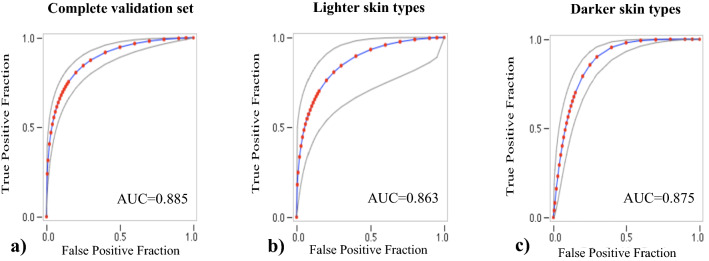
Assessment of burn extent and depth are critical and require very specialized diagnosis. Automated image-based algorithms could assist in performing wound detection and classification. We aimed to develop two deep-learning algorithms that respectively identify burns, and classify whether they require surgery. An additional aim assessed the performances in different Fitzpatrick skin types. Annotated burn (n = 1105) and background (n = 536) images were collected. Using a commercially available platform for deep learning algorithms, two models were trained and validated on 70% of the images and tested on the remaining 30%. Accuracy was measured for each image using the percentage of wound area correctly identified and F1 scores for the wound identifier; and area under the receiver operating characteristic (AUC) curve, sensitivity, and specificity for the wound classifier. The wound identifier algorithm detected an average of 87.2% of the wound areas accurately in the test set. For the wound classifier algorithm, the AUC was 0.885. The wound identifier algorithm was more accurate in patients with darker skin types; the wound classifier was more accurate in patients with lighter skin types. To conclude, image-based algorithms can support the assessment of acute burns with relatively good accuracy although larger and different datasets are needed.
© 2023. The Author(s).
Conflict of interest statement
Mikael Lundin and Johan Lundin are founders and co-owners of Aiforia Technologies Oy, Helsinki, Finland. Other authors have no competing interests.
Figures
References
-
- World Health Organization. Global Health Estimates 2016: Estimated deaths by cause and region, 2000 and 2016. (2017).
Publication types
MeSH terms
LinkOut - more resources
Full Text Sources
Medical
