


The autism spectrum among transgender youth: default mode functional connectivity
- PMID: 36721890
- PMCID: PMC10233301
- DOI: 10.1093/cercor/bhac530
The autism spectrum among transgender youth: default mode functional connectivity
Abstract
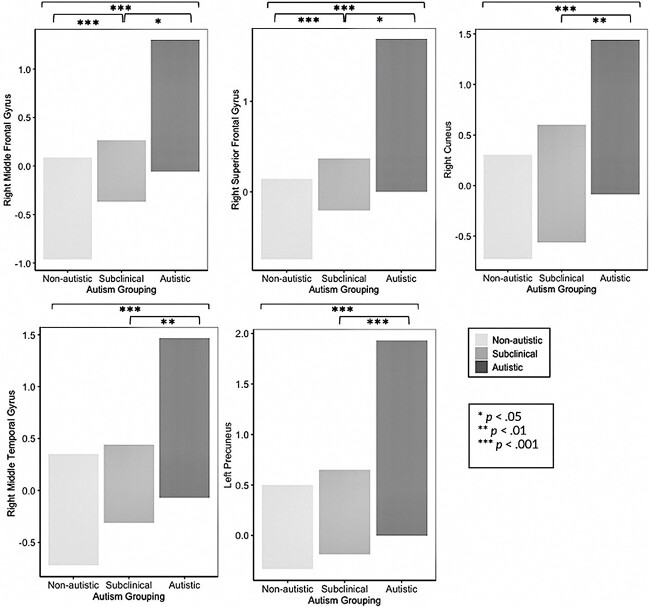
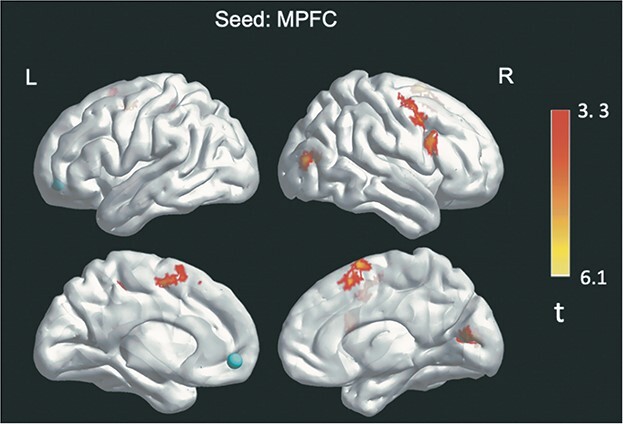
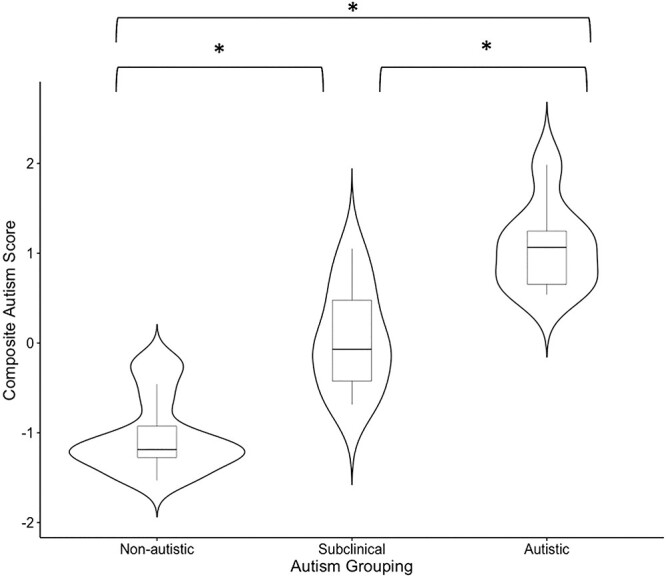
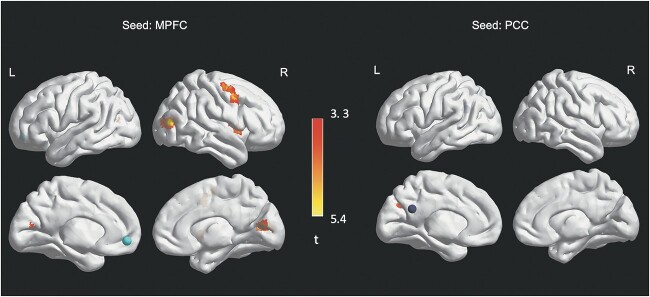
The common intersection of autism and transgender identities has been described in clinical and community contexts. This study investigates autism-related neurophenotypes among transgender youth. Forty-five transgender youth, evenly balanced across non-autistic, slightly subclinically autistic, and full-criteria autistic subgroupings, completed resting-state functional magnetic resonance imaging to examine functional connectivity. Results confirmed hypothesized default mode network (DMN) hub hyperconnectivity with visual and motor networks in autism, partially replicating previous studies comparing cisgender autistic and non-autistic adolescents. The slightly subclinically autistic group differed from both non-autistic and full-criteria autistic groups in DMN hub connectivity to ventral attention and sensorimotor networks, falling between non-autistic and full-criteria autistic groups. Autism traits showed a similar pattern to autism-related group analytics, and also related to hyperconnectivity between DMN hub and dorsal attention network. Internalizing, gender dysphoria, and gender minority-related stigma did not show connectivity differences. Connectivity differences within DMN followed previously reported patterns by designated sex at birth (i.e. female birth designation showing greater within-DMN connectivity). Overall, findings suggest behavioral diagnostics and autism traits in transgender youth correspond to observable differences in DMN hub connectivity. Further, this study reveals novel neurophenotypic characteristics associated with slightly subthreshold autism, highlighting the importance of research attention to this group.
Keywords: Autistic; Gender diverse; Resting state.
© The Author(s) 2023. Published by Oxford University Press. All rights reserved. For permissions, please e-mail: journals.permissions@oup.com.
Figures
References
-
- Achenbach TM. The Achenbach system of empirically based sssessment (ASEBA): development, findings, theory, and applications. Burlington (VT): University of Vermont Research Center for Children, Youth, & Families; 2009
-
- Aitken M, Steensma TD, Blanchard R, VanderLaan DP, Wood H, Fuentes A, Fitzsimmons CL, Leef JH, Lishak V, Reim E et al. Evidence for an altered sex ratio in clinic-referred adolescents with gender dysphoria. J Sex Med. 2015:12(3):756–763. - PubMed
-
- Akgül GY, Ayaz AB, Yildirim B, Fis NP. Autistic traits and executive functions in children and adolescents with gender dysphoria. J Sex Marital Ther. 2018:44(7):619–626. - PubMed
-
- American Psychiatric Association . Diagnostic and statistical manual of mental disorders. Washington, DC: American Psychiatric Association; 2022. Fifth Edition
