


doi: 10.1249/JES.0000000000000313.
Epub 2023 Feb 1.
Controlling Inflammation Improves Aging Skeletal Muscle Health
Affiliations
- PMID: 36722844
- PMCID: PMC10033374
- DOI: 10.1249/JES.0000000000000313
Item in Clipboard
Controlling Inflammation Improves Aging Skeletal Muscle Health
Exerc Sport Sci Rev.
.
Abstract
Chronic inflammation is associated with a decline in aging skeletal muscle health. Inflammation also seems to interfere with the beneficial skeletal muscle adaptations conferred by exercise training in older individuals. We hypothesize that the cyclooxygenase pathway is partially responsible for this negative inflammatory influence on aging skeletal muscle health and plasticity.
Copyright © 2023 by the American College of Sports Medicine.
Figures
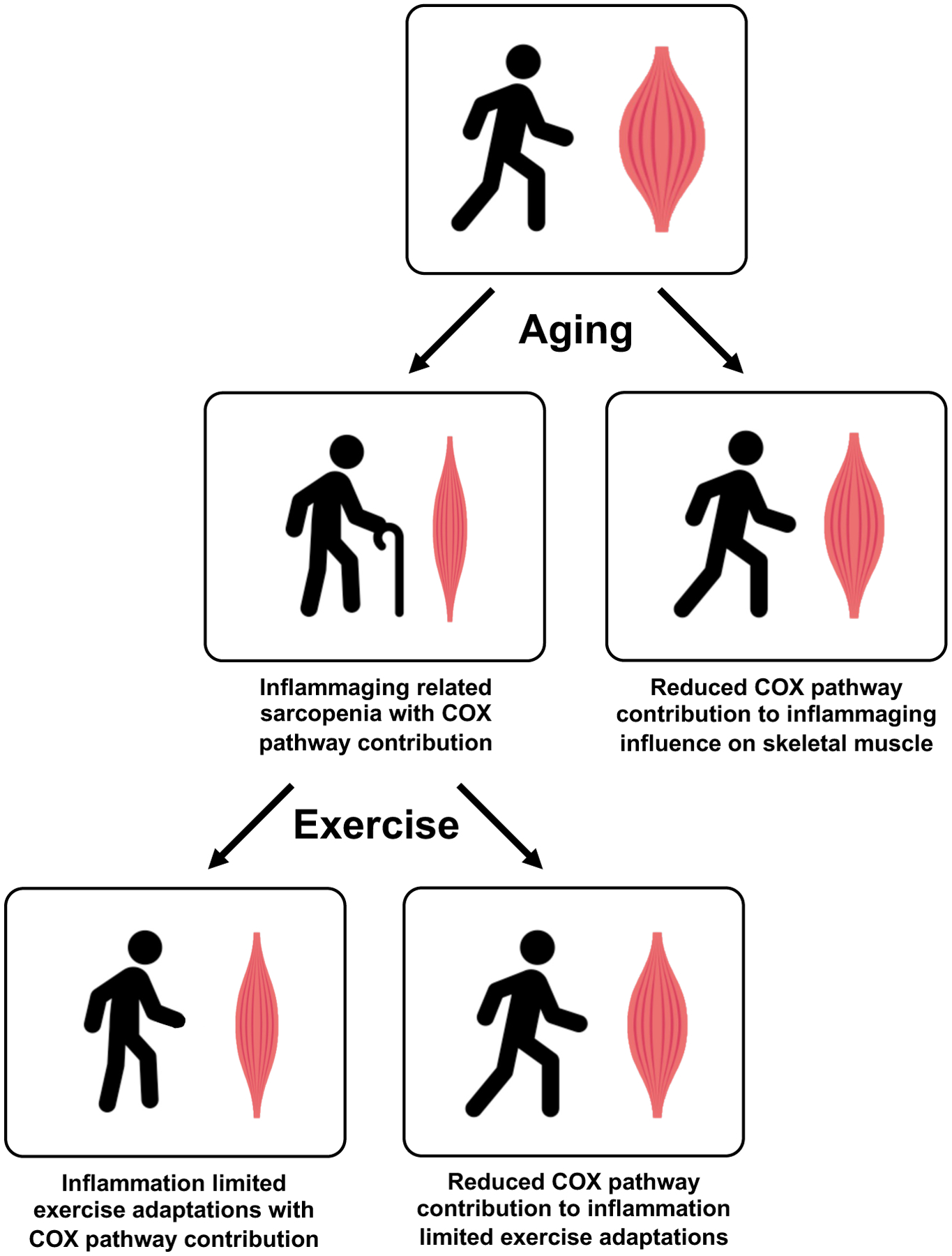
Proposed contribution of the COX pathway to the effect of inflammation on aging skeletal muscle. The authors hypothesize that the effect of age-related inflammation (i.e., “inflammaging”) on the development of sarcopenia can be mitigated by reducing the contribution of the COX pathway in aging skeletal muscle. Similarly, it appears the influence of age-related inflammation on limiting exercise adaptations can be mitigated by reducing the contribution of the COX pathway, ultimately promoting greater improvements in skeletal muscle health.
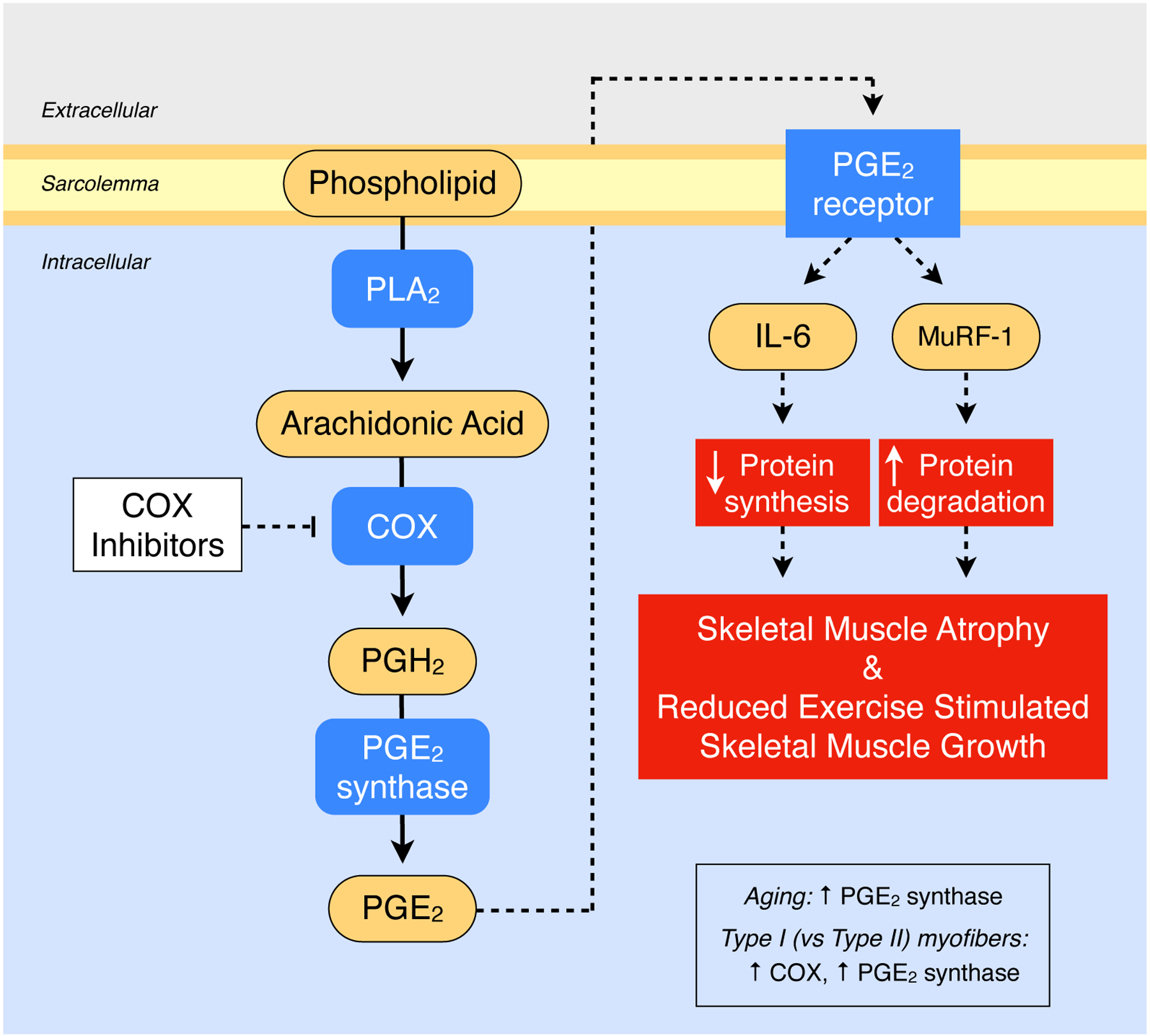
Overview of the PGE2 portion of the COX pathway (i.e., the PGE2/COX pathway) in skeletal muscle and the proposed series of reactions and downstream regulatory events that influence skeletal muscle mass. Aging and muscle fiber type alter the level of COX pathway components. See text for the studies and specific references that have delineated the items outlined in this schematic. PLA2, phospholipase A2; COX, cyclooxygenase; PGH2, prostaglandin H2; PGE2, prostaglandin E2; MuRF-1, muscle RING finger 1; IL-6, interleukin 6.
References
-
- Wallach D, Kang T-B, and Kovalenko A. Concepts of tissue injury and cell death in inflammation: a historical perspective. Nat Rev Immunol 14: 51–59, 2014. - PubMed
-
- Furman D, Campisi J, Verdin E, Carrera-Bastos P, Targ S, Franceschi C, Ferrucci L, Gilroy D, Fasano A, Miller G, Miller A, Mantovani A, Weyand C, Barzilai N, Goronzy J, Rando T, Effros R, Lucia A, Kleinstreuer N, and Slavich G. Chronic inflammation in the etiology of disease across the life span. Nat Med 25: 1822–1832, 2019. - PMC - PubMed
-
- Germolec D, Shipowski K, Frawley R, and Evans E. Markers of inflammation. In: Immunotoxicity Testing Methods in Molecular Biology. New York, NY: Humana Press, 2018, p. 57–79. - PubMed
Publication types
MeSH terms
Grants and funding
LinkOut - more resources
Full Text Sources
Medical
