


Peer-led recovery groups for people with psychosis in South Africa (PRIZE): protocol for a randomised controlled feasibility trial
- PMID: 36726164
- PMCID: PMC9890934
- DOI: 10.1186/s40814-022-01232-8
Peer-led recovery groups for people with psychosis in South Africa (PRIZE): protocol for a randomised controlled feasibility trial
Abstract
Background: The available care for people with psychosis in South Africa is inadequate to support personal recovery. Group peer support interventions are a promising approach to foster recovery, but little is known about the preferences of service users, or the practical application of this care model, in low- and middle-income countries (LMIC). This study aims to assess the acceptability and feasibility of integrating peer-led recovery groups for people with psychosis and their caregivers in South Africa into existing systems of care, and to determine key parameters in preparation for a definitive trial.
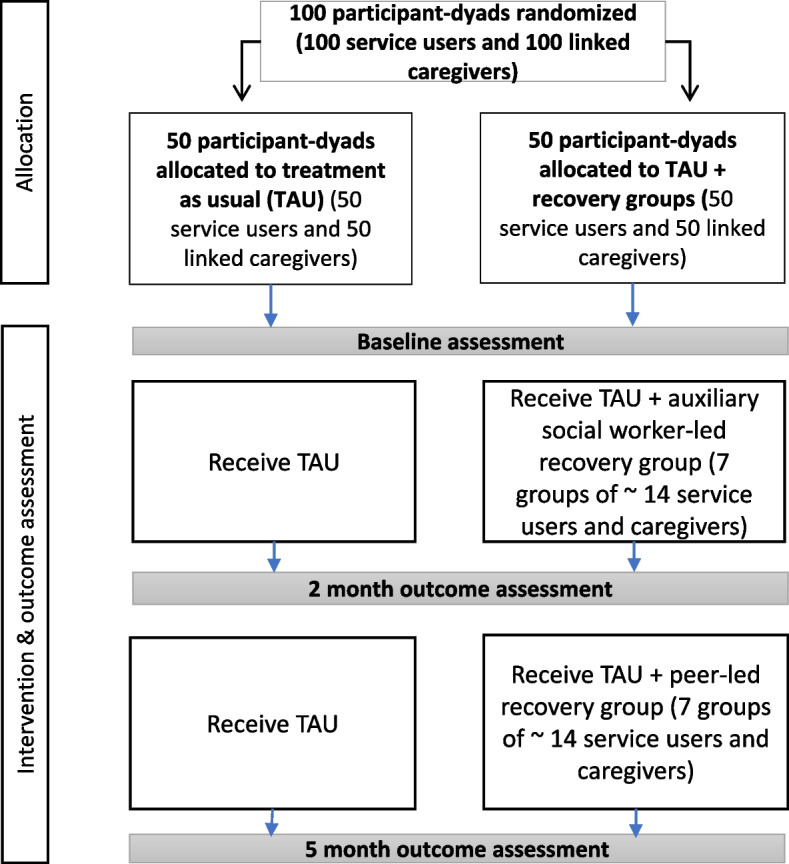
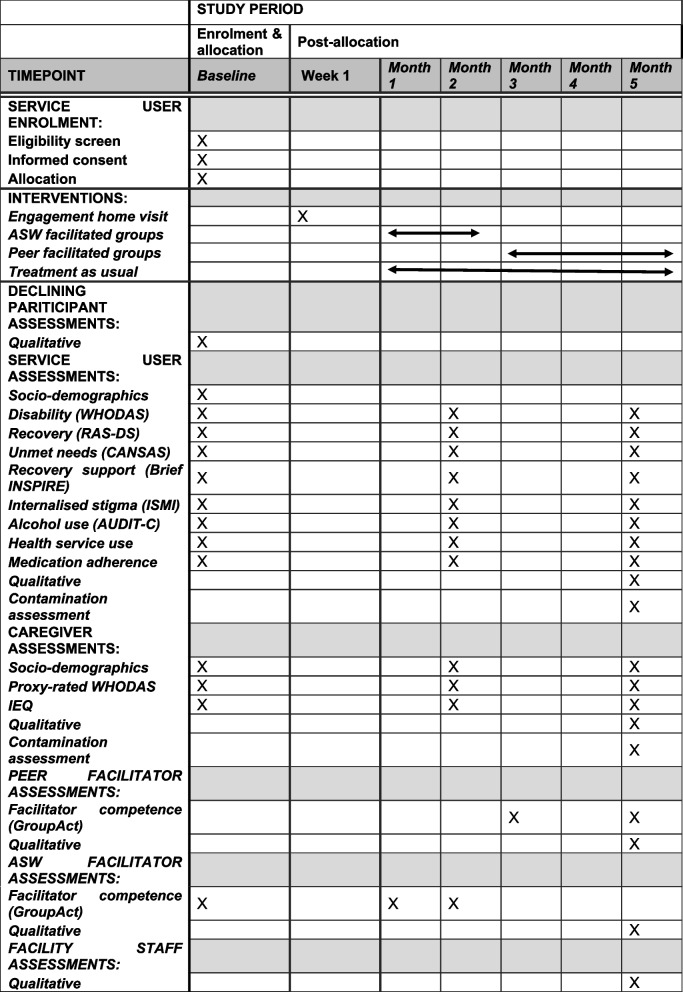
Methods: The study is set in Nelson Mandela Bay Metropolitan district of the Eastern Cape Province, South Africa. The design is an individually randomised parallel group feasibility trial comparing recovery groups in addition to treatment as usual (TAU) with TAU alone in a 1:1 allocation ratio. We aim to recruit 100 isiXhosa-speaking people with psychosis and 100 linked caregivers. TAU comprises anti-psychotic medication-focused outpatient care. The intervention arm will comprise seven recovery groups, including service users and caregiver participants. Recovery groups will be delivered in two phases: a 2-month phase facilitated by an auxiliary social worker, then a 3-month peer-led phase. We will use mixed methods to evaluate the process and outcomes of the study. Intervention acceptability and feasibility (primary outcomes) will be assessed at 5 months post-intervention start using qualitative data collected from service users, caregivers, and auxiliary social workers, along with quantitative process indicators. Facilitator competence will be assessed with the GroupACT observational rating tool. Trial procedures will be assessed, including recruitment and retention rates, contamination, and validity of quantitative outcome measures. To explore potential effectiveness, quantitative outcome data (functioning, unmet needs, personal recovery, internalised stigma, health service use, medication adherence, and caregiver burden) will be collected at baseline, 2 months, and 5 months post-intervention start.
Discussion: This study will contribute to the sparse evidence on the acceptability and feasibility of peer-led and recovery-oriented interventions for people with psychosis in LMIC when integrated into existing care systems. Results from this feasibility trial will inform preparations for a definitive trial and subsequent larger-scale implementation.
Trial registration: Pan-African Clinical Trials Register PACTR202202482587686. Registered on 28 February 2022. https://pactr.samrc.ac.za/TrialDisplay.aspx?TrialID=21496 .
Keywords: Community mental health services; Developing countries; Peer-led; Psychiatric rehabilitation; Psychosocial intervention; Psychotic disorders; Recovery; Schizophrenia; Self-help groups; Sub-Saharan Africa.
© 2023. The Author(s).
Conflict of interest statement
The authors declare that they have no competing interests.
Figures
References
-
- Asher L, Fekadu A, Hanlon C. Global mental health and schizophrenia. Curr Opin Psychiatry. 2018;31(3):193–99. - PubMed
-
- Anthony WA. Recovery from mental illness: the guiding vision of the mental health service system in the 1990s. Psychosoc Rehabil J. 1993;16(4):11–23.
Grants and funding
LinkOut - more resources
Full Text Sources
