. 2023 Mar 1;30(3):247-253.
doi: 10.1097/GME.0000000000002143. Epub 2023 Jan 4.

Antimüllerian hormone and adiposity across midlife among women in Project Viva

Affiliations

Antimüllerian hormone and adiposity across midlife among women in Project Viva

Ellen C Francis et al. Menopause. .

Abstract

Objective: This study aimed to examine the association of antimüllerian hormone (AMH) with concurrent and prospective measures of adiposity during approximately 9 years of follow-up.

Methods: Participants were 697 parous women from the Project Viva prebirth cohort without polycystic ovarian syndrome. We measured AMH at approximately 3 years postpartum (baseline). Outcomes were weight, body mass index (BMI), and waist circumference assessed at baseline, 4, and 9 years later; % body fat was assessed by bioimpedance at the 4- and 9-year visit. We used linear mixed-effect models including all outcome time points and accounting for age across follow-up and hormonal contraception prescription. In an additional model, we further adjusted for height.

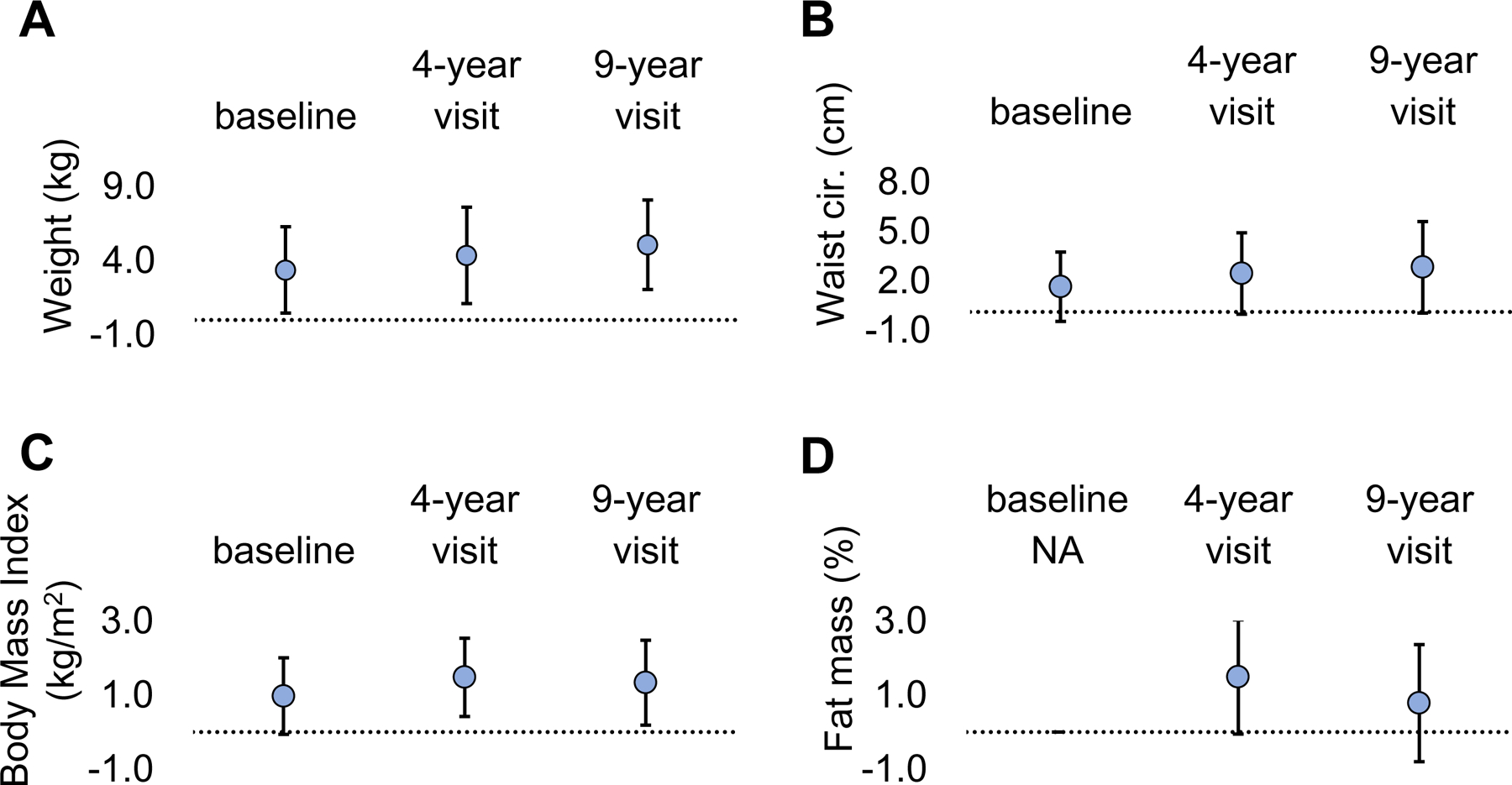
Results: Median AMH was 1.97 ng/mL (interquartile range, 0.83-4.36 ng/mL), 29.1% had AMH <1.0 ng/mL, and mean age at AMH measurement was 36.7 years (SD, 4.9 y; range, 20-48 y). AMH was inversely associated with average weight, BMI, and waist circumference over follow-up. In age-adjusted models, women with AMH <1.0 versus ≥1.0 ng/mL were 4.92 kg (95% CI, 2.01-7.82 kg) heavier, had a 2.51 cm (95% CI, 0.12-4.89 cm) greater waist circumference, and a 1.46 kg/m 2 (95% CI, 0.44-2.48 kg/m 2 ) greater BMI across the 9 years of follow-up. Findings were similar after covariate adjustment and when AMH was modeled continuously. AMH was also inversely associated with higher fat mass %; however, the CI crossed the null.

Conclusion: Low AMH at baseline was associated with greater adiposity concurrently and across approximately 9 years of follow-up. Whether low AMH is a useful marker of metabolic risk across midlife requires further research.


Conflict of interest statement

Financial disclosure/conflicts of interest: None reported.

Figures
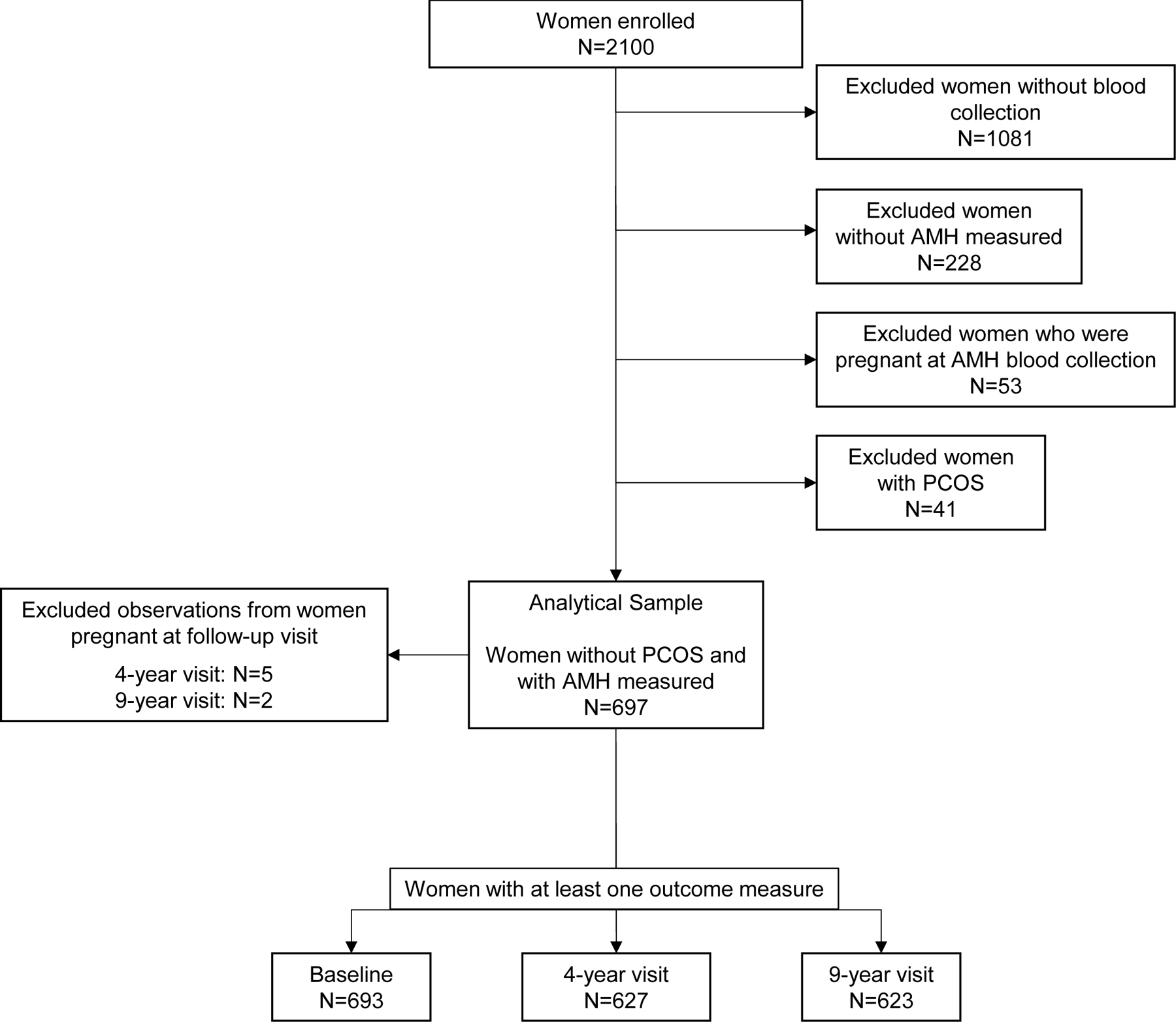
Figure 1:
Figure 1:. Participant flow chart
Pregnant women were enrolled in project viva between 1999–2002. After delivery women completed three in-person follow-up visits: baseline (3 years postpartum), and 4, and 9 years after baseline. Abbreviations: AMH, anti-Mullerian hormone; PCOS, Polycystic ovarian syndrome
Figure 2:
Figure 2:. Least square mean differences and 95% confidence intervals for each adiposity indicator with respect to AMH < 1 vs. ≥ 1 ng/ml across follow-up (N=697).
Abbreviations: AMH, anti-Mullerian hormone; BMI, body mass index; NA, not applicable P-values = Type 3 tests for main effects derived from generalized linear models adjusted for age + age2. (A) Association of AMH < 1 vs. ≥ 1 ng/ml at baseline with weight (kg) at baseline, 4, and 9 years later. At each timepoint, AMH < 1ng/ml was associated with greater weight compared to AMH ≥ 1ng/ml (B) Association of AMH < 1 vs. ≥ 1 ng/ml baseline with waist cir. (cm) at baseline, 4, and 9 years later. (C) Association of AMH < 1 vs. ≥ 1 ng/ml baseline with BMI (kg/m2) at baseline, 4, and 9 years later. At the 4-year and 9-year visits, AMH < 1ng/ml was associated with higher BMI compared to AMH ≥ 1ng/ml (D) Association of AMH < 1 vs. ≥ 1 ng/ml at baseline with fat mass % at 4 and 9 years later. Fat mass % was measured only at the 4-year and 9-year visits.

References

    1. Zhu D, Chung HF, Dobson AJ, et al. Age at natural menopause and risk of incident cardiovascular disease: a pooled analysis of individual patient data. Lancet Public Health. Nov 2019;4(11):e553–e564. doi: 10.1016/s2468-2667(19)30155-0 - DOI - PMC - PubMed
    1. Brand JS, van der Schouw YT, Onland-Moret NC, et al. Age at menopause, reproductive life span, and type 2 diabetes risk: results from the EPIC-InterAct study. Diabetes Care. Apr 2013;36(4):1012–9. doi: 10.2337/dc12-1020 - DOI - PMC - PubMed
    1. Dewailly D, Andersen CY, Balen A, et al. The physiology and clinical utility of anti-Mullerian hormone in women. Hum Reprod Update May-Jun 2014;20(3):370–85. doi: 10.1093/humupd/dmt062 - DOI - PubMed
    1. Su HI, Sammel MD, Freeman EW, Lin H, DeBlasis T, Gracia CR. Body size affects measures of ovarian reserve in late reproductive age women. Menopause Sep-Oct 2008;15(5):857–61. doi: 10.1097/gme.0b013e318165981e - DOI - PMC - PubMed
    1. Nestler JE. Insulin regulation of human ovarian androgens. Human reproduction (Oxford, England) Oct 1997;12 Suppl 1:53–62. doi: 10.1093/humrep/12.suppl_1.53 - DOI - PubMed