


Pharmacokinetic Alterations Associated with Critical Illness
- PMID: 36732476
- PMCID: PMC9894673
- DOI: 10.1007/s40262-023-01213-x
Pharmacokinetic Alterations Associated with Critical Illness
Abstract
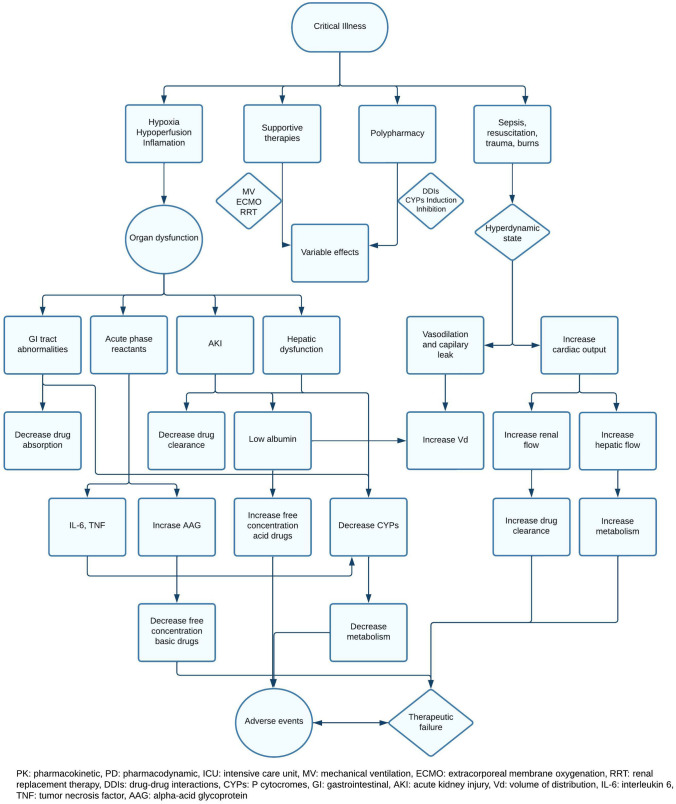
Haemodynamic, metabolic, and biochemical derangements in critically ill patients affect drug pharmacokinetics and pharmacodynamics making dose optimisation particularly challenging. Appropriate therapeutic dosing depends on the knowledge of the physiologic changes caused by the patient's comorbidities, underlying disease, resuscitation strategies, and polypharmacy. Critical illness will result in altered drug protein binding, ionisation, and volume of distribution; it will also decrease oral drug absorption, intestinal and hepatic metabolism, and renal clearance. In contrast, the resuscitation strategies and the use of vasoactive drugs may oppose these effects by leading to a hyperdynamic state that will increase blood flow towards the major organs including the brain, heart, kidneys, and liver, with the subsequent increase of drug hepatic metabolism and renal excretion. Metabolism is the main mechanism for drug clearance and is one of the main pharmacokinetic processes affected; it is influenced by patient-specific factors, such as comorbidities and genetics; therapeutic-specific factors, including drug characteristics and interactions; and disease-specific factors, like organ dysfunction. Moreover, organ support such as mechanical ventilation, renal replacement therapy, and extracorporeal membrane oxygenation may contribute to both inter- and intra-patient variability of drug pharmacokinetics. The combination of these competing factors makes it difficult to predict drug response in critically ill patients. Pharmacotherapy targeted to therapeutic goals and therapeutic drug monitoring is currently the best option for the safe care of the critically ill. The aim of this paper is to review the alterations in drug pharmacokinetics associated with critical illness and to summarise the available evidence.
© 2023. The Author(s), under exclusive licence to Springer Nature Switzerland AG.
Conflict of interest statement
Dr Morales Castro, Dr Dresser and Dr Granton have no conflicts of interest to disclose. Dr Fan reports personal fees from ALung Technologies, Aerogen, Baxter, Boehringer-Ingelheim, GE Healthcare, Inspira, and Vasomune outside the submitted work.
Figures
References
-
- McKindley DS, Hanes S, Boucher BA. Hepatic drug metabolism in critical illness. Pharmacotherapy. 1998;18(4):759–778. - PubMed
-
- Roberts JA, Bellomo R, Cotta MO, Koch BCP, Lyster H, Ostermann M, et al. Machines that help machines to help patients: optimising antimicrobial dosing in patients receiving extracorporeal membrane oxygenation and renal replacement therapy using dosing software. Intensive Care Med. 2022;48(10):1338–1351. doi: 10.1007/s00134-022-06847-2. - DOI - PMC - PubMed
Publication types
MeSH terms
Substances
LinkOut - more resources
Full Text Sources
