


Does mandibular advancement with clear aligners have the same skeletal and dentoalveolar effects as traditional functional appliances?
- PMID: 36732724
- PMCID: PMC9896678
- DOI: 10.1186/s12903-023-02709-5
Does mandibular advancement with clear aligners have the same skeletal and dentoalveolar effects as traditional functional appliances?
Abstract
Background: The study aimed to compare the dentoskeletal effects of Vanbeek Activator, Herbst, Twin-Block and Mandibular Advancement with clear aligners in children with skeletal Class II malocclusions.
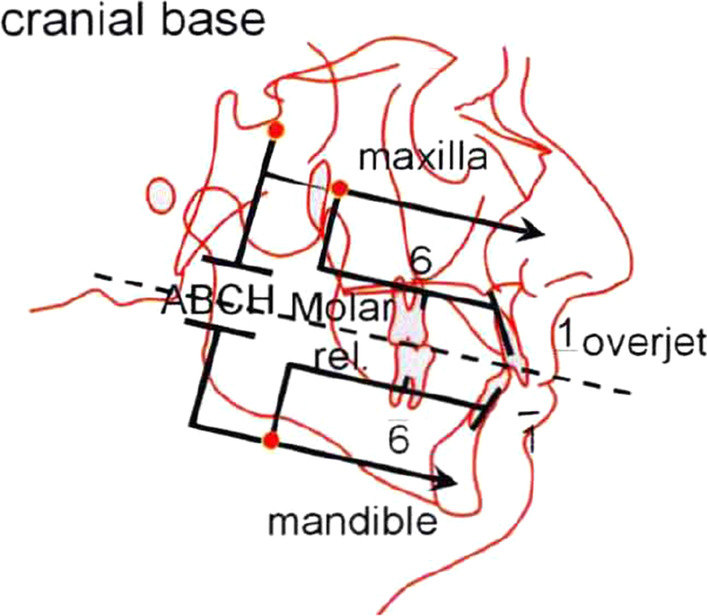
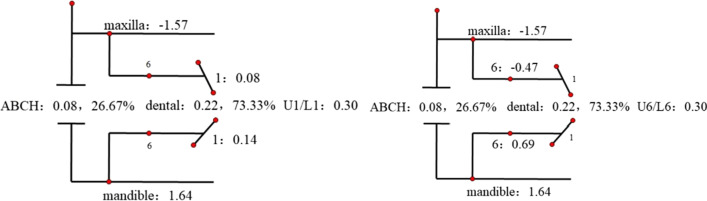
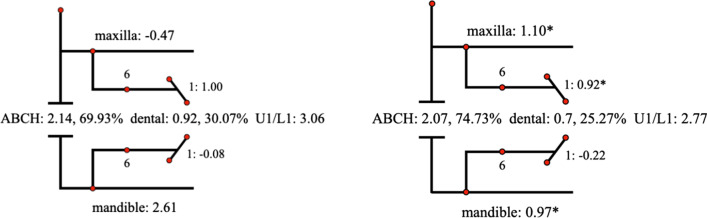
Methods: A sample with sixty-three patients (37 males, 26 females) was included and divided into untreated control group (C, n = 12), Vanbeek Activator group (V, n = 14), Herbst group (H, n = 11), Twin-Block group (TB, n = 12) and MA group (MA, n = 14). Cephalometric analysis and Johnston Pitchfork analysis were performed to quantify the skeletal and dentoalveolar components in molar relationship and overjet correction. Compare the differences of cephalometric data and Johnston-analysis data.
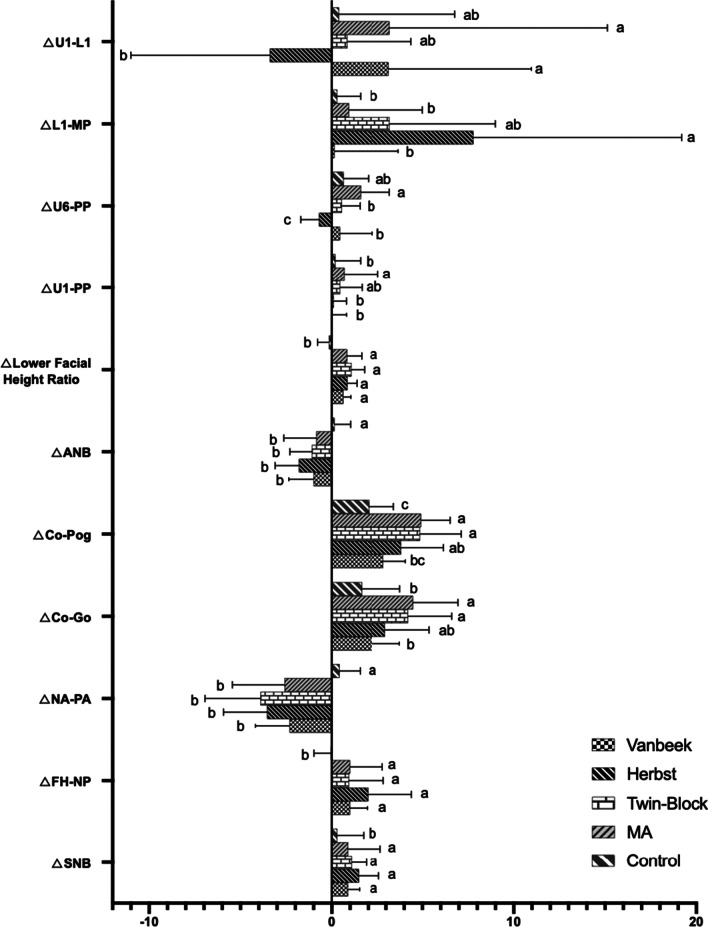
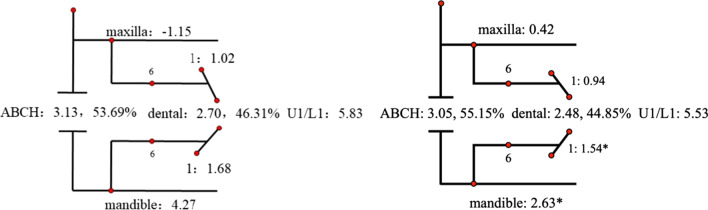
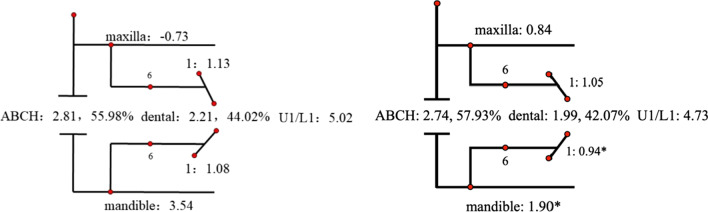
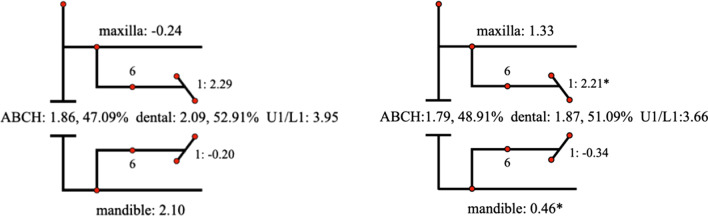
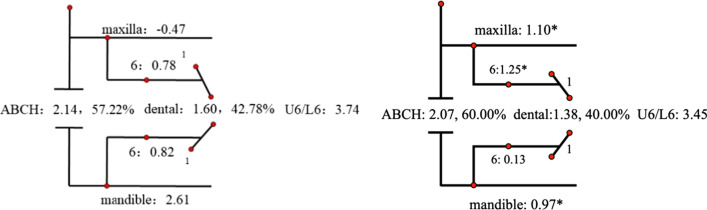
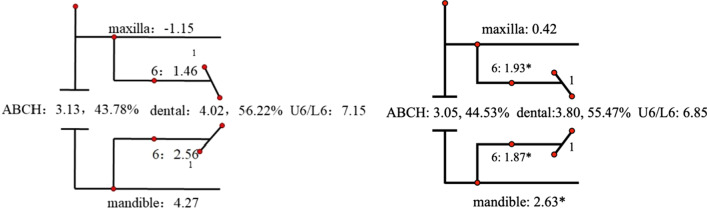
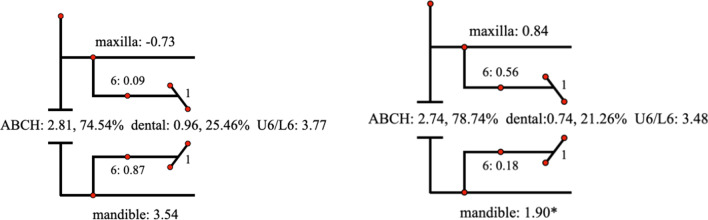
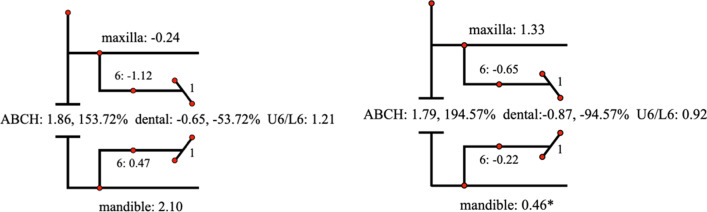
Results: The treatment changes showed significant differences in SNB, FH-NP, NA-PA, Co-Go, Co-Pog, ANB, lower facial height ratio, U1-PP, U6-PP, L1-MP and U1-L1. All the appliances improved overjet relationships significantly (Vanbeek, Herbst, Twin-Block and MA were 2.77 mm, 5.53 mm, 4.73 mm and 3.66 mm respectively) with significant retraction of maxillary incisors. The lower incisor displacement of group V and MA was negative, while that of group H and TB was positive and there were significant differences. Molar relationships were also improved by 3.45 mm, 6.85 mm, 3.48 mm and 0.92 mm for Vanbeek, Herbst, Twin-Block and MA. Mandible displacement showed a trend of group H > TB > V > MA. The displacement of maxillary molars in group H was greater than that in group C, TB and MA, and that of mandibular ones was greater than that in group C, V and MA, significantly. Herbst, Twin-Block and MA have more significant dentoalveolar effect than Vanbeek, while Vanbeek has more skeletal effect than the others especially in restraining maxillary growth.
Conclusions: Four appliances are all effective in mandibular advancement, modification of class II molar relationship and deep overjet, with unavoidable increase in lower facial ratio. Vanbeek Activator has the most skeletal effects. Vanbeek and MA have a good control of mandibular incisors while more compensatory lower incisors proclination in Herbst and Twin-Block. Herbst has greater maxillary molar distalization. MA allows aligning and leveling meanwhile leading the mandible forward.
Keywords: Cephalometric; Class II malocclusion; Clear aligners; Functional appliances; Johnston’s Pitchfork Analysis.
© 2023. The Author(s).
Conflict of interest statement
The authors declare that they have no competing interests.
Figures
References
-
- Wadhawan N, Kumar S, Kharbanda O, Duggal R, Sharma R. Temporomandibular joint adaptations following two-phase therapy: an MRI study. Orthod Craniofac Res. 2008;11(4):235–250. - PubMed
-
- Cozza P, Baccetti T, Franchi L, De Toffol L, McNamara J. Mandibular changes produced by functional appliances in Class II malocclusion: a systematic review. Am J Orthodont Dentofacial Orthop. 2006;129(5):599.e1–12; discussion e1–6. - PubMed
-
- Martins R, da Rosa MJ, Martins L, Buschang P. Skeletal and dental components of Class II correction with the bionator and removable headgear splint appliances. Am J Orthodont Dentofacial Orthop. 2008;134(6):732–741. - PubMed
-
- Čirgić E, Kjellberg H, Hansen K. Treatment of large overjet in Angle Class II: division 1 malocclusion with Andresen activators versus prefabricated functional appliances-a multicenter, randomized, controlled trial. 2015;38(5):516. - PubMed
Publication types
MeSH terms
Grants and funding
LinkOut - more resources
Full Text Sources
Miscellaneous
