


Unusual gingival actinomycosis post allogeneic hematopoietic stem-cell transplant: case report
- PMID: 36732789
- PMCID: PMC9893679
- DOI: 10.1186/s12903-023-02777-7
Unusual gingival actinomycosis post allogeneic hematopoietic stem-cell transplant: case report
Abstract
Background: Allogeneic hematopoietic stem cell transplant (allo-HSCT) is used to treat several hematological diseases, but immunosuppression during allo-HSCT facilitates opportunistic microbial growth in tissues, such as actinomycosis. An effective diagnosis of opportunistic diseases is essential for correct management of the disease and preservation of the immunosuppressed patient's life.
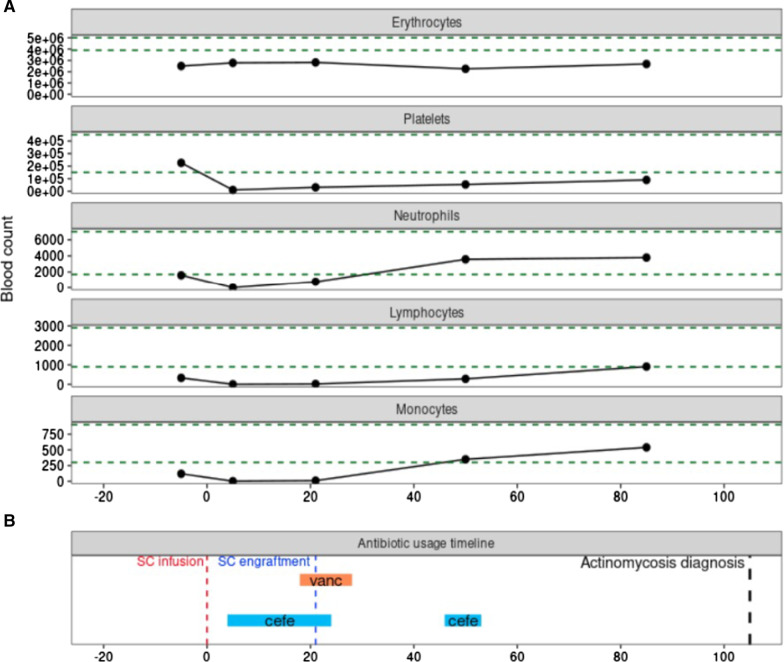
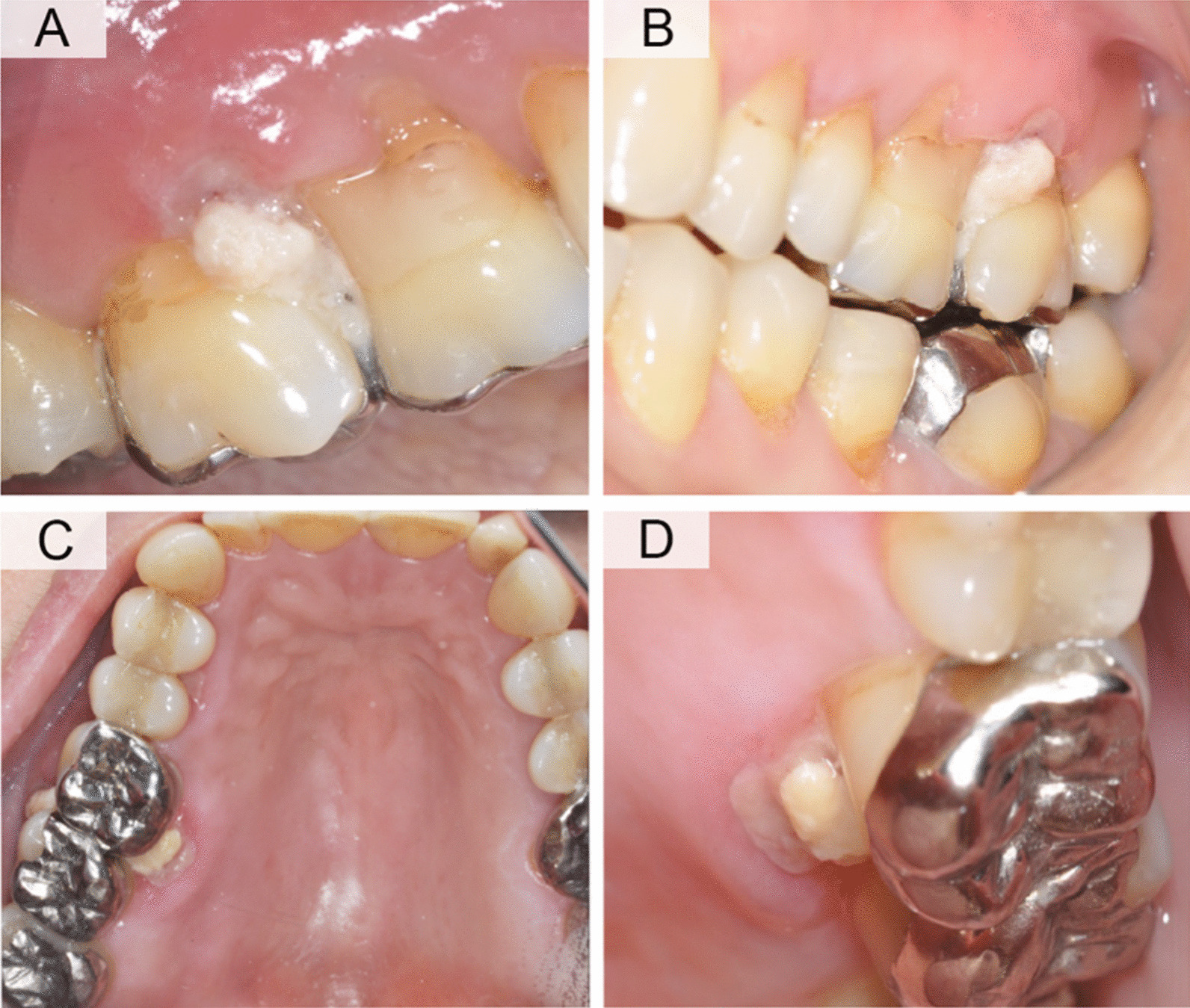
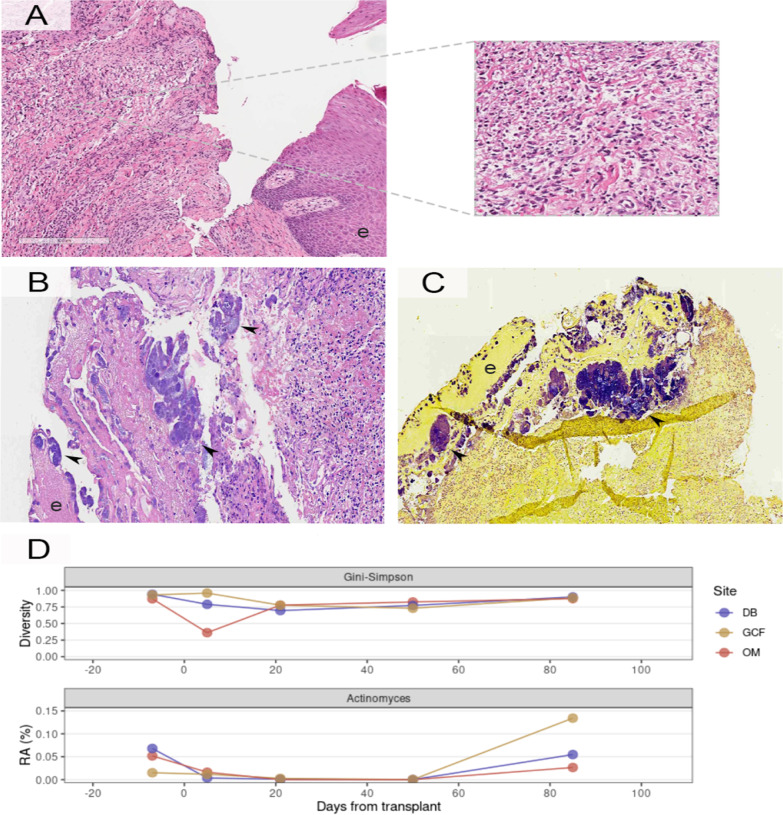
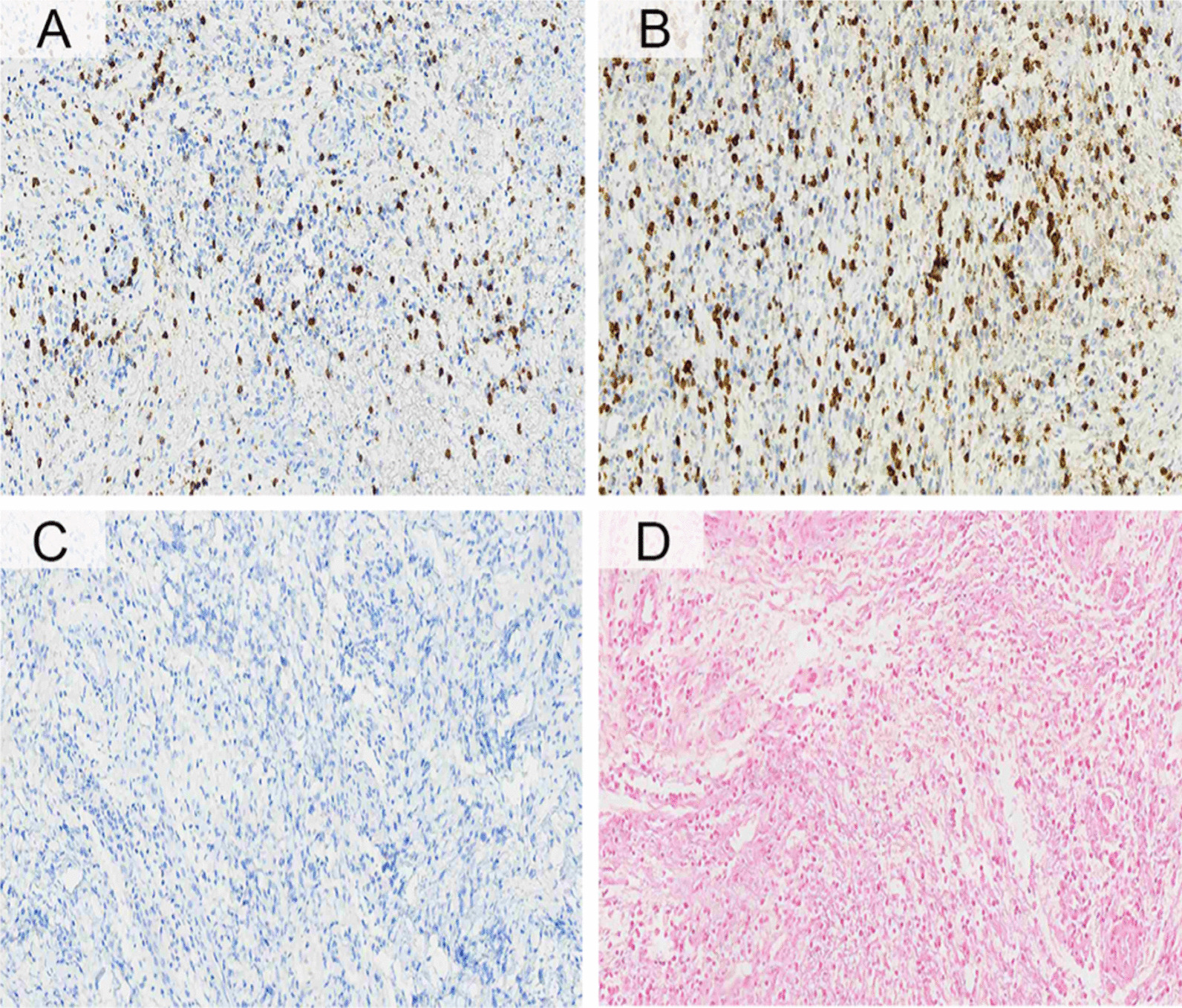
Case description: A 57-year-old female patient was diagnosed with extranodal nasal type NK/T cell lymphoma and underwent curative treatment with allo-HSCT. Twenty-one days after the last clinical follow-up, the patient presented a necrotizing lesion in the papilla region between the first and second molars of the second quadrant. Histopathological analysis showed the presence of a bacterial cluster consistent with Actinomyces infection, and a dense lymphoid infiltrate was also observed. Immunohistochemistry for CD20, CD3, and CD56 was performed to exclude the possibility of the recurrence of extranodal NK/T cell lymphoma. Oral microbiota profiling showed a huge increase in the abundance of Actinomyces bacteria in the subgingival region three weeks prior to appearance of the lesion.
Conclusions: Opportunistic infections with an unusual clinical appearance are confounding factors in therapeutic decision-making. We present for the first time a case of actinomycosis in the gingival papilla region following allo-HSCT. We also highlight how microbiota profiling through next-generation sequencing could be used to anticipate bacterial infection diagnosis.
Keywords: Actinomycosis; Allogeneic hematopoietic stem-cell transplant; Oral diseases; Oral microbiota.
© 2023. The Author(s).
Conflict of interest statement
The authors declare no competing interests.
Figures
References
-
- Kawajiri J, Nagata K, Nakamura A, Fujieda A, Ino K, Nomura J, et al. Clinical utility of oral management in allogeneic hematopoietic stem cell transplantation recipients: microbiological evidence based on molecular analysis of oral bacteria. Support Care Cancer. 2022;30(1):757–764. doi: 10.1007/s00520-021-06462-9. - DOI - PubMed
-
- Elad S, Raber-Durlacher JE, Brennan MT, Saunders DP, Mank AP, Zadik Y, et al. Basic oral care for hematology–oncology patients and hematopoietic stem cell transplantation recipients: a position paper from the joint task force of the Multinational Association of Supportive Care in Cancer/International Society of Oral Oncology (MASC. Support Care Cancer. 2015;23(1):223–236. doi: 10.1007/s00520-014-2378-x. - DOI - PMC - PubMed
Publication types
MeSH terms
LinkOut - more resources
Full Text Sources
Research Materials
