


The Contribution of Attentional Control and Working Memory to Reading Comprehension and Decoding
- PMID: 36733663
- PMCID: PMC9891492
- DOI: 10.1080/10888438.2014.902461
The Contribution of Attentional Control and Working Memory to Reading Comprehension and Decoding
Abstract
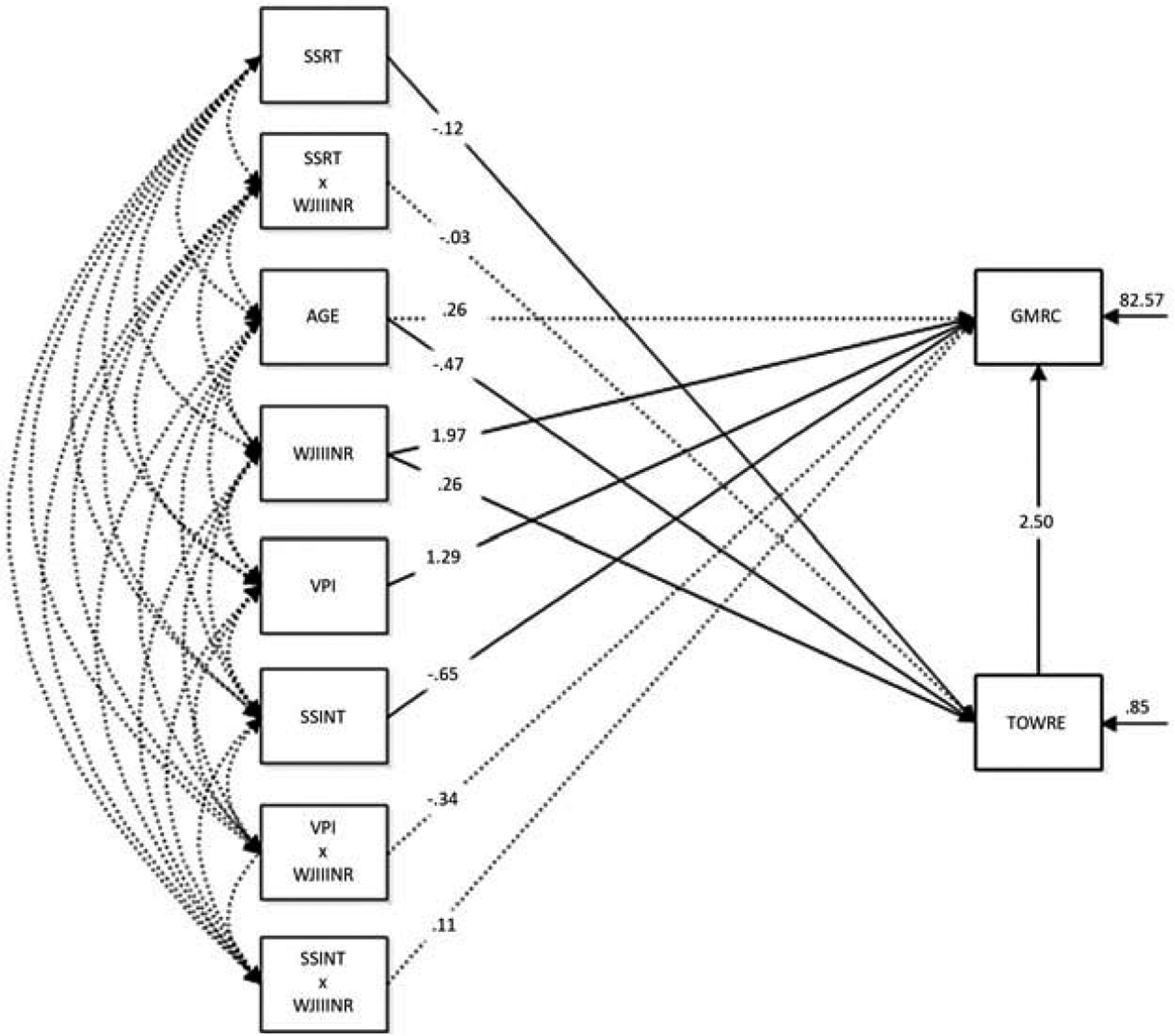
Little is known about how specific components of working memory, namely, attentional processes including response inhibition, sustained attention, and cognitive inhibition, are related to reading decoding and comprehension. The current study evaluated the relations of reading comprehension, decoding, working memory, and attentional control in 1,134 adolescent students. Path analyses were used to assess the direct and indirect effects of working memory and aspects of attentional control on reading comprehension and decoding. There were significant direct effects of working memory, sustained attention, and cognitive inhibition on reading comprehension, but not decoding. There was a significant direct effect of working memory and response inhibition on decoding, but not comprehension. These results suggest that different aspects of attentional control are important for decoding versus comprehension.
Figures


References
-
- Aaron PG, Joshi RM, Palmer H, Smith N, & Kirby E (2002). Separating genuine cases of reading disability from reading deficits caused by predominantly inattentive ADHD behavior. Journal of Learning Disabilities, 35, 425–436. - PubMed
-
- Alloway TP, Elliott J, & Place M (2010). Investigating the relationship between attention and working memory in clinical and community samples. Child Neuropsychology, 16, 242–254. - PubMed
-
- Astle D, & Scerif G (2011). Interactions between attention and visual short-term memory (VSTM): What can be learnt from individual and developmental differences? Neuropsychologia, 49, 1435–1445. - PubMed
-
- Baddeley AD (1986). Working memory. New York, NY: Clarendon/Oxford University Press.
-
- Baddeley AD (1992). Working memory: The interface between memory and cognition. Journal of Cognitive Neuroscience, 4, 281–288. - PubMed
Grants and funding
LinkOut - more resources
Full Text Sources