


Biomechanical homeostasis in ocular diseases: A mini-review
- PMID: 36733902
- PMCID: PMC9886686
- DOI: 10.3389/fpubh.2023.1106728
Biomechanical homeostasis in ocular diseases: A mini-review
Abstract
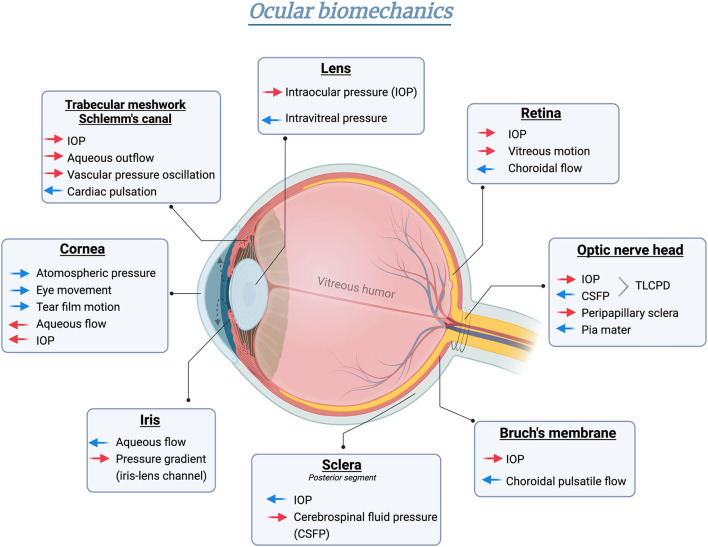
Diabetes mellitus-induced hyperglycemia is responsible for multiple pathological ocular alternations from vasculopathy to biomechanical dyshomeostasis. Biomechanical homeostasis is crucial to maintain the normal physiological condition of the eyes. Biomechanical features vary in eye tissues regarding different anatomical positions, tissue components, and cellular functions. The disturbance in biomechanical homeostasis may result in different ocular diseases. In this review, we provide a preliminary sketch of the latest evidence on the mechano-environment of the eyeball and its possible influencing factors, thereby underscoring the relationship between the dyshomeostasis of ocular biomechanics and common eye diseases (e.g., diabetic retinopathy, keratoconus, glaucoma, spaceflight-associated neuro-ocular syndrome, retinal vein occlusion and myopia, etc.). Together with the reported evidence, we further discuss and postulate the potential role of biomechanical homeostasis in ophthalmic pathology. Some latest strategies to investigate the biomechanical properties in ocular diseases help unveil the pathological changes at multiple scales, offering references for making new diagnostic and treatment strategies targeting mechanobiology.
Keywords: biomechanical homeostasis; diabetic retinopathy; glaucoma; keratoconus; myopia.
Copyright © 2023 Cheng, Ren and Wang.
Conflict of interest statement
The authors declare that the research was conducted in the absence of any commercial or financial relationships that could be construed as a potential conflict of interest.
Figures
References
-
- Giri B, Dey S, Das T, Sarkar M, Banerjee J, Dash SK. Chronic hyperglycemia mediated physiological alteration and metabolic distortion leads to organ dysfunction, infection, cancer progression and other pathophysiological consequences: an update on glucose toxicity. Biomed Pharmacother. (2018) 107:306–28. 10.1016/j.biopha.2018.07.157 - DOI - PubMed
Publication types
MeSH terms
Supplementary concepts
LinkOut - more resources
Full Text Sources
Medical
