. 2023 Aug 1;94(3):249-261.
doi: 10.1016/j.biopsych.2023.01.022. Epub 2023 Feb 1.

Impaired Endogenous Neurosteroid Signaling Contributes to Behavioral Deficits Associated With Chronic Stress

Affiliations

Impaired Endogenous Neurosteroid Signaling Contributes to Behavioral Deficits Associated With Chronic Stress

Najah L Walton et al. Biol Psychiatry. .

Abstract

Background: Chronic stress is a major risk factor for psychiatric illnesses, including depression. However, the pathophysiological mechanisms whereby stress leads to mood disorders remain unclear. Allopregnanolone acts as a positive allosteric modulator preferentially on δ subunit-containing GABAA (gamma-aminobutyric acid A) receptors. Accumulating clinical and preclinical evidence supports the antidepressant effects of exogenous administration of allopregnanolone analogs; yet, the role of endogenous allopregnanolone in the pathophysiology of depression remains unknown.

Methods: We utilized a chronic unpredictable stress (CUS) mouse model, followed by behavioral and biochemical assays, to examine whether altered neurosteroid signaling contributes to behavioral outcomes following CUS. We subsequently performed in vivo CRISPR (clustered regularly interspaced short palindromic repeats) knockdown of rate-limiting enzymes involved in allopregnanolone synthesis, 5α-reductase type 1 and 2 (5α1/2), in addition to lentiviral overexpression of 5α1/2 in the basolateral amygdala (BLA) of mice that underwent CUS to assess the impact of 5α1/2 on behavioral outcomes.

Results: The expression of δ subunit-containing GABAA receptors and endogenous levels of allopregnanolone were reduced in the BLA following CUS. Treatment with an exogenous allopregnanolone analog, SGE-516, was sufficient to increase allopregnanolone levels in the BLA following CUS. Knockdown of 5α1/2 in the BLA mimicked the behavioral outcomes associated with CUS. Conversely, overexpression of 5α1/2 in the BLA improved behavioral outcomes following CUS.

Conclusions: Our findings demonstrate that chronic stress impairs endogenous neurosteroid signaling in the BLA, which is sufficient to induce behavioral deficits. Further, these studies suggest that allopregnanolone-based treatments may directly target the underlying pathophysiology of mood disorders suggesting that targeting endogenous neurosteroidogenesis may offer a novel therapeutic strategy.

Keywords: Allopregnanolone; Depression; GABA; Neurosteroidogenesis; Neurosteroids; Stress.


Figures

Figure 1.
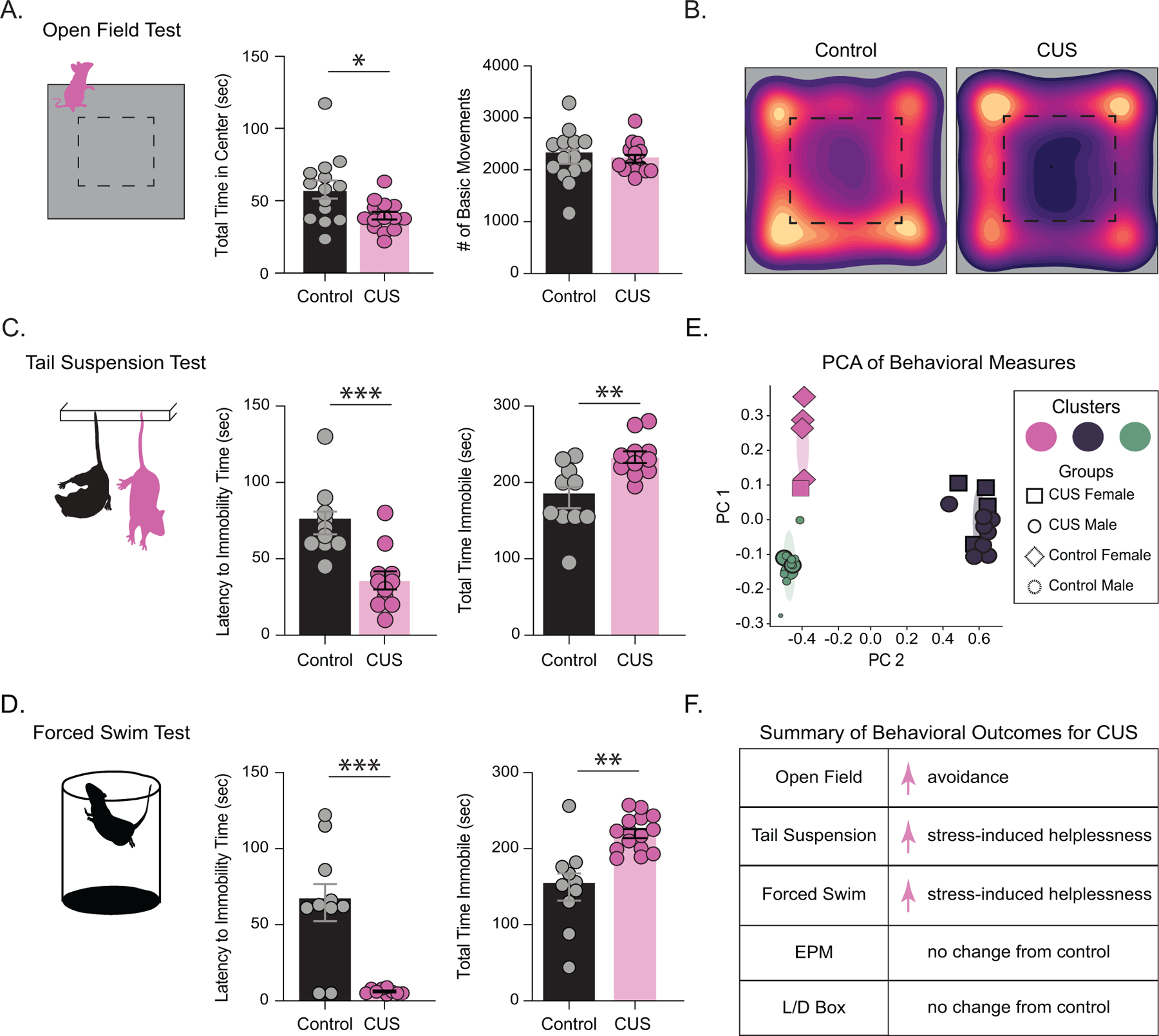
Figure 1.. Chronic unpredictable stress induced behavioral deficits.
CUS increased avoidance behaviors, with decreased total time spent in the center of the open field without altered overall locomotor behavior (A) control n=14, CUS n=15. (B) representative heat maps of mobility during the open field test of control and CUS mice. CUS also increased stress-induced helplessness, with CUS mice exhibiting a decreased latency to immobility time and an increased total time spent immobile during the tail suspension test (C) control n=10, CUS n=11. CUS mice also displayed stress-induced helplessness in the forced swim test, exhibiting a decreased latency to immobility and increased total time immobile compared to controls (D) n=10, CUS n=15. (E) PCA performed on all behavioral outcomes demonstrated different clusters for mice subjected to CUS compared to controls. (F) summary of behavioral outcomes for mice that underwent CUS for transparency across experiments. *denotes p< 0.05, **p<0.01, ***p<0.001 using an unpaired t-test.
Figure 2.
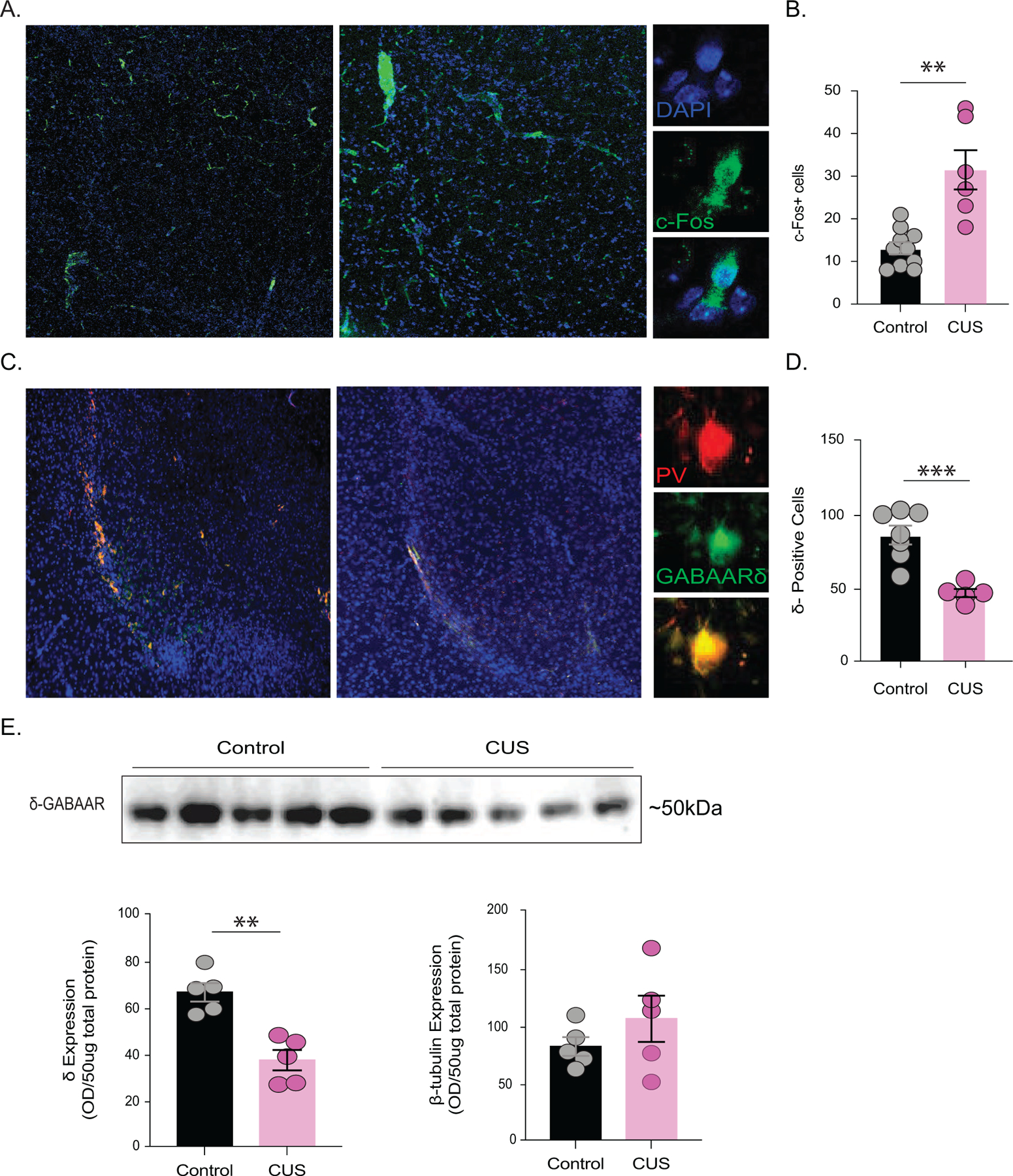
Figure 2.. δ-GABAARs are downregulated in the BLA following CUS.
(A) Representative images of cFos immunofluorescence in the BLA of control and CUS mice. The average number of cFos positive cells in the BLA is reduced in mice subjected to CUS compared to controls (B) control n=10 mice, CUS n=6 mice, average 5 sections per mouse. (C) Representative images of immunofluorescence co-labelling of parvalbumin (PV) interneurons and δ-GABAARs in the BLA. The average number of δ-positive cells in the BLA from control and CUS mice (D) control n=7 mice, CUS n=5 mice, average 5 sections per mouse. (E) (above) Representative western blot for δ-GABAAR expression in total protein isolated from the BLA from control and CUS mice. (below) The average optical density expression of δ-GABAARs and β-tubulin per 25ug of total protein. control n=5 mice, CUS n=5 mice. **denotes p<0.01, ***p<0.001 using an unpaired t-test.
Figure 3.
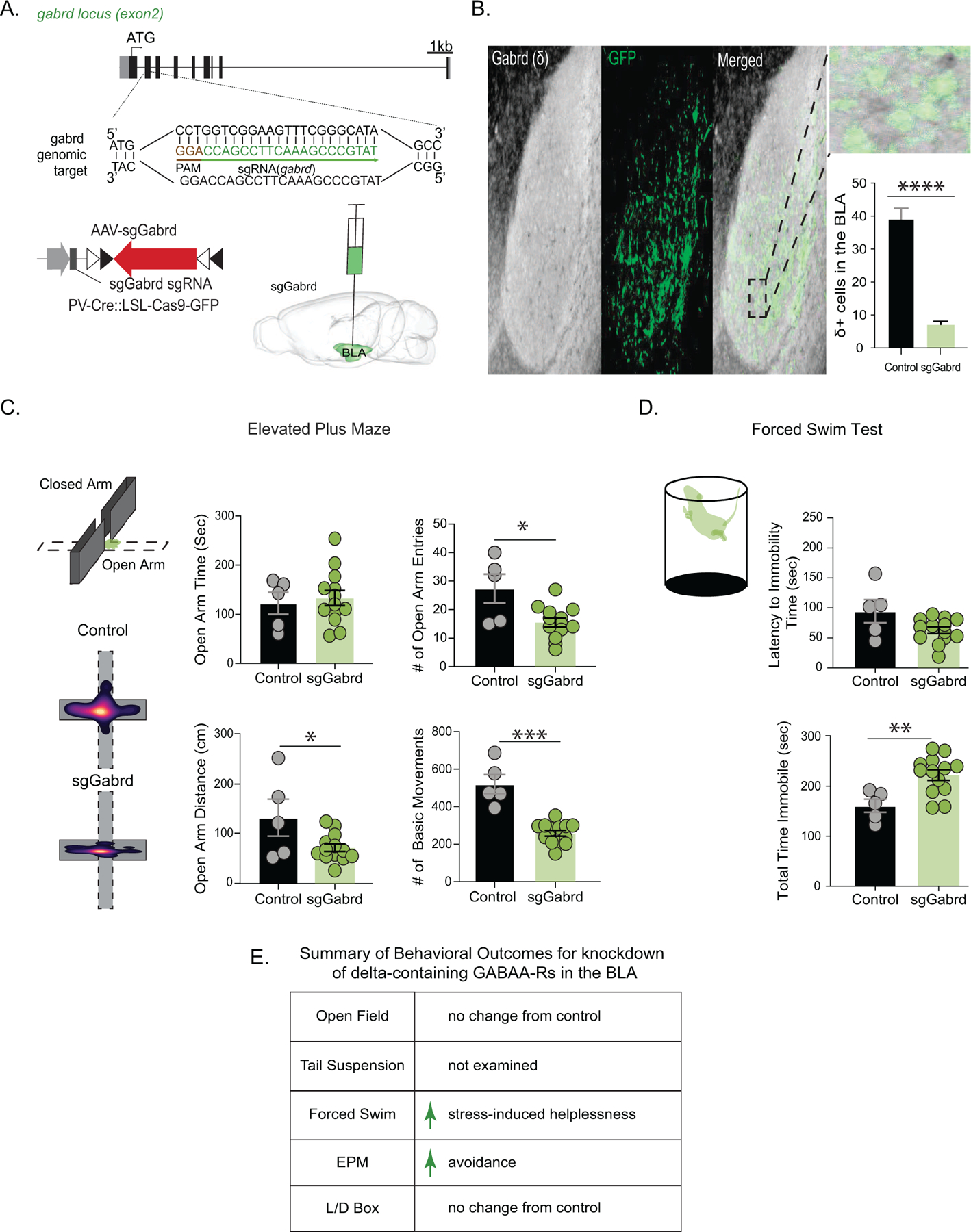
Figure 3.. CRISPR knockdown of δ-GABAARs in the BLA induced behavioral deficits.
(A) A schematic of the sgRNA construct for knockdown of Gabrd and overview of viral targeting strategy in the BLA of PV/Cas9 mice. (B) Representative co-labeling for δ-GABAARs (DAB) and sgRNA expression (GFP) confirmed a loss of δ-GABAARs in GFP-positive cells. The average number of cells expressing δ-GABAARs in the BLA was reduced in mice injected with sgGabrd compared to controls (inset). sgGabrd mice exhibited a reduction in the total distance traveled, number of entries, and a reduction in basic movements with no change in the amount of time spent in the open arm of the elevated plus maze compared to controls (C) control n=5, sgGabrd n=13. sgGabrd mice exhibited an increase in the total time spent immobile in the forced swim test compared to controls without any change in the latency to immobility (D) control n=5, sgGabrd n=13. (E) A summary of behavioral outcomes for knockdown of δ-GABAARs from PV interneurons in the BLA for transparency across figures and experiments. *denotes p < 0.05, **p<0.01, ***p<0.001, ****p<0.0001 using an unpaired t-test.
Figure 4.
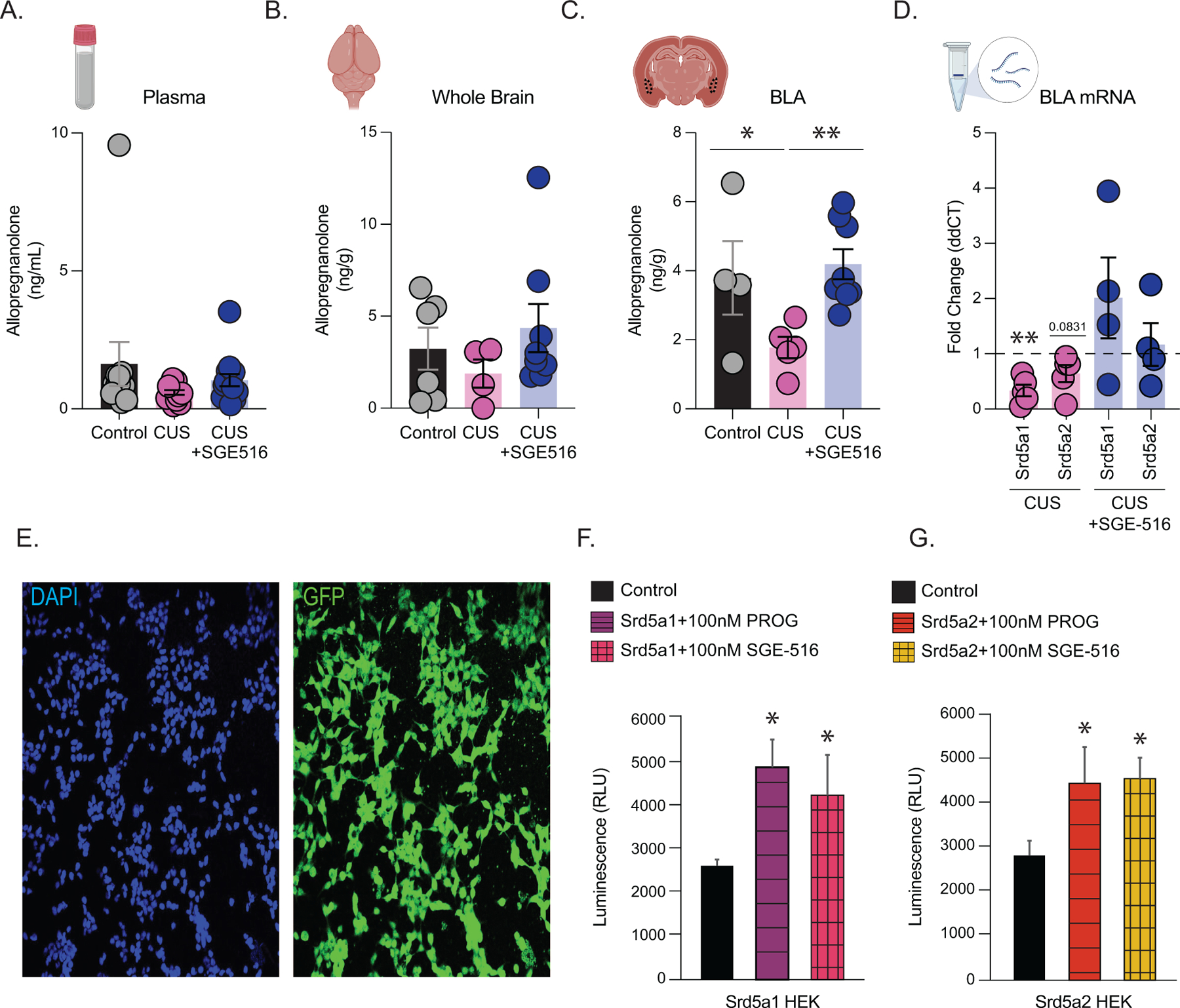
Figure 4.. Exogenous neurosteroid-analog SGE-516 promoted restoration of endogenous allopregnanolone in vivo and in vitro through 5α-reductases type 1 and 2.
LC-MS/MS measurement of allopregnanolone levels from control, CUS, and CUS+SGE-516 mice. (A) plasma, control n=10, CUS n=13, CUS+SGE-516 n=14 (B) whole brain, control n=6, CUS n=4, CUS+SGE-516 n=8 and (C) BLA samples, control n=4, CUS n=5, CUS+SGE-516 n=8. (D) qRT-PCR measurement of BLA mRNA levels of Srd5a1 and Srd5a2 normalized to β-actin and control levels, control n=16; CUS n=20; CUS+SGE-516 n=16 pooled BLA samples from 4 mice per experiment. (E) Representative images of Srd5a1 and Srd5a2 expressing cell lines showing cell confluency by DAPI staining left, and Srd5a1 and Srd5a2 GFP tag right. Quantification of NADP assay readout for luminescence from (F) Srd5a1 and (G) Srd5a2 expressing cell lines following application of control, progesterone, and SGE-516 treatments.
Figure 5.
Figure 5.. Knockdown of Srd5a1 and Srd5a2 in the BLA induced behavioral deficits.
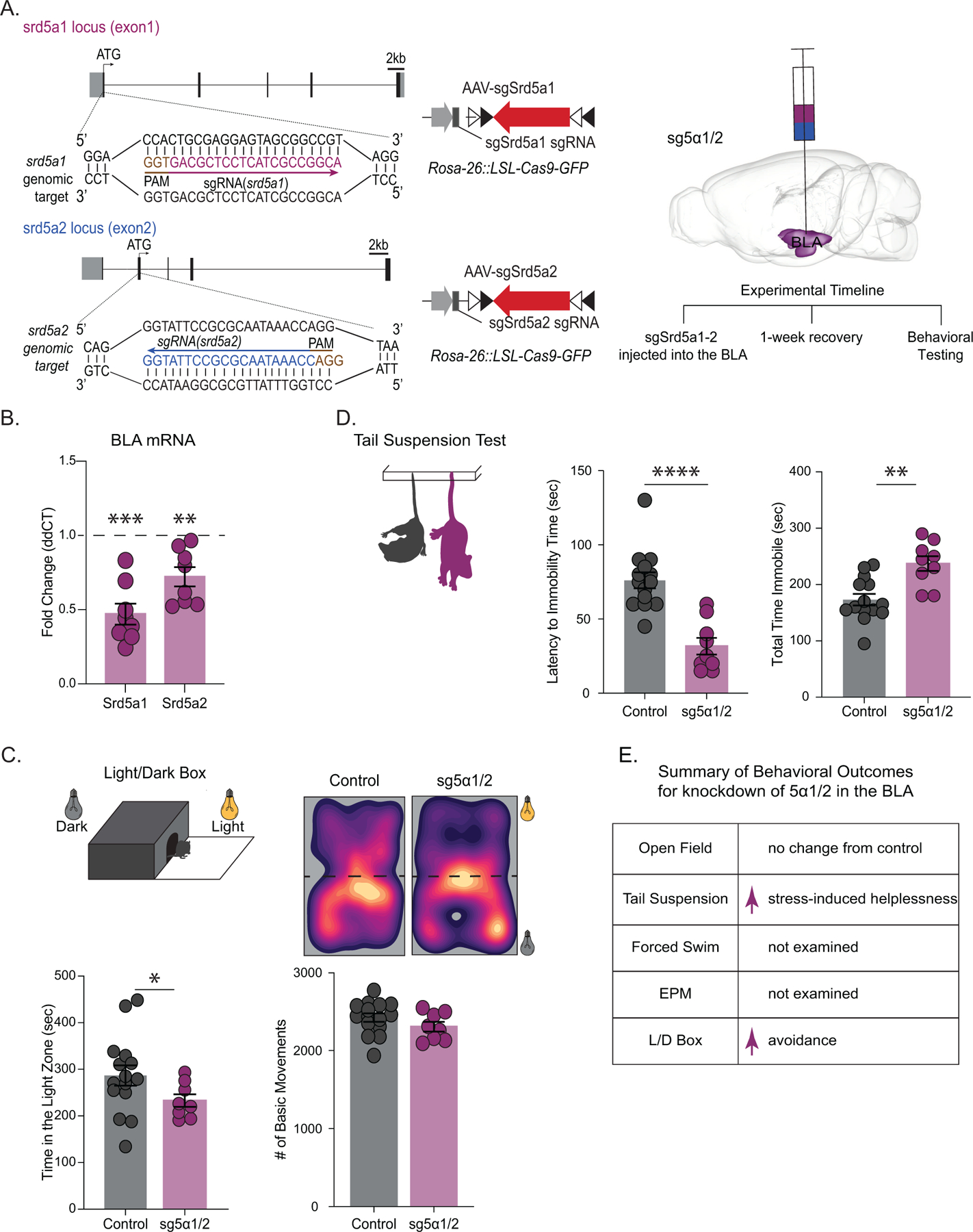
(A) (left) A schematic of the sgRNA construct for the knockdown of Srd5a1 and Srd5a2 in the BLA of constitutive Cas9 mice and the experimental timeline (right). The average expression of Srd5a1 and Srd5a2 mRNA in the BLA of sg5α1/2mice decreased compared to controls measured using qRT-PCR normalized to β-actin levels (B) control n=15, sg5α1/2 n=8. (above) Representative heat maps of movement of control and sgSrd1/2 mice in the light/dark box test. (below) Knockdown of 5α1/2 increased avoidance behaviors, evident from a decrease in the amount of time spent in the light chamber of the light/dark box with no change in basic movements (C) control n=15, sg5α1/2 n=8. Knockdown of 5α1/2 in the BLA increased stress-induced helplessness, evident by a decreased latency to immobility and an increased total time spent immobile during the tail suspension test (D) control n=14, 5α1/2 n=9.(E) Summary of behavioral outcomes for transparency across behavioral tests. * denotes p < 0.05, **p<0.01, ***p<0.001, ****p<0.0001 using an unpaired t-test.
Figure 6.
Figure 6.. Overexpression of Srd5a1 and Srd5a2 improved behavioral outcomes following CUS.
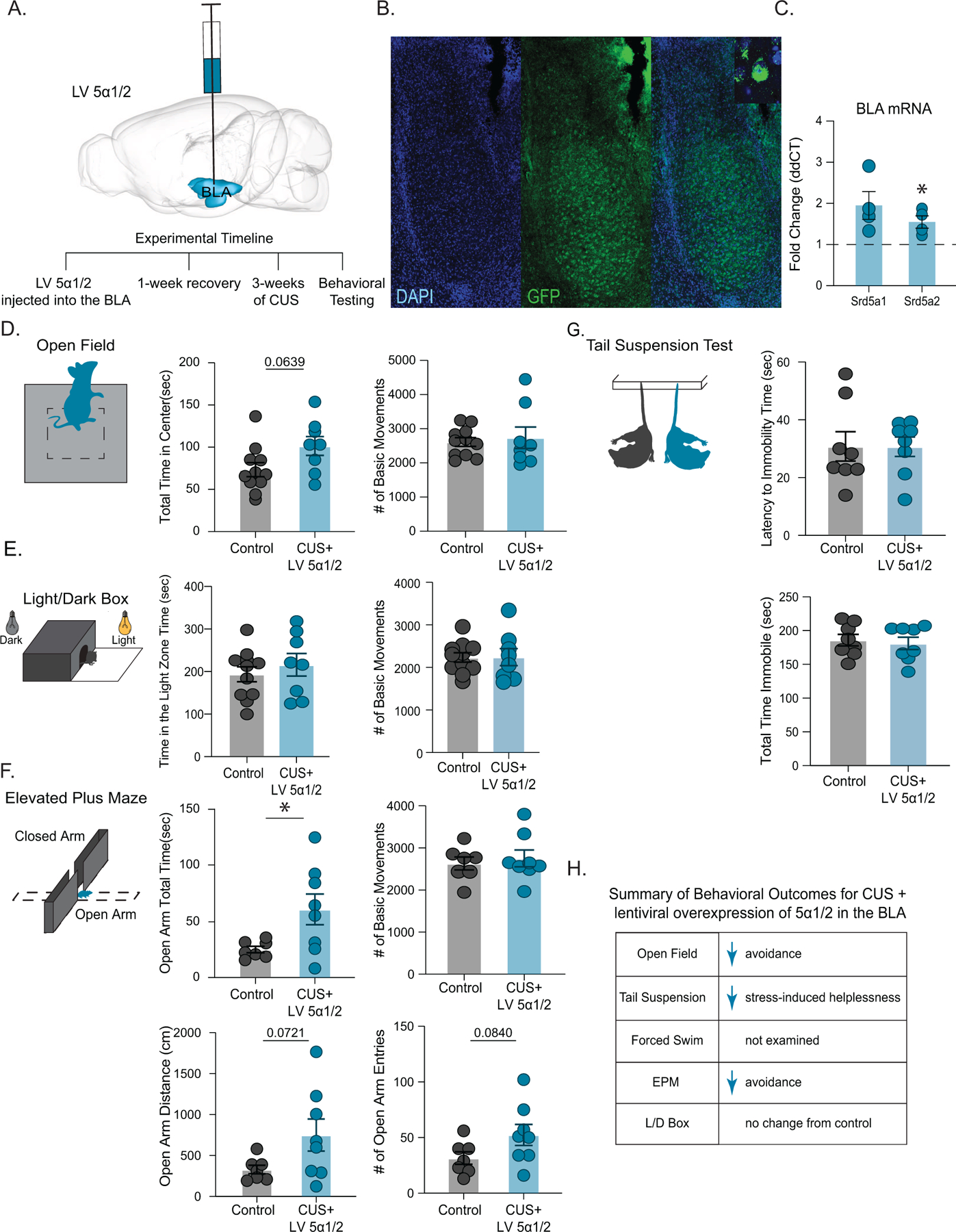
(A) (above) Schematic of lentiviral construct and targeting for overexpression of Srd5a1 and Srd5a2 in the BLA and the experimental timeline (below). (B) Representative immunofluorescence of GFP-tagged lentiviral targeting in the BLA of LV 5α1/2 mice. (C) The average mRNA expression of Srd5a1 and Srd5a2 increased in LV 5α1/2 mice compared to controls measured using qRT-PCR in the BLA of LV 5α1/2 mice, which were normalized to β-actin levels, control n=7, LV 5α1/2 n=4. (D) Overexpression of 5α1/2 decreased avoidance behaviors in CUS mice, exhibited as no change in the time spent in the center of the open field test compared to controls with no change in the total number of basic movements. control n=11, CUS+LV 5α1/2 n=8. These mice did not differ from controls in the time spent in the light zone or the number of basic movements performed in the light/dark box test control (E) n=11, CUS+LV 5α1/2 n=8. (F) CUS mice with overexpression of 5α1/2 in the BLA also demonstrated a decrease in stress-induced anxiety, indicated by an increase in the total time spent in the open arm of the elevated plus maze with no change in basic movements compared to controls. LV Srd5a1/2 mice subjected to CUS also exhibited a trend towards traveling further and performing more entries into the open arm of the elevated plus maze. control n=7, CUS+LV 5α1/2 n=8. (G) CUS mice with overexpression of 5α1/2 in the BLA exhibited a decrease in stress-induced helplessness as demonstrated by similar latency to immobility and overall time immobile in the tail suspension test. control n=8, CUS+LV 5α1/2 n=8. (H) summary of behavioral outcomes for CUS mice with lentiviral overexpression of 5α1/2 in the BLA. p > 0.05 is not significant, * Denotes p < 0.05, **p<0.01, ***p<0.001 using an unpaired t-test.
Figure 7.
Figure 7.. Summary of major findings.
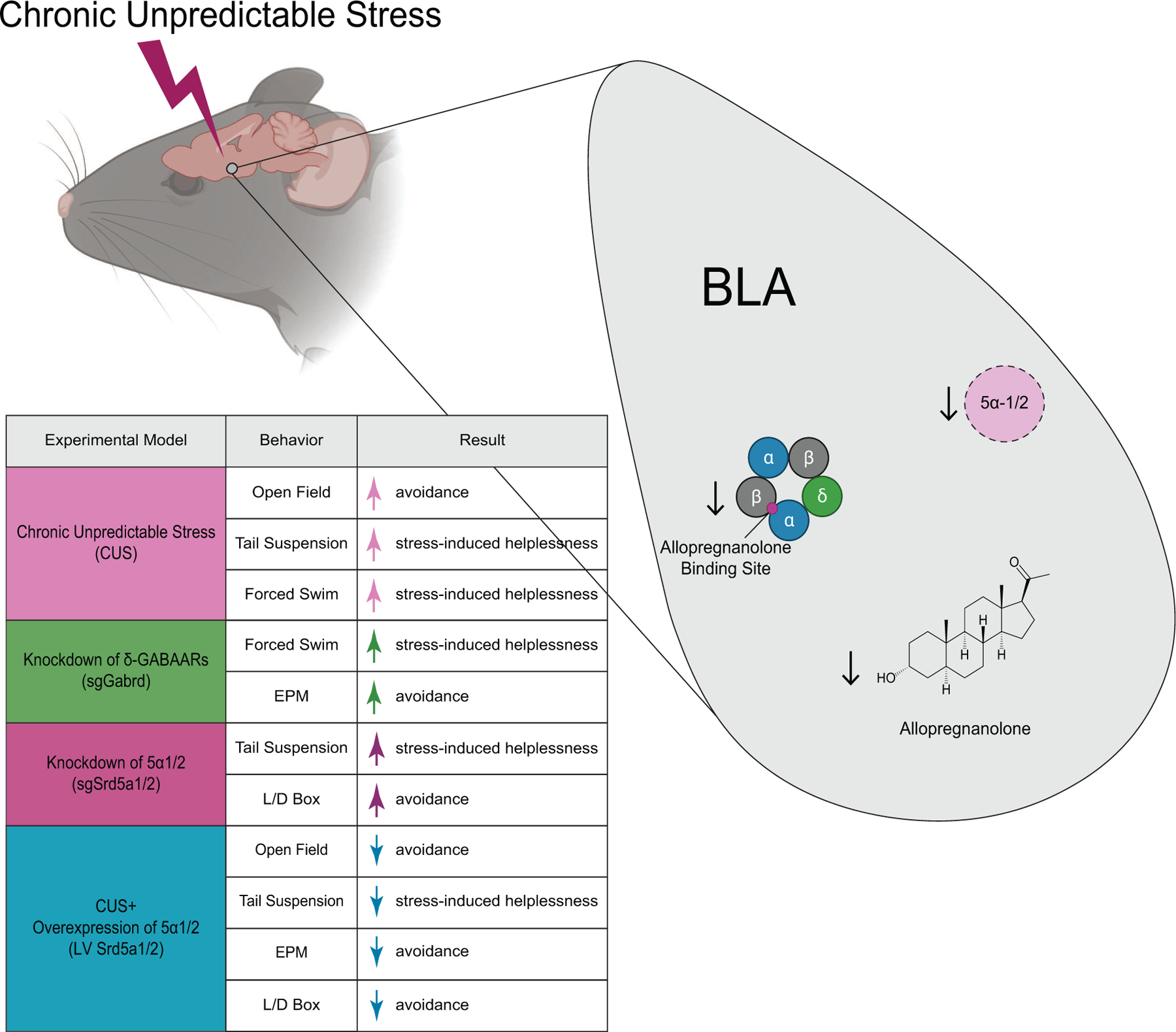
Chronic unpredictable stress increases avoidance behaviors and stress-induced helplessness. Knocking down key enzymes involved in endogenous neurosteroid synthesis, 5α-reductase 1 and 2, in the BLA was sufficient to increase avoidance behaviors and stress-induced helplessness. Similarly, knocking down the primary site of action for neurosteroid signaling, δ-GABAARs, also increased avoidance behaviors and stress-induced helplessness. Conversely, overexpression of 5α-reductase 1 and 2 prevented the behavioral deficits following CUS, resulting in no change or even a reduction in avoidance behaviors or stress-induced helplessness compared to controls.

Comment in

References

    1. Mackenzie G, & Maguire J (2013). Neurosteroids and GABAergic signaling in health and disease. Biomol Concepts, 4(1), 29–42. 10.1515/bmc-2012-0033 - DOI - PMC - PubMed
    1. Dong E, Matsumoto K, Uzunova V, Sugaya I, Takahata H, Nomura H, et al. (2001). Brain 5α-dihydroprogesterone and allopregnanolone synthesis in a mouse model of protracted social isolation. Proceedings of the National Academy of Sciences of the United States of America, 98(5), 2849–2854. 10.1073/pnas.051628598 - DOI - PMC - PubMed
    1. Matsumoto K, Pinna G, Puia G, Guidotti A, & Costa E (2005). Social isolation stress-induced aggression in mice: a model to study the pharmacology of neurosteroidogenesis. Stress (Amsterdam, Netherlands), 8(2), 85–93. 10.1080/10253890500159022 - DOI - PubMed
    1. Serra M, Pisu MG, Littera M, Papi G, Sanna E, Tuveri F, et al. (2002). Social isolation-induced decreases in both the abundance of neuroactive steroids and Gabaa receptor function in rat brain. Journal of Neurochemistry, 75(2), 732–740. - PubMed
    1. Agís-Balboa RC, Pinna G, Pibiri F, Kadriu B, Costa E, & Guidotti A (2007). Down-regulation of neurosteroid biosynthesis in corticolimbic circuits mediates social isolation-induced behavior in mice. Proceedings of the National Academy of Sciences of the United States of America, 104(47), 18736–18741. 10.1073/pnas.0709419104 - DOI - PMC - PubMed

Publication types

LinkOut - more resources