


The factors associated with the trend in incidence of Bacteraemia and associated mortality over 30 years
- PMID: 36737678
- PMCID: PMC9897612
- DOI: 10.1186/s12879-023-08018-0
The factors associated with the trend in incidence of Bacteraemia and associated mortality over 30 years
Abstract
Background: Studies have reported increased incidence of BSI over the past decades and indicate that it is necessary to investigate the causes. The aim of this study was to determine the factors affecting trends in the incidence of bacteraemias and associated mortality.
Methods: We conducted a retrospective cohort study assessing prospectively collected data of all clinically significant bacteraemias between 1991 and 2020 in a 450-bed hospital. We determined the evolution of bacteraemia-associated incidence, adjusted 30-day mortality and performed multivariable logistic regression to compare the evolution of variables associated with mortality between 5-year periods.
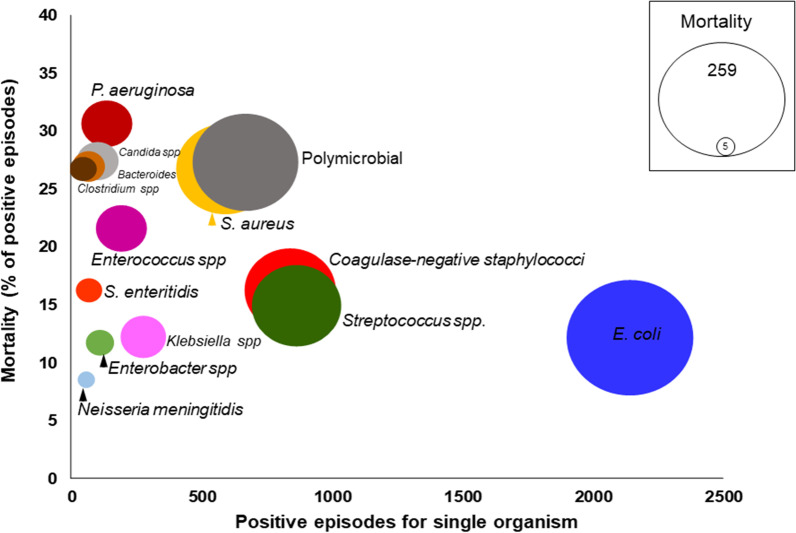
Results: 6777 episodes were included, 59.7% males, age 66.5 ± 18.2, 39.4% ≥ 75 years. The incidence total increased: 43.8/100,000/year in 1991-1995 to 205 in 2016-2020; community-acquired bacteraemia (24.9 to 139) and hospital-acquired (0.36/1000 inpatients-days to 1.09). Bacteraemia with source in vascular catheter, urinary and biliary tract increased. The 30-day mortality rate of patients was 1179/6777 (17.4%) in the whole series and population-adjusted mortality incidence increased from 11.4/100,000 in 1991-1996 to 28.4 in 2016-2020 (RR 2.49, 95% CI 2.01-3.08). Mortality was higher in men (18.2% vs 16.3%) and those over 74 years (22.2% vs 14.3%). Appropriate empirical antimicrobial treatment improved (66.5% to 73.1%), 30-day mortality of patients decreased from 26.1 to 13.9%. When comparing the evolution of the factors associated with mortality between 1991 and 1996 vs 2016-2020, the frequency of some variables associated with higher mortality increased: male sex (OR 1.38, 95% CI 1.10-1,74), age (OR 1.02, 1.01-10.3), immunosuppressive treatment (OR 3.1, 2.09-4.6), polymicrobial bacteraemia (OR 1.76, 1.12-2.79), and others decreased: severe sepsis/septic shock (OR 0.70, 0.52-0.93), spontaneous bacterial peritonitis in cirrhosis (OR 0.06, 0.02-0.23), endocarditis (OR 0.54, 0.35-0.83); on the other hand, the frequency of factors associated with lower mortality increased: urinary (OR 1.67, 95% CI 1.23-2.27) and bile tract source (OR 1.59, 1.04-2.43), and adequate empirical treatment (OR 1.42, 95% CI 1.10-1.83).
Conclusions: The incidence of bacteraemia increased due to more elderly, co-morbid patients undergoing procedures and more device related bacteraemia. The percentage of mortality decreased because adequate empirical treatment improved, decreased spontaneous bacterial peritonitis in cirrhosis and endocarditis, and increased bacteraemia of urinary and biliary tract source.
Keywords: Bacteraemias; Community acquired; Epidemiology; Morbidity; Nosocomial.
© 2023. The Author(s).
Conflict of interest statement
The authors declare no conflict of interest.
Figures

References
MeSH terms
Substances
LinkOut - more resources
Full Text Sources
Medical
Miscellaneous
