


Species-specific immunogenicity and protective efficacy of a vesicular stomatitis virus-based Sudan virus vaccine: a challenge study in macaques
- PMID: 36739878
- PMCID: PMC10010116
- DOI: 10.1016/S2666-5247(23)00001-0
Species-specific immunogenicity and protective efficacy of a vesicular stomatitis virus-based Sudan virus vaccine: a challenge study in macaques
Abstract
Background: The recent Sudan virus (SUDV) outbreak in Uganda highlights the need for rapid response capabilities, including development of vaccines against emerging viruses with high public health impact. We aimed to develop a Sudan virus-specific vaccine suitable for emergency use during outbreaks.
Methods: We generated and characterised a vesicular stomatitis virus (VSV)-based vaccine, VSV- SUDV, and evaluated the protective efficacy following a single-dose vaccination against lethal SUDV infection in non-human primates (NHPs). We used male and female cynomolgus macaques (n=11) aged 6-11 years and weighing 3·8-9·0 kg. Animals received a 1 mL intramuscular injection for vaccination containing either 1 × 10⁷ plaque forming units (PFU) VSV-SUDV or 1 × 10⁷ PFU of a VSV-based vaccine against Marburg virus (control; five NHPs). NHPs were challenged intramuscularly 28 days after vaccination with 1 × 10⁴ TCID50 SUDV-Gulu. We assessed anaesthetised NHPs on days 28, 21, 14, and 7 before challenge; days 0, 3, 6, 9, 14, 21, 28, and 35 after challenge; and at euthanasia (day 40 for survivors). As we repurposed NHPs from a successful VSV-Ebola virus (EBOV) vaccine efficacy study, we also investigated VSV-EBOV's cross-protective potential against SUDV challenge.
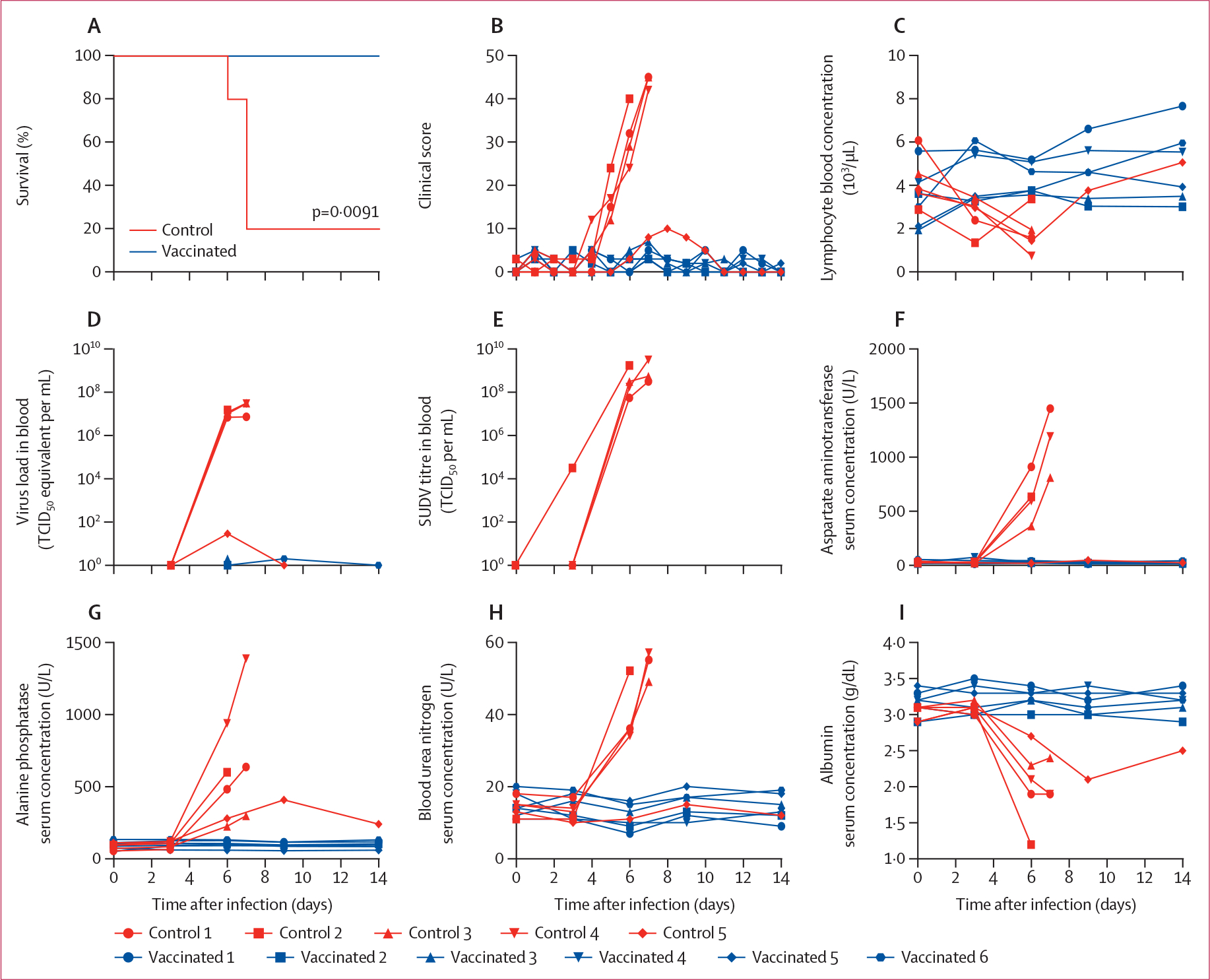
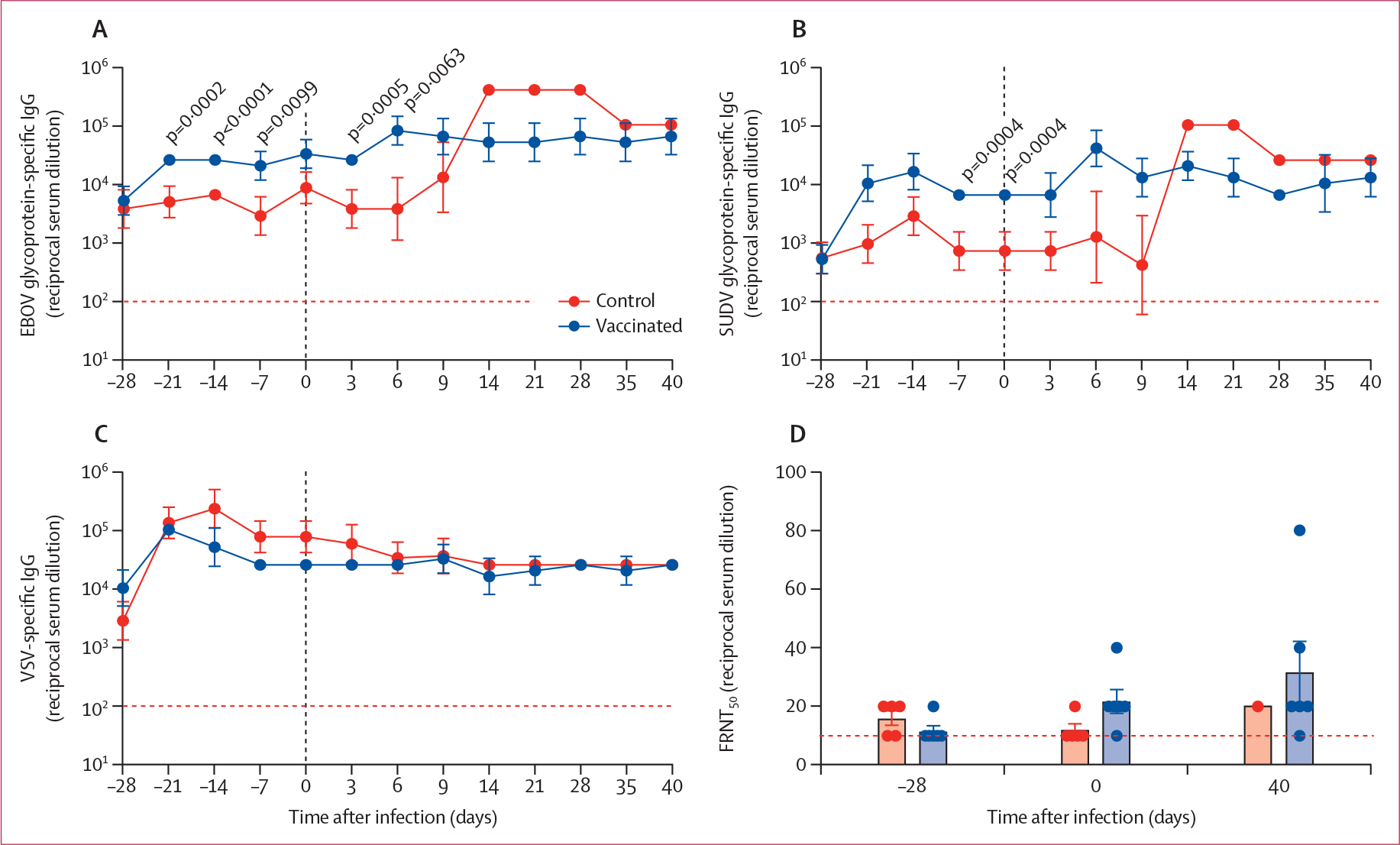
Findings: Of the six NHPs given VSV-SUDV, none showed any signs of disease in response to the challenge. Four of the five NHPs in the control group developed characteristic clinical signs of Sudan virus diseases. SUDV glycoprotein-specific IgG concentrations peaked 14 days after vaccination (titre of >1:10 000) and reached their highest concentrations at 6 days after challenge (1:25 600-1:102 400). Although the NHPs developed cross-reactive humoral responses to SUDV after VSV-EBOV vaccination and EBOV challenge, there was little cross-protection.
Interpretation: These data emphasise the need for species-specific vaccines for each human-pathogenic Ebolavirus. Furthermore, although previous VSV-EBOV immunity is boosted through VSV-SUDV vaccination, it only has a small effect on the immunogenicity and protective efficacy of VSV-SUDV vaccination against SUDV challenge.
Funding: Intramural Research Program, US National Institute of Allergy and Infectious Diseases, National Institutes of Health.
Copyright © 2023 The Author(s). Published by Elsevier Ltd. This is an Open Access article under the CC BY-NC-ND 4.0 license. Published by Elsevier Ltd.. All rights reserved.
Conflict of interest statement
Declaration of interests HF claims intellectual property of VSV-based filovirus vaccines. All other authors declare no competing interests.
Figures

References
-
- WHO. Ebola disease caused by Sudan virus—Uganda. Sept 26, 2022. https://www.who.int/emergencies/disease-outbreak-news/item/2022-DON410 (accessed Dec 3, 2022).
-
- WHO. Ebola virus disease in Uganda SitRep—93. https://www.afro.who.int/countries/uganda/publication/ebola-virus-diseas... (accessed Oct 27, 2022).
-
- Steenhuysen J US sends experimental antibody, antiviral drug to Uganda for Ebola outbreak. Oct 18, 2022. https://www.reuters.com/business/healthcare-pharmaceuticals/us-sends-exp... (accessed Dec 3, 2022).
Publication types
MeSH terms
Substances
Grants and funding
LinkOut - more resources
Full Text Sources
Other Literature Sources
Medical
Research Materials
