


Two-thirds of pregnant mothers attending antenatal care services at Arsi Zone, Oromia Regional State, Ethiopia had no comprehensive knowledge of HIV/AIDS: A cross-sectional study
- PMID: 36741929
- PMCID: PMC9893063
- DOI: 10.1177/20503121221145614
Two-thirds of pregnant mothers attending antenatal care services at Arsi Zone, Oromia Regional State, Ethiopia had no comprehensive knowledge of HIV/AIDS: A cross-sectional study
Abstract
Objective: The study aimed to assess the magnitude and factors associated with comprehensive knowledge of HIV/AIDS among pregnant mothers attending antenatal care (ANC) services at health institutions in Arsi zone, Oromia Regional State, Ethiopia.
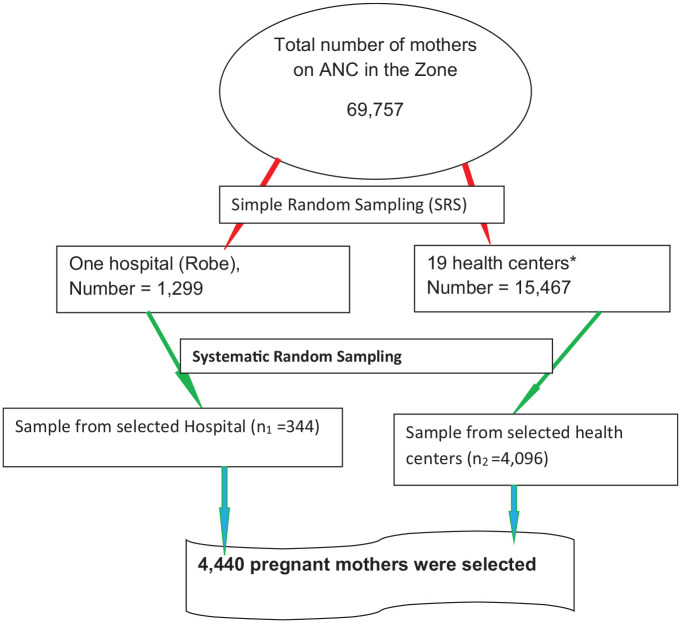
Methods: The study employed a health facility-based cross-sectional study design from 18 March to 25 June 2019. Out of an estimated sample size of 4481, a total of 4440 (92.23%) pregnant women were selected by multistage random sampling technique and interviewed. Multivariable binary logistic regression was used to identify the factors associated with comprehensive knowledge of HIV/AIDS. The model fitness was tested by Hosmer and Lemeshow goodness of fit, which provided a p value of 0.72 and deviance reduced (i.e., -2log likelihood was reduced from 5580.38 to 5069.55 with a p value of 0.000).
Results: Out of the total mothers (4440) interviewed, only 1430 (32.2%; 95% confidence interval: (30.83%, 33.60%)) had comprehensive knowledge about HIV/AIDS. Not knowing safe period to be pregnant (adjusted odds ratio = 0.67; 95% confidence interval: 0.56, 0.81), and not empowering women's for sexual practice (adjusted odds ratio = 0.50; 95% confidence interval: 0.43, 0.58) let women have less comprehensive knowledge while women who never educated about the sexual matter (adjusted odds ratio = 1.65; 95% confidence interval: 1.42, 1.92), who had a discouraging attitude toward having multiple partners (adjusted odds ratio = 1.53; 95% confidence interval: 1.24, 1.88), who had a discouraging attitude toward premarital sex (adjusted odds ratio = 1.68; 95% confidence interval: 1.38, 2.03), and who had a positive attitude toward accepting HIV/AIDS patients (2.69; 95% confidence interval: 2.34, 3.10) had more comprehensive knowledge of HIV/AIDS.
Conclusion: Only about one-third (32.2%) of pregnant mothers on ANC follow-up had comprehensive knowledge. Thus, it would be better if the health institutions emphasize educating the mothers attending antenatal care follow-up about HIV/AIDS, for those who do not know pregnancy occurrence date, not empowered of sexual practice, and had an encouraging attitude toward multiple partners, premarital sex, and negative attitude toward accepting HIV/AIDS patients.
Keywords: Comprehensive knowledge of HIV/AIDS; mothers attending ANC; mothers’ HIV/AIDS knowledge.
© The Author(s) 2023.
Conflict of interest statement
The author(s) declared no potential conflicts of interest with respect to the research, authorship, and/or publication of this article.
Figures
References
-
- UNAIDS. Ending AIDS: progress towards the 90 –90 –90 targets. Global AIDS update 2017. Geneva: UNAIDS, http://www.unaids.Org/sites/default/files/media_asset/Global_AIDS_update... (2017, accessed 18 November 2021).
-
- World Health Organization. Global guidance on criteria and processes for validation of elimination of mother-to-child transmission of HIV and syphilis, 2nd edn. Geneva: World Health Organization, 2017.
-
- Federal Ministry of Health. National guideline for prevention of mother-to-child transmission of HIV, Syphilis and Hepatitis B Virus. Ethiopia: ICAP, 2021.
-
- UNAIDS. The gap report 2014: children and pregnant women living with HIV. Geneva: UNAIDS, p.5; http://www.unaids.org/sites/default/files/media_asset/09_Childrenandpreg... (2014, accessed 18 November 2021).
-
- World Health Organization. Global guidance on criteria and processes for validation: elimination of mother-to-child transmission of HIV and Syphilis. Geneva, Switzerland: WHO, 2017.
LinkOut - more resources
Full Text Sources
