


The effect of HIIT on body composition, cardiovascular fitness, psychological well-being, and executive function of overweight/obese female young adults
- PMID: 36743598
- PMCID: PMC9891140
- DOI: 10.3389/fpsyg.2022.1095328
The effect of HIIT on body composition, cardiovascular fitness, psychological well-being, and executive function of overweight/obese female young adults
Abstract
Purpose: To evaluate the effect of a short-term HIIT program on the selected health-related parameters for overweight/obese young adult women in a university context.
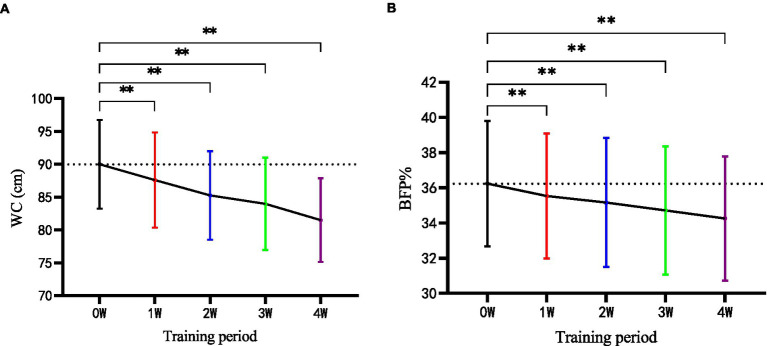
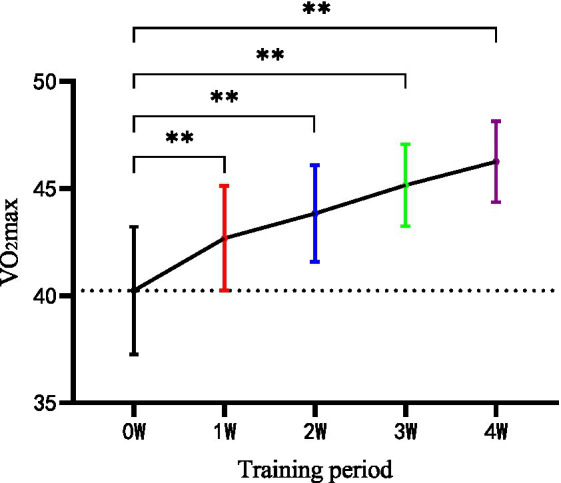
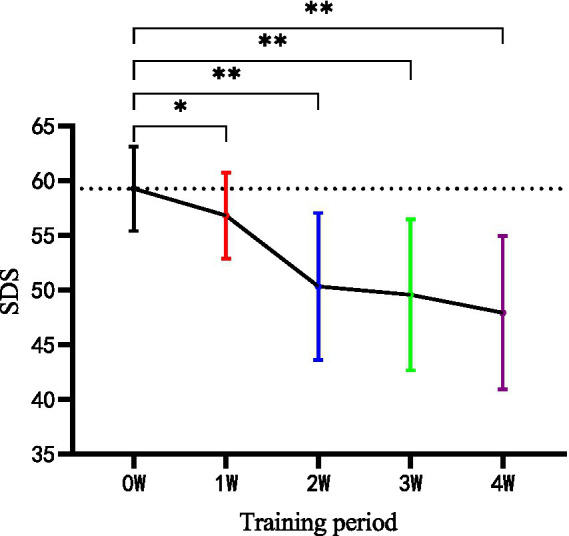
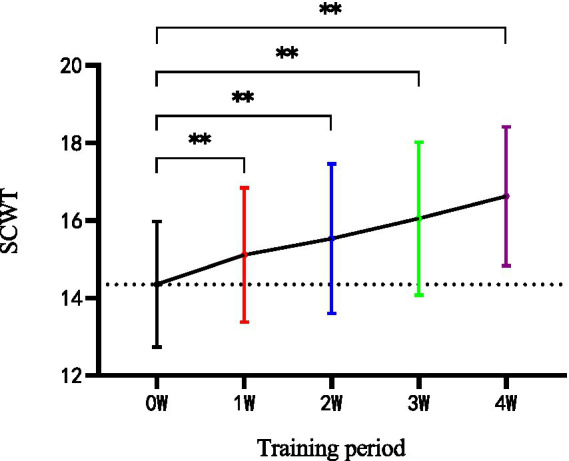
Methods: A total of 48 participants were randomly divided into two groups. The exercise group (HIIT) received a HIIT intervention of aerobics for 4 weeks, while the control group (CON) received no training. Body composition including waist circumference (WC), body fat percentage (BF %), Cardiorespiratory fitness (VO2max), the score of Self-Rating Depression Scale (SDS), and Stroop word-color test (SCWT) results were assessed before and after the intervention along with within- and between-group comparisons.
Results: All the indices were significantly improved in HIIT group (p < 0.01) after 4 weeks of intervention. No significant changes were found in CON. There were significant differences between HIIT and CON in cardiovascular fitness (p < 0.01), SDS (p < 0.01) and SCWT (p < 0.05) before and after 4 weeks. In addition, weekly measurements of HIIT effects showed significant changes (p < 0.01) from the second week in the variables of body composition, VO2max, SDS and SCWT when compared with the baseline and maintained the tendency till the end of program.
Conclusion: The short-term HIIT aerobics of the campus program conducted in a non-lab setting induced significant improvements in body composition, cardiovascular fitness, psychological well-being and executive function in overweight young female adults.
Keywords: HIIT; body composition; executive function; female young adults; psychological well-being.
Copyright © 2023 Guo, Chen and Yuan.
Conflict of interest statement
The authors declare that the research was conducted in the absence of any commercial or financial relationships that could be construed as a potential conflict of interest.
Figures
References
-
- Abdel-Baki A., Brazzini-Poisson V., Marois F., Letendre É., Karelis A. D. (2013). Effects of aerobic interval training on metabolic complications and cardiorespiratory fitness in young adults with psychotic disorders: a pilot study. Schizophr. Res. 149, 112–115. doi: 10.1016/j.schres.2013.06.040, PMID: - DOI - PubMed
-
- Bartlett J. D., Close G. L., MacLaren D. P. M., Gregson W., Drust B., Morton J. P. (2011). High-intensity interval running is perceived to be more enjoyable than moderate-intensity continuous exercise: implications for exercise adherence. J. Sports Sci. 29, 547–553. doi: 10.1080/02640414.2010.545427, PMID: - DOI - PubMed
LinkOut - more resources
Full Text Sources
Miscellaneous
