


The Role of Essential Oils in Homemade Cosmetics: A Study of 140 Recipes
- PMID: 36743973
- PMCID: PMC9891214
The Role of Essential Oils in Homemade Cosmetics: A Study of 140 Recipes
Abstract
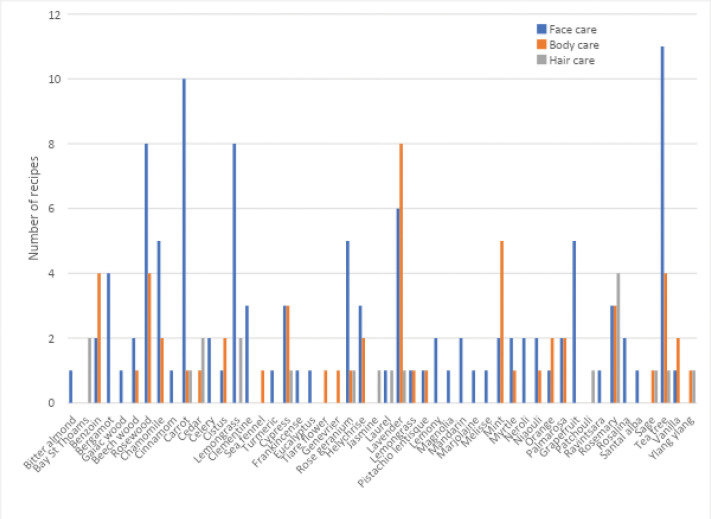
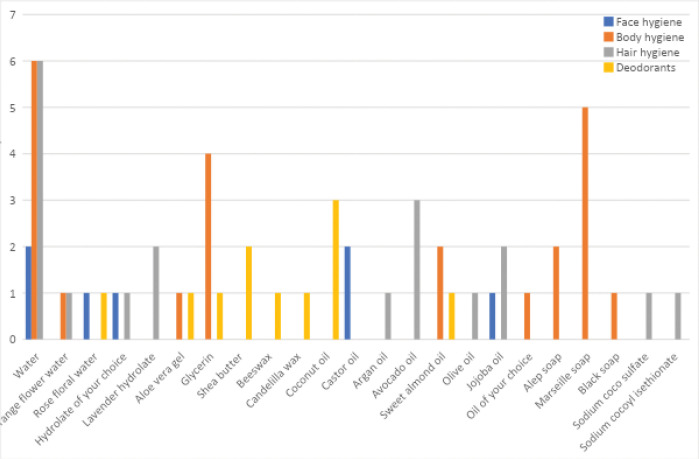
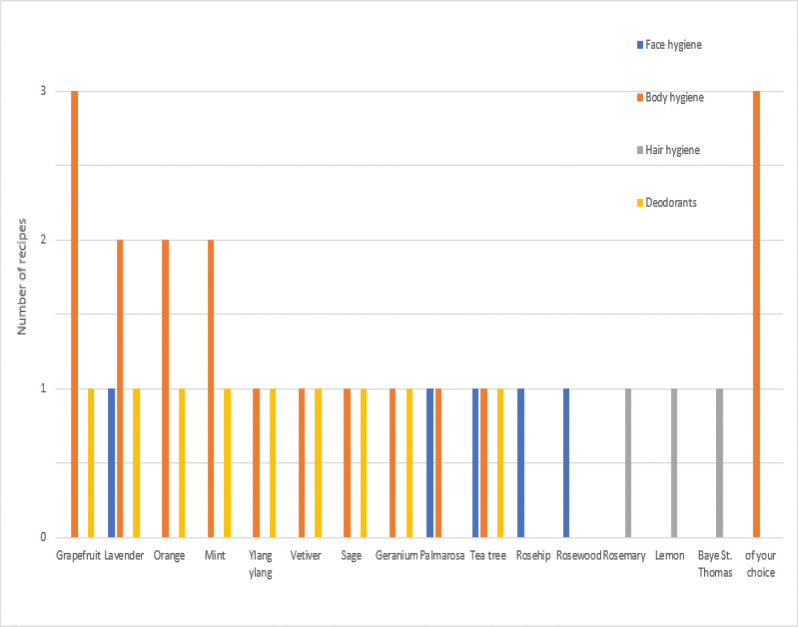
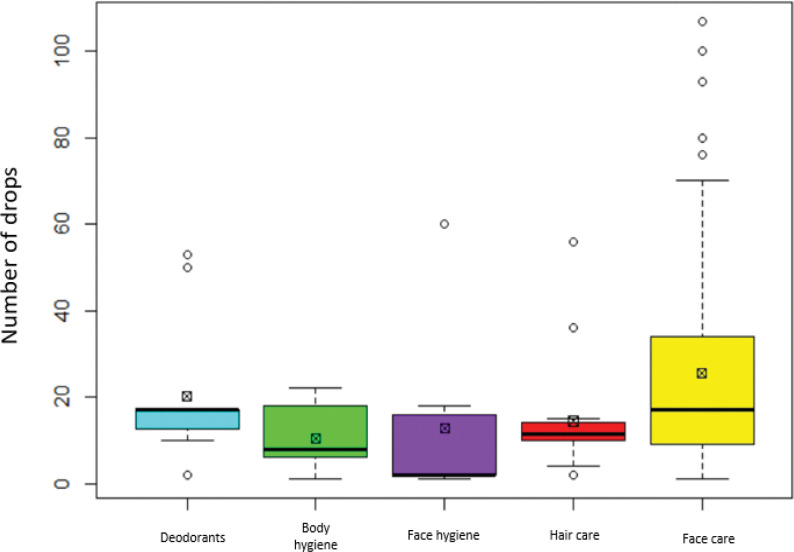
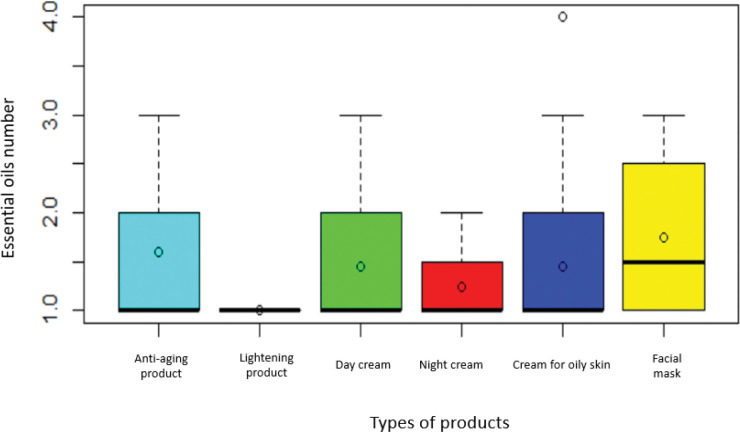
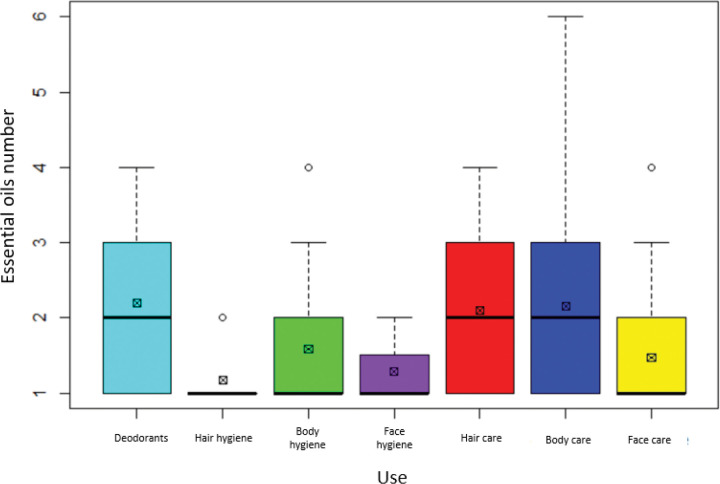
Two recent trends that have developed simultaneously are a mistrust of health products by some of the population and the growing popularity of essential oils. The objective of this study was to analyze recipes with essential oils found on the internet and to assess their level of photoprotective efficacy. Therefore, we conducted a study of 140 recipes for personal care and hygiene products that incorporate one or more essential oils. This analysis revealed that numerous essential oils are called for in these recipes, derived from plants belonging to a wide diversity of botanical families. There was a significant difference (p=0.0026) in the number of essential oils listed in the recipes for facial care and body care recipes. There was also a statistically significant difference (p=2.54E-5) in the amount of essential oil to be added, expressed in drops, according to the type of product being made. A common characteristic of most of the recipes was the absence of any antimicrobial agents or antioxidants, which poses serious issues of preservation for the finished products. Recipes with essential oils pose many issues. The first issue lies in the quantities of the different raw materials to be incorporated; it influences the final essential oil concentration. The second issue concerns the adverse effects (photosensitization, for example) and contraindications (pregnant women, nursing women) of certain essential oils. Finally, it is not possible to carry out physicochemical testing raw materials and finish preparation.
Keywords: DIY; Essential oils; Hygiene; Personal care; Recipes.
Copyright © 2023. Matrix Medical Communications. All rights reserved.
Conflict of interest statement
DISCLOSURES: The authors report no conflicts of interest relevant to the content of this article.
Figures
References
-
- Colin C. Williams CC. A lifestyle choice? Evaluating the motives of do-it-yourself (DIY) consumers. Int J Retail Distrib Manag. 2004;32(5):270–278.
-
- Sarpong D, Ofosu G, Botchie D Do-it-yourself (DiY) science: The proliferation, relevance and concerns. 2020. p. 158. Technol Forecasting Soc Change. 120127, ISSN 0040–1625.
-
- Auger C. Portes entrouvertes sur l'industrie du loisir créatif. Gestion. 2014;1:11–15.
-
- Stébé JM, Marchal H. Acquérir et rénover une maison au cœur d’un village. Regards sur un territoire émergent : le pré-urbain. Ethnol fr. 2016;46:721–731.
Publication types
LinkOut - more resources
Full Text Sources