


New concepts on the etiology of endometriosis
- PMID: 36746607
- PMCID: PMC10946875
- DOI: 10.1111/jog.15549
New concepts on the etiology of endometriosis
Abstract
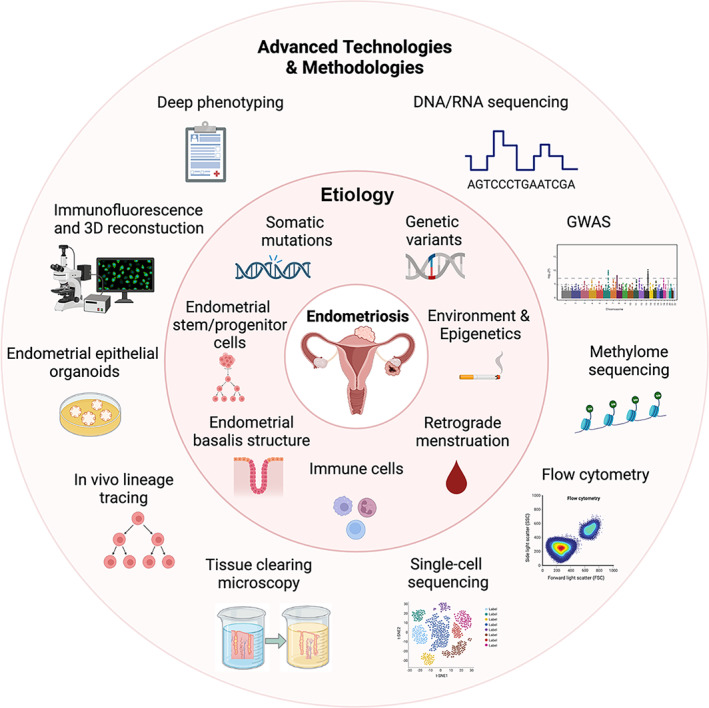
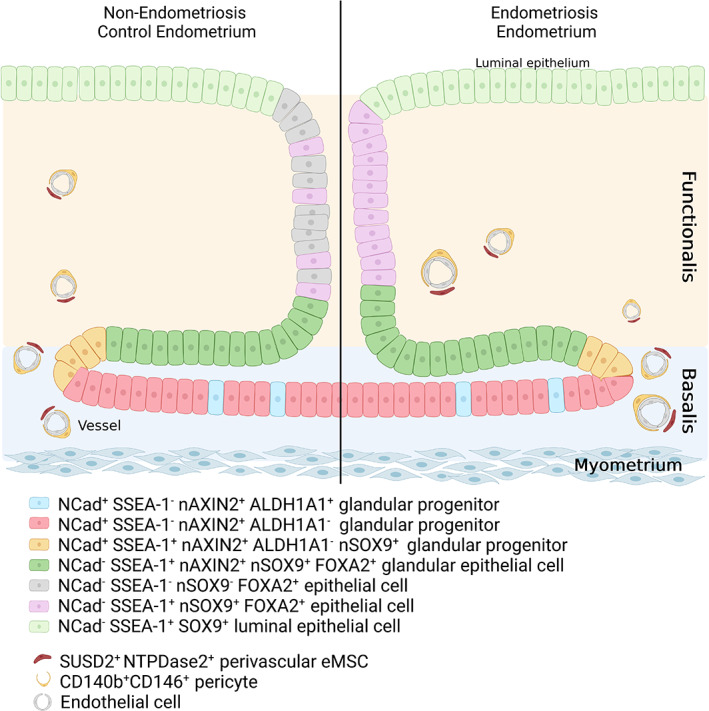
Endometriosis is a serious, chronic disorder where endometrial tissue grows outside the uterus, causing severe pelvic pain and infertility. It affects 11% of women. Endometriosis is a multifactorial disorder of unclear etiology, although retrograde menstruation plays a major role. It has a genetic component with over 40 genetic risk factors mapped, although their mechanism of action is still emerging. New evidence suggests a role for retrograde menstruation of endometrial stem/progenitor cells, now that identifying markers of these cells are available. Recent lineage tracing and tissue clearing microscopy and 3D reconstruction has provided new understanding of endometrial glandular structure, particularly the horizontal orientation and interconnection of basalis glands. New sequencing technologies, particularly whole genome DNA sequencing are revealing somatic mutations, including in cancer driver genes, in normal and eutopic endometrium of patients with endometriosis, as well as ectopic endometriotic lesions. Methylome sequencing is offering insight into the regulation of genes and the role of the environmental factors. Single cell RNA sequencing reveals the transcriptome of individual endometrial cells, shedding new light on the diversity and range of cellular subpopulations of the major cell types present in the endometrium and in endometriotic lesions. New endometrial epithelial organoid cultures replicating glandular epithelium are providing tractable models for studying endometriosis. Organoids derived from menstrual fluid offer a non-invasive source of endometrial tissue and a new avenue for testing drugs and developing personalized medicine for treating endometriosis. These new approaches are rapidly advancing our understanding of endometriosis etiology.
Keywords: endometrial stem/progenitor cells; endometriosis; genetic variants; retrograde menstruation; somatic mutations.
© 2023 The Authors. Journal of Obstetrics and Gynaecology Research published by John Wiley & Sons Australia, Ltd on behalf of Japan Society of Obstetrics and Gynecology.
Conflict of interest statement
The authors declare no conflict of interests for this article.
Figures
References
-
- Counseller VS, Crenshaw JL Jr. A clinical and surgical review of endometriosis. Am J Obstet Gynecol. 1951;62:930–42. - PubMed
-
- Winkel CA. Evaluation and management of women with endometriosis. Obstet Gynecol. 2003;102:397–408. - PubMed
-
- Vercellini P, Fedele L, Aimi G, Pietropaolo G, Consonni D, Crosignani PG. Association between endometriosis stage, lesion type, patient characteristics and severity of pelvic pain symptoms: a multivariate analysis of over 1000 patients. Hum Reprod. 2007;22:266–71. - PubMed
MeSH terms
Grants and funding
LinkOut - more resources
Full Text Sources
Medical
