


20 million pregnant women with group B streptococcus carriage: consequences, challenges, and opportunities for prevention
- PMID: 36749143
- PMCID: PMC9994794
- DOI: 10.1097/MOP.0000000000001223
20 million pregnant women with group B streptococcus carriage: consequences, challenges, and opportunities for prevention
Abstract
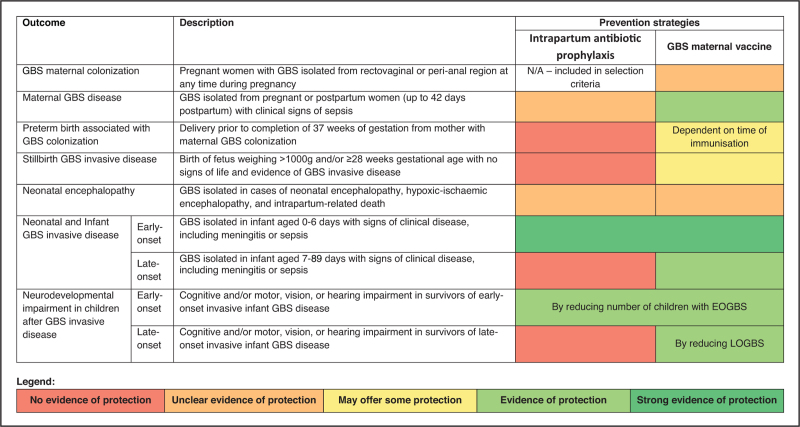
Purpose of review: Intrapartum antibiotic prophylaxis (IAP) is currently the only recommended preventive approach against clinical consequences of maternal Group B Streptococcus (GBS) colonization. In this review, we discuss new findings of total perinatal GBS burden and relative effectiveness of differing targeting of IAP, notably microbiology-based and risk factor-based screening, including potential limitations. Finally, we provide updates on maternal GBS vaccines and their potential cost-effectiveness in disease reduction.
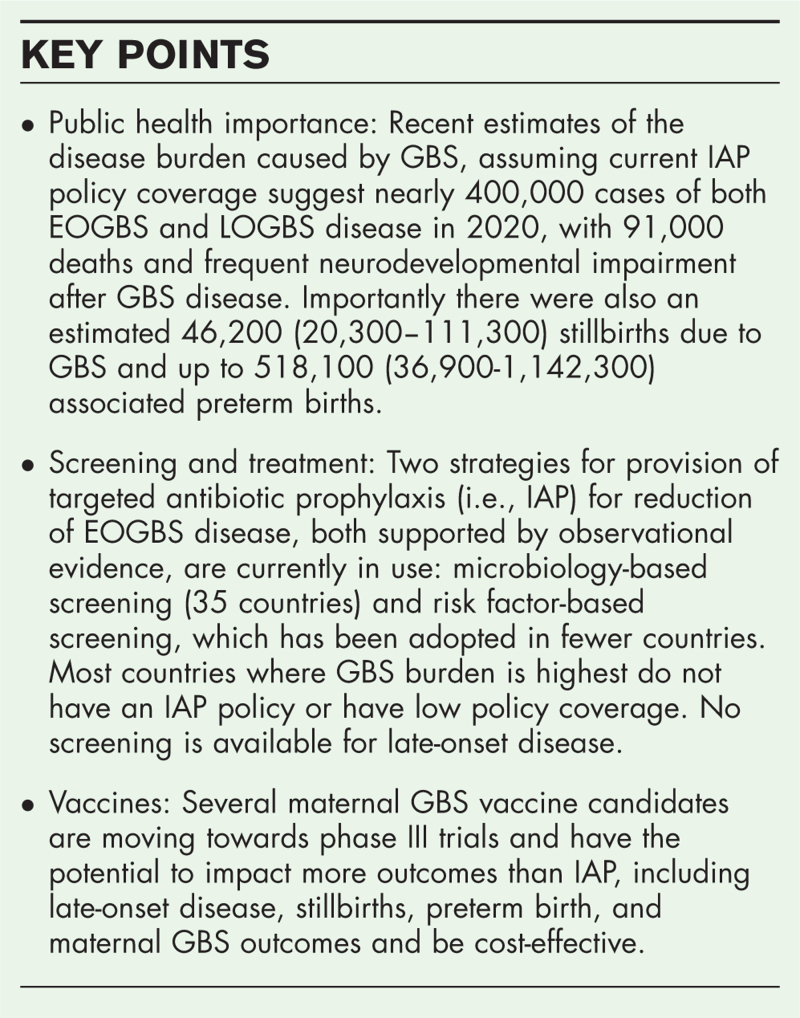
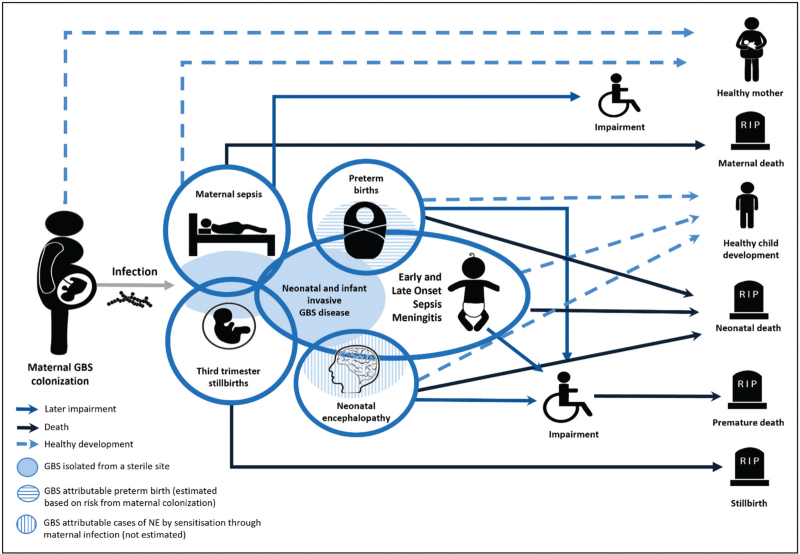
Recent findings: Updated estimates of the burden of GBS related to pregnancy outcomes show (1) early-onset GBS disease incidence and deaths are high in some low- and middle-income countries where IAP has not been implemented and (2) late-onset GBS disease, preterm birth, and stillbirth, which are not preventable by IAP, remain a public health problem in both high and low-middle income settings. Observational evidence indicates that microbiology-based screening may be more effective than risk factor-based screening, but even in high-income countries, compliance is imperfect. To address the need for alternative prevention strategies, several maternal vaccine candidates are in clinical development, and modelling suggests these could be cost-effective in most scenarios.
Summary: Recent progress in GBS vaccine research holds promise of reducing the large and preventable burden of mortality and disability caused by GBS disease, especially in higher-burden settings where clinical and laboratory services may be limited. Importantly vaccines also hold potential to prevent GBS stillbirths and GBS-associated preterm births.
Copyright © 2023 The Author(s). Published by Wolters Kluwer Health, Inc.
Conflict of interest statement
Figures
References
-
- Gonçalves BP, Procter SR, Paul P, et al. . Group B streptococcus infection during pregnancy and infancy: estimates of regional and global burden. The Lancet Global Health 2022; 10:e807–e819. - PMC - PubMed
-
This study improves and updates the estimates of GBS burden for 2020, including more input data from novel studies and applying different statistical approaches for GBS related maternal and child outcomes: maternal colonisation and disease, infant invasive disease, infant death, stillbirths, preterm births, and neurodevelopmental impairment among infant GBS survivors. This highlights the public health implications for maternal immunisation and other preventive strategies for both acute and long-term consequences of invasive GBS.
Publication types
MeSH terms
Substances
LinkOut - more resources
Full Text Sources
Medical
Research Materials
