


Health Care Provider Decisions to Initiate Oral HIV Preexposure Prophylaxis in New York City Public Sexual Health Clinics
- PMID: 36749905
- PMCID: PMC10838661
- DOI: 10.1097/OLQ.0000000000001782
Health Care Provider Decisions to Initiate Oral HIV Preexposure Prophylaxis in New York City Public Sexual Health Clinics
Abstract
Background: Oral HIV preexposure prophylaxis (PrEP) is safe and effective but underutilized. Health care providers' beliefs about PrEP and attitudes toward people who could benefit may affect PrEP access.
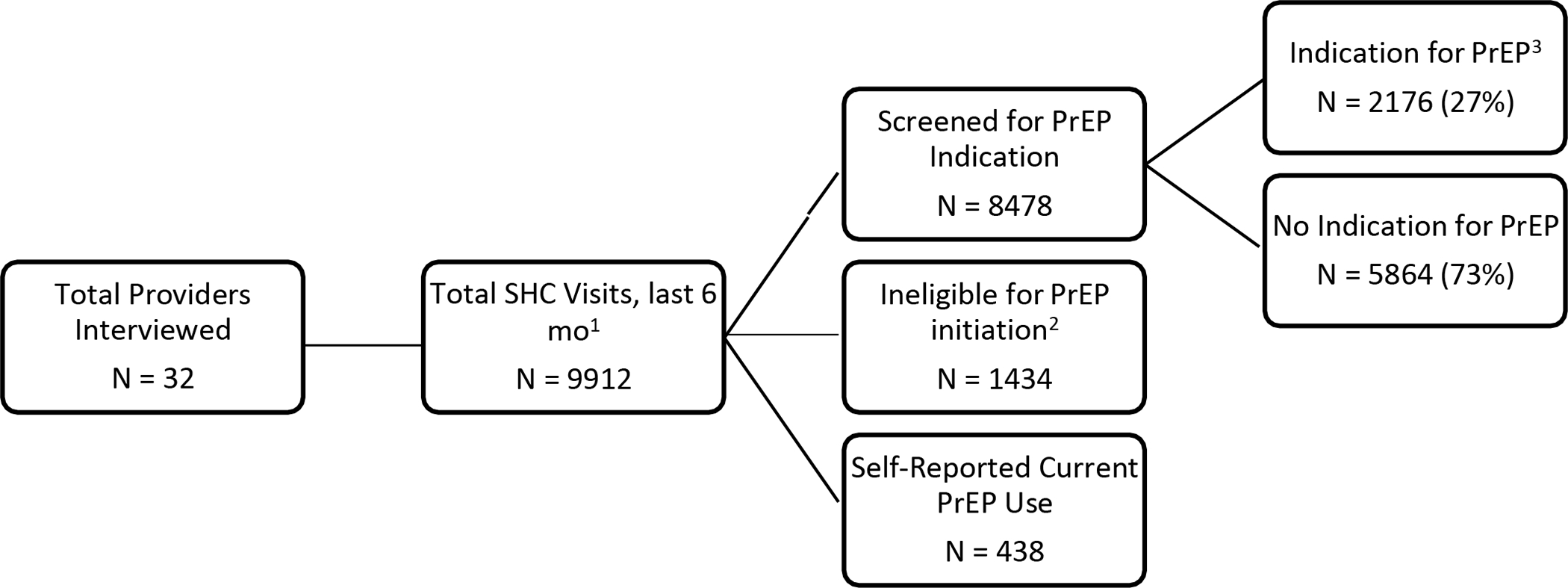
Methods: This mixed-methods study (2016-2018) was conducted in 8 New York City public sexual health clinics that implemented a PrEP program. Data included 32 in-depth qualitative interviews with clinicians, quantitatively coded to reflect their PrEP beliefs; a provider questionnaire; and 6 months of medical record visit data for these providers. Among patients with a PrEP indication, we examined the odds of a patient being initiated on PrEP associated with providers' PrEP beliefs and demographic characteristics, and patient characteristics.
Results: Providers reported strong support for offering PrEP to eligible patients. The majority denied concerns about possible development of drug-resistant viral strains, giving PrEP to people who might not benefit, and PrEP toxicity. Nevertheless, about one-third agreed with each of these concerns, and 55% thought PrEP use might limit condom use. Of 2176 patients with a PrEP indication, 20% were initiated. Providers with more restrictive PrEP beliefs did not have lower odds of initiating patients on PrEP. Women as well as Black and Latinx patients were less likely to be initiated on PrEP.
Conclusions: Contrary to our hypotheses, providers' negative PrEP beliefs did not seem to reduce initiation of PrEP for eligible patients. This may be attributable to clear clinical protocols, strong staff support, and training on implementing PrEP in this setting. Racial and gender disparities in PrEP uptake urgently require attention.
Copyright © 2023 American Sexually Transmitted Diseases Association. All rights reserved.
Conflict of interest statement
Conflict of Interest and Sources of Funding: None declared.
Figures
References
-
- U.S. Department of Health & Human Services, U.S. Food and Drug Administration. Truvada for PrEP fact sheet: Ensuring safe and proper use. 2012. Available at: https://www.fda.gov/media/83586/download. Accessed May 13, 2022.
-
- Centers for Disease Control and Prevention, US Public Health Service. Preexposure prophylaxis for the prevention of HIV infection in the United States—2021 update: A clinical practice guideline. 2021. Available at: https://www.cdc.gov/hiv/pdf/risk/prep/cdc-hiv-prep-guidelines-2021.pdf. Accessed March 7, 2022.
-
- Centers for Disease Control and Prevention. Core indicators for monitoring the Ending the HIV Epidemic initiative (preliminary data): National HIV Surveillance System data reported through June 2021; and preexposure prophylaxis (PrEP) data reported through March 2021. HIV Surveillance Data Tables 2021;2(No. 4). http://www.cdc.gov/hiv/library/reports/hiv-surveillance.html. Published October 2021. Accessed August 30 2022
-
- AIDSVu. PrEP use across the U.S. at the county-level. 2020. Available at: https://aidsvu.org/aidsvu-releases-landmark-county-level-data-and-intera.... Accessed November 26, 2021.
Publication types
MeSH terms
Substances
Grants and funding
LinkOut - more resources
Full Text Sources
Medical
Miscellaneous
