


Identification of brain cell types underlying genetic association with word reading and correlated traits
- PMID: 36750735
- PMCID: PMC10208966
- DOI: 10.1038/s41380-023-01970-y
Identification of brain cell types underlying genetic association with word reading and correlated traits
Abstract
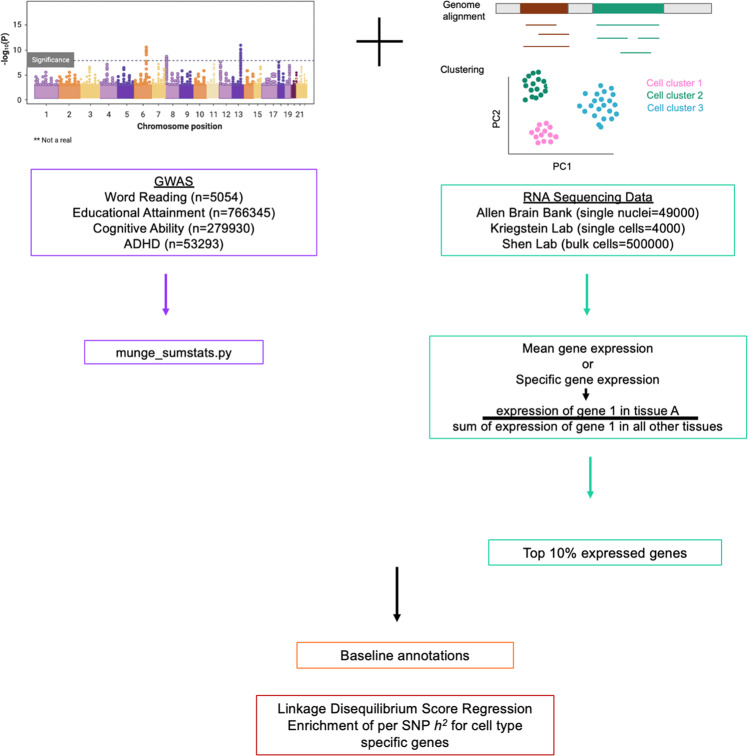
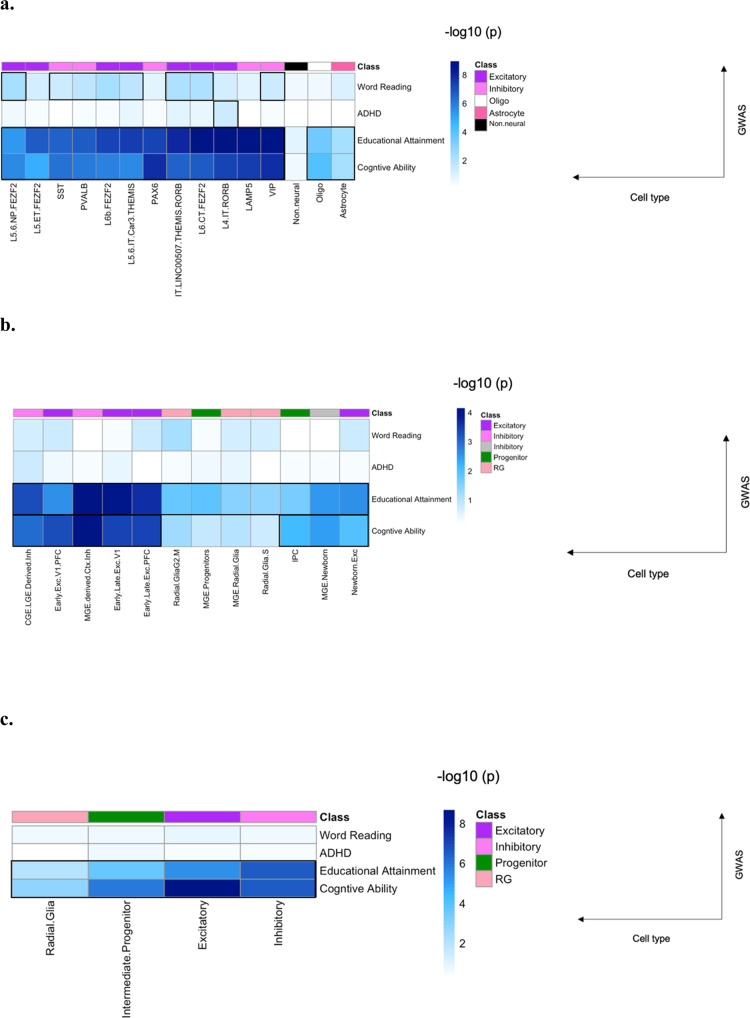
Neuroimaging studies implicate multiple cortical regions in reading ability/disability. However, the neural cell types integral to the reading process are unknown. To contribute to this gap in knowledge, we integrated genetic results from genome-wide association studies for word reading (n = 5054) with gene expression datasets from adult/fetal human brain. Linkage disequilibrium score regression (LDSC) suggested that variants associated with word reading were enriched in genes expressed in adult excitatory neurons, specifically layer 5 and 6 FEZF2 expressing neurons and intratelencephalic (IT) neurons, which express the marker genes LINC00507, THEMIS, or RORB. Inhibitory neurons (VIP, SST, and PVALB) were also found. This finding was interesting as neurometabolite studies previously implicated excitatory-inhibitory imbalances in the etiology of reading disabilities (RD). We also tested traits that shared genetic etiology with word reading (previously determined by polygenic risk scores): attention-deficit/hyperactivity disorder (ADHD), educational attainment, and cognitive ability. For ADHD, we identified enrichment in L4 IT adult excitatory neurons. For educational attainment and cognitive ability, we confirmed previous studies identifying multiple subclasses of adult cortical excitatory and inhibitory neurons, as well as astrocytes and oligodendrocytes. For educational attainment and cognitive ability, we also identified enrichment in multiple fetal cortical excitatory and inhibitory neurons, intermediate progenitor cells, and radial glial cells. In summary, this study supports a role of excitatory and inhibitory neurons in reading and excitatory neurons in ADHD and contributes new information on fetal cell types enriched in educational attainment and cognitive ability, thereby improving our understanding of the neurobiological basis of reading/correlated traits.
© 2023. The Author(s).
Conflict of interest statement
The authors declare no competing interests.
Figures
References
-
- Lyon GR. Part I defining dyslexia, comorbidity, teachers’ knowledge of language and reading. Ann Dyslexia. 2003;53:1–14. doi: 10.1007/s11881-003-0001-9. - DOI
-
- Eising E, Mirza-Schreiber N, de Zeeuw EL, Wang CA, Truong DT, Allegrini AG, et al. Genome-wide analyses of individual differences in quantitatively assessed reading- and language-related skills in up to 34,000 people. Proc Natl Acad Sci USA. 2022;119:e2202764119. doi: 10.1073/pnas.2202764119. - DOI - PMC - PubMed
Publication types
MeSH terms
Grants and funding
LinkOut - more resources
Full Text Sources
Medical
Miscellaneous
