


A world together: Global citizen identification as a basis for prosociality in the face of COVID-19
- PMID: 36751503
- PMCID: PMC9892534
- DOI: 10.1177/13684302211051619
A world together: Global citizen identification as a basis for prosociality in the face of COVID-19
Abstract
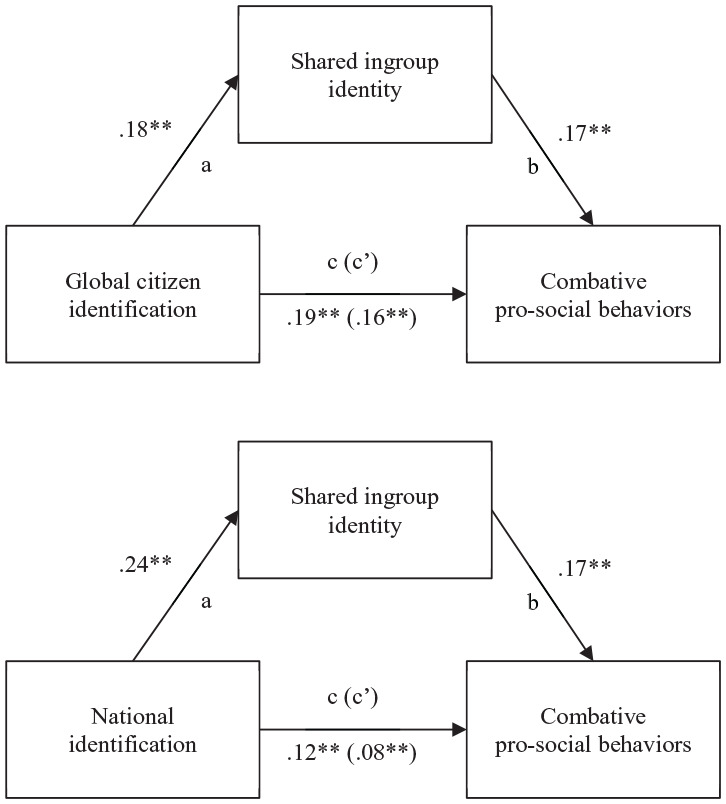
How do global citizens respond to a global health emergency? The present research examined the association between global citizen identification and prosociality using two cross-national datasets-the World Values Survey (Study 1, N = 93,338 from 60 countries and regions) and data collected in 11 countries at the start of the COVID-19 pandemic (Study 2, N = 5,427). Results showed that individuals who identified more strongly as global citizens reported greater prosociality both generally (Study 1) and more specifically in the COVID-19 global health emergency (Study 2). Notably, global citizen identification was a stronger predictor of prosociality in response to COVID-19 than national identification (Study 2). Moreover, analyses revealed that shared ingroup identity accounted for the positive association between global citizen identification and prosociality (Study 2). Overall, these findings highlight global citizenship as a unique and promising direction in promoting prosociality and solidarity, especially in the fight against COVID-19.
Keywords: global citizen; national identification; prosociality; shared ingroup identity; the COVID-19 pandemic.
© The Author(s) 2021.
Figures



References
-
- Bates D., Mächler M., Bolker B., Walker S. (2015). Fitting linear mixed-effects models using lme4. Journal of Statistical Software, 67, 1–48. 10.18637/jss.v067.i01 - DOI
-
- Bonetto E., Delouvée S., Mahfud Y., Adam-Troian J. (2020). National identification, a social cure for COVID-19? Evidence from 67 countries. PsyArXiv. 10.31234/osf.io/294r5 - DOI - PubMed
LinkOut - more resources
Full Text Sources