


Comparing Complication Rates of Midline Catheter vs Peripherally Inserted Central Catheter. A Systematic Review and Meta-analysis
- PMID: 36751645
- PMCID: PMC9898877
- DOI: 10.1093/ofid/ofad024
Comparing Complication Rates of Midline Catheter vs Peripherally Inserted Central Catheter. A Systematic Review and Meta-analysis
Abstract
Background: Peripherally inserted central catheters (PICCs) and midlines are commonly used devices for reliable vascular access. Infection and thrombosis are the main adverse effects of these catheters. We aimed to evaluate the relative risk of complications from midlines and PICCs.
Methods: We conducted a systematic review and meta-analysis of randomized controlled trials (RCTs) and observational studies. The primary outcomes were catheter-related bloodstream infection (CRBSI) and thrombosis. Secondary outcomes evaluated included mortality, failure to complete therapy, catheter occlusion, phlebitis, and catheter fracture. The certainty of evidence was assessed using the GRADE approach.
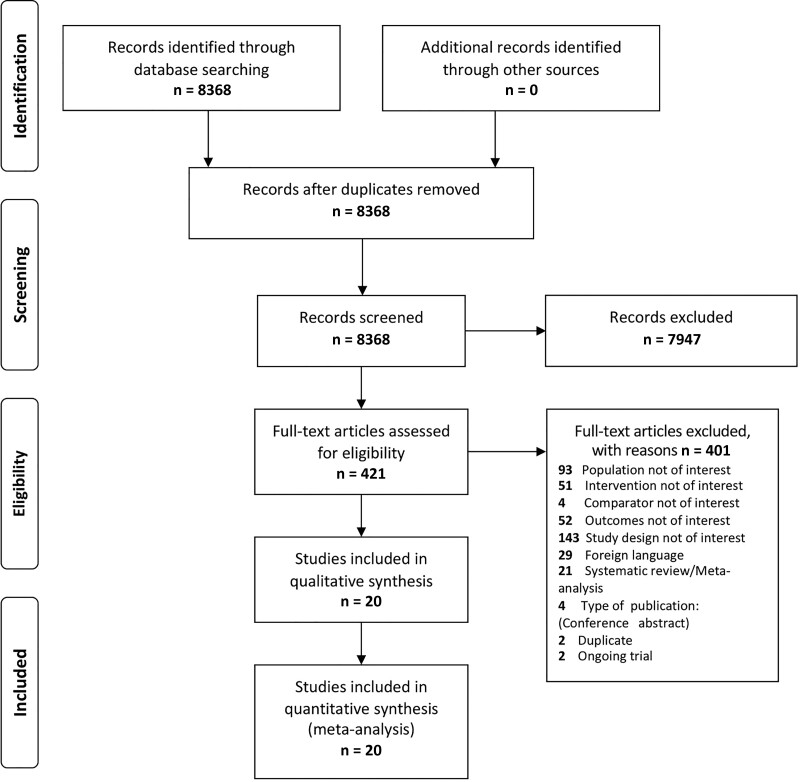
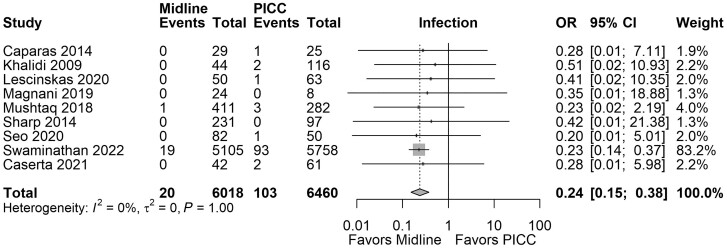
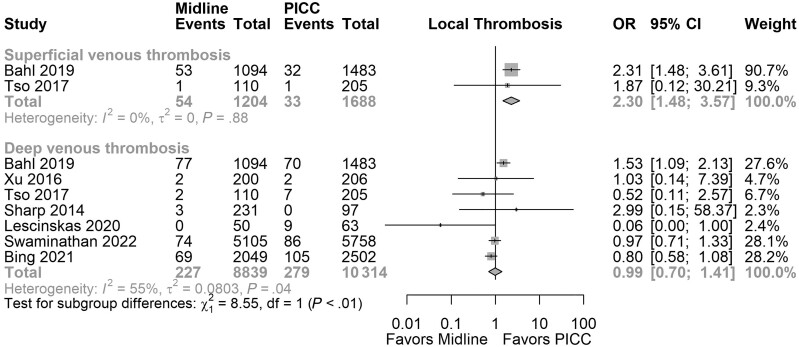
Results: Of 8368 citations identified, 20 studies met the eligibility criteria, including 1 RCT and 19 observational studies. Midline use was associated with fewer patients with CRBSI compared with PICCs (odds ratio [OR], 0.24; 95% CI, 0.15-0.38). This association was not observed when we evaluated risk per catheter. No significant association was found between catheters when evaluating risk of localized thrombosis and pulmonary embolism. A subgroup analysis based on location of thrombosis showed higher rates of superficial venous thrombosis in patients using midlines (OR, 2.30; 95% CI, 1.48-3.57). We did not identify any significant difference between midlines and PICCs for the secondary outcomes.
Conclusions: Our findings suggest that patients who use midlines might experience fewer CRBSIs than those who use PICCs. However, the use of midline catheters was associated with greater risk of superficial vein thrombosis. These findings can help guide future cost-benefit analyses and direct comparative RCTs to further characterize the efficacy and risks of PICCs vs midline catheters.
Keywords: PICC; catheter; infection; midline; thrombosis.
© The Author(s) 2023. Published by Oxford University Press on behalf of Infectious Diseases Society of America.
Figures
References
-
- Maki DG, Kluger DM, Crnich CJ. The risk of bloodstream infection in adults with different intravascular devices: a systematic review of 200 published prospective studies. Mayo Clin Proc 2006; 81:1159–71. - PubMed
-
- Chopra V, O'Horo JC, Rogers MA, Maki DG, Safdar N. The risk of bloodstream infection associated with peripherally inserted central catheters compared with central venous catheters in adults: a systematic review and meta-analysis. Infect Control Hosp Epidemiol 2013; 34:908–18. - PubMed
-
- Turcotte S, Dubé S, Beauchamp G. Peripherally inserted central venous catheters are not superior to central venous catheters in the acute care of surgical patients on the ward. World J Surg 2006; 30:1605–19. - PubMed
-
- Periard D, Monney P, Waeber G, et al. Randomized controlled trial of peripherally inserted central catheters vs. peripheral catheters for middle duration in-hospital intravenous therapy. J Thromb Haemost 2008; 6:1281–8. - PubMed
LinkOut - more resources
Full Text Sources
Medical
Miscellaneous
