


Death-associated protein kinase 1 is associated with cognitive dysfunction in major depressive disorder
- PMID: 36751808
- PMCID: PMC10154471
- DOI: 10.4103/1673-5374.361532
Death-associated protein kinase 1 is associated with cognitive dysfunction in major depressive disorder
Abstract
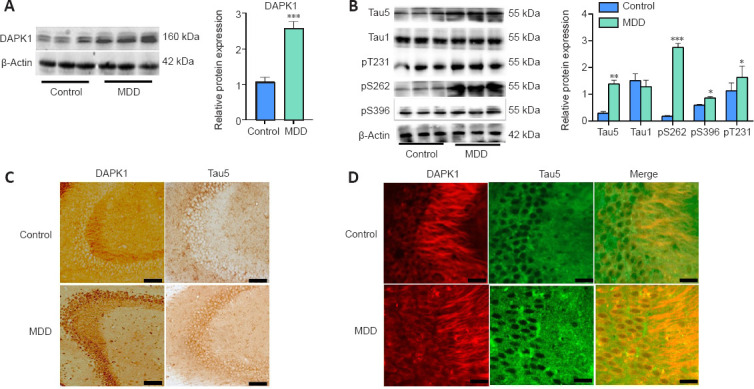
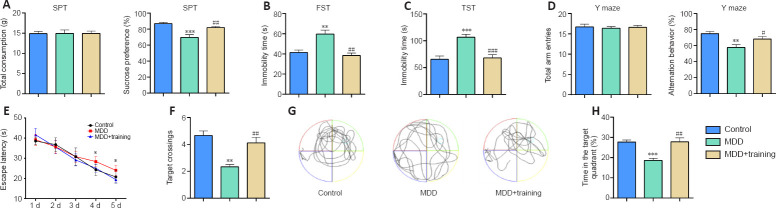
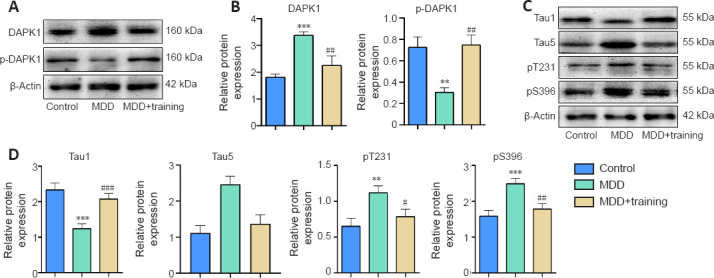
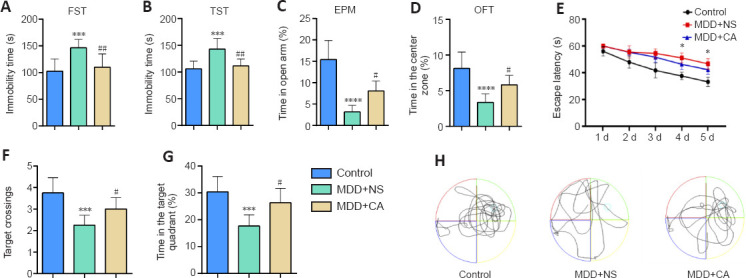
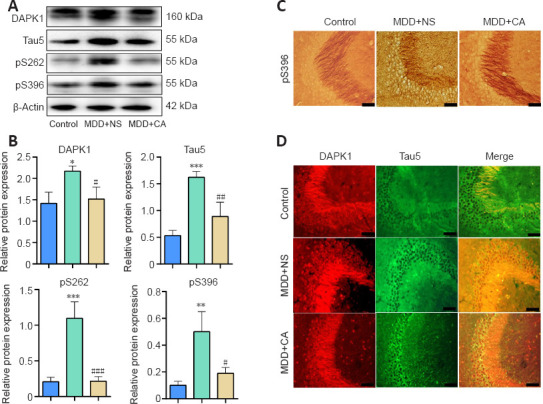
We previously showed that death-associated protein kinase 1 (DAPK1) expression is increased in hippocampal tissue in a mouse model of major depressive disorde and is related to cognitive dysfunction in Alzheimer's disease. In addition, depression is a risk factor for developing Alzheimer's disease, as well as an early clinical manifestation of Alzheimer's disease. Meanwhile, cognitive dysfunction is a distinctive feature of major depressive disorder. Therefore, DAPK1 may be related to cognitive dysfunction in major depressive disorder. In this study, we established a mouse model of major depressive disorder by housing mice individually and exposing them to chronic, mild, unpredictable stressors. We found that DAPK1 and tau protein levels were increased in the hippocampal CA3 area, and tau was hyperphosphorylated at Thr231, Ser262, and Ser396 in these mice. Furthermore, DAPK1 shifted from axonal expression to overexpression on the cell membrane. Exercise and treatment with the antidepressant drug citalopram decreased DAPK1 expression and tau protein phosphorylation in hippocampal tissue and improved both depressive symptoms and cognitive dysfunction. These results indicate that DAPK1 may be a potential reason and therapeutic target of cognitive dysfunction in major depressive disorder.
Keywords: Alzheimer’s disease; antidepressant drug; behavioral tests; cognitive dysfunction; death-associated protein kinase 1; exercise; hippocampus; major depressive disorder; phosphorylation; tau protein.
Conflict of interest statement
None
Figures
References
-
- Abraham EH, Khan B, Ling E, Bernstein LJ. The development and evaluation of a patient educational resource for cancer-related cognitive dysfunction. J Cancer Educ. (2022);37:111–119. - PubMed
-
- Agnihotri A, Aruoma OI. Alzheimer's disease and Parkinson's disease:a nutritional toxicology perspective of the impact of oxidative stress, mitochondrial, dysfunction, nutrigenomics, and environmental chemicals. J Am Coll Nutr. (2020);39:16–27. - PubMed
-
- Baumgart M, Snyder HM, Carrillo MC, Fazio S, Kim H, Johns H. Summary of the evidence on modifiable risk factors for cognitive decline and dementia:a population-based perspective. Alzheimers Dement. (2015);11:718–726. - PubMed
LinkOut - more resources
Full Text Sources
Miscellaneous
