An Algorithm for Labia Minora Reduction Based on a Review of Anatomical, Configurational, and Individual Considerations
- PMID: 36755650
- PMCID: PMC9902108
- DOI: 10.1055/a-1938-0991
An Algorithm for Labia Minora Reduction Based on a Review of Anatomical, Configurational, and Individual Considerations
Abstract
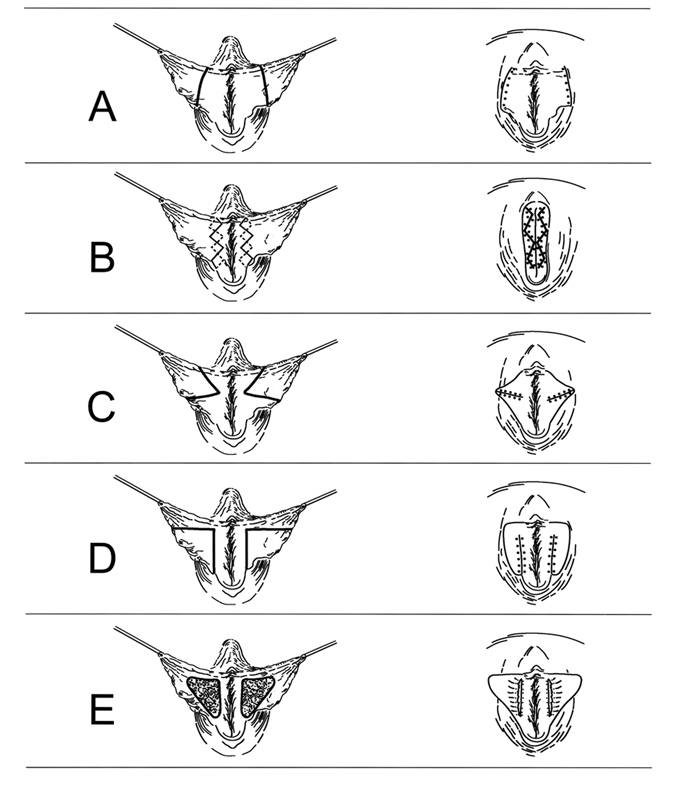
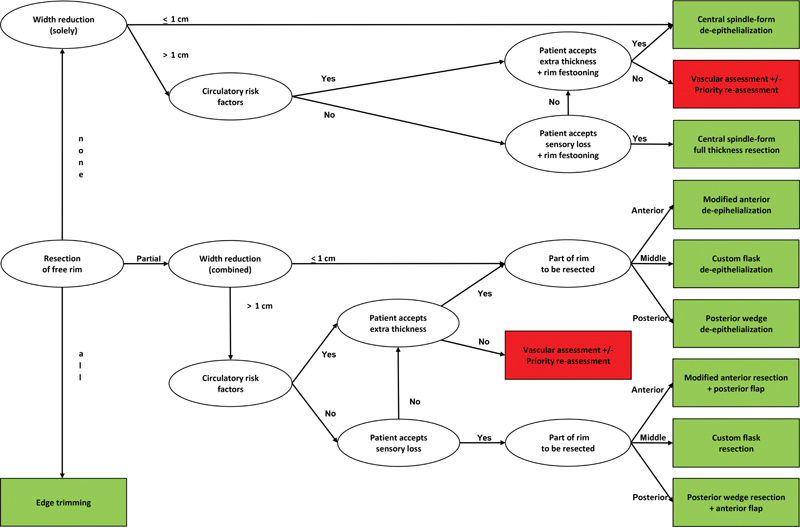
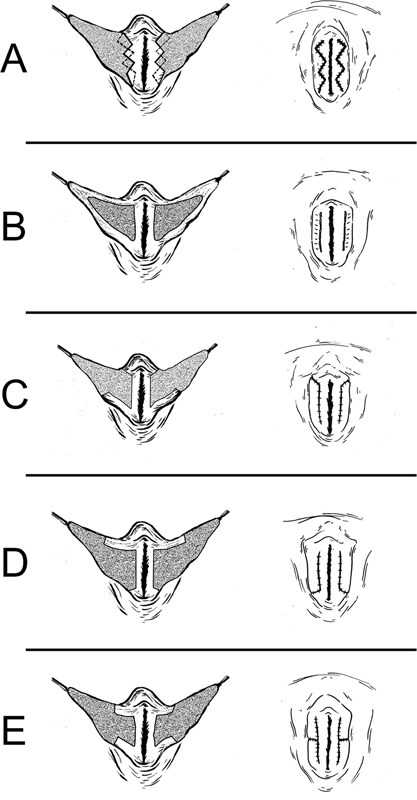
A variety of reduction labiaplasty techniques have been introduced to date, but no single technique will offer the optimal solution for every patient. Rather, the technique should be chosen based on anatomical, configurational, and technical considerations, as well as on patients' personal preferences regarded maintenance of the labial rim, maintenance of labial sensitivity, and prevention of iatrogenic thickening of the labium. We reviewed, defined, and assessed labial configurational variety, neurovascular supply, reduction techniques, and patient's preferences as the considerations relevant to the choice of labiaplasty technique. Based on this review, an algorithm was constructed that leads to a choice of reduction technique through five decisions to be made regarding (1) resection or (partial) retention of the labial free rim, (2) the measure of required labial width reduction, (3) labial vascular status, (4) prevention of iatrogenic labial thickening, and (5) preservation of labial sensibility. The choice of techniques includes edge trimming, central spindle form de-epithelialization or full-thickness resection, and three modifications of the wedge resection or de-epithelialization technique. These three modifications comprised a modified anterior resection or de-epithelialization combined with posterior flap transposition, a custom flask resection or de-epithelialization, and a modified posterior wedge resection or de-epithelialization combined with anterior flap transposition. Use of the five decisional steps and the inclusion of modifications of all three conventional reduction techniques offer an improved algorithm for the choice of labioplasty technique.
Keywords: algorithm; cosmetic surgery; female; review; vulva.
The Korean Society of Plastic and Reconstructive Surgeons. This is an open access article published by Thieme under the terms of the Creative Commons Attribution-NonDerivative-NonCommercial License, permitting copying and reproduction so long as the original work is given appropriate credit. Contents may not be used for commercial purposes, or adapted, remixed, transformed or built upon. ( https://creativecommons.org/licenses/by-nc-nd/4.0/ ).
Conflict of interest statement
Conflict of Interest None declared.
Figures
References
-
- Vieira-Baptista P, Almeida G, Bogliatto F. International Society for the Study of Vulvovaginal Disease recommendations regarding female cosmetic genital surgery. J Low Genit Tract Dis. 2018;22(04):415–434. - PubMed
-
- Chibnall K, McDonald K, Kirkman M. Pathologising diversity: medical websites offering female genital cosmetic surgery in Australia. Cult Health Sex. 2020;22(01):64–80. - PubMed
-
- Boddy J. Re-thinking the zero tolerance approach to FGM/C: the debate around female genital cosmetic surgery. Curr Sex Health Rep. 2020;12:302–313.
-
- Society T A.The Aesthetic Plastic Surgery National Databank Statistics 2020 2021 Accessed September 28, 2022, at:https://cdn.theaestheticsociety.org/media/statistics/aestheticplasticsur...
-
- Munhoz A M, Filassi J R, Ricci M D. Aesthetic labia minora reduction with inferior wedge resection and superior pedicle flap reconstruction. Plast Reconstr Surg. 2006;118(05):1237–1247. - PubMed
LinkOut - more resources
Full Text Sources