


Facemask: Protection or threat?
- PMID: 36758311
- PMCID: PMC9902895
- DOI: 10.1016/j.marpolbul.2023.114681
Facemask: Protection or threat?
Abstract
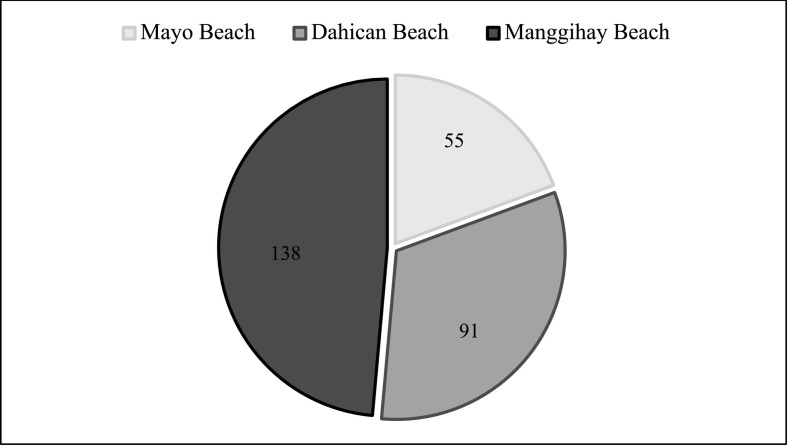
Facemasks were widely used as a protection against SARS-COV-2, which significantly reduced COVID-19 transmission during the pandemic. However, concerns have been raised regarding its adverse impacts on human health due to intense use and mismanagement. Although rampant plastic littering was the norm before the pandemic, the magnitude of the problem is worsening as potentially COVID-19-infected facemasks are thrown along the shoreline. This study assessed the discarded facemasks on the most popular beach destinations in Mati City, Davao Oriental, Philippines. A total of N = 284 discarded facemasks were found in a cumulative area of 22,500 m2, with an average density of 8.4 × 10⁻⁴ items/m2. The surgical facemask (82 %; n = 234) was the most abundant type of facemask found in the areas, followed by KF94 (16 %; n = 45) and KN95 (2 %; n = 5). The Analysis of Variance (ANOVA) showed significant differences in the visual counts of facemasks on the three beaches (p < 0.05).
Keywords: Beaches; COVID-19 pandemic; Davao Oriental; Mati City; Personal protective equipment (PPE).
Copyright © 2023 Elsevier Ltd. All rights reserved.
Conflict of interest statement
Declaration of competing interest The authors declare that they have no known competing financial interests or personal relationships that could have appeared to influence the work reported in this paper.
Figures



References
-
- Abreo N., Kobayashi V. First evidence of marine litter associated with COVID-19 in Davao Gulf, Mindanao Philippines. Philippine Journal of Science. 2021;150(5):1145–1149. doi: 10.56899/150.05.23. - DOI
-
- Abreo N., Macusi E., Blatchley D., Cuenca G. Ingestion of Marine Plastic Debris by Green Turtle (Chelonia mydas) in Davao Gulf, Mindanao, Philippines. Philipp. J. Sci. 2016;145(1):17–23.
MeSH terms
LinkOut - more resources
Full Text Sources
Medical
Miscellaneous
