


Not all engaged students are alike: patterns of engagement and burnout among elementary students using a person-centered approach
- PMID: 36759909
- PMCID: PMC9909855
- DOI: 10.1186/s40359-023-01071-z
Not all engaged students are alike: patterns of engagement and burnout among elementary students using a person-centered approach
Abstract
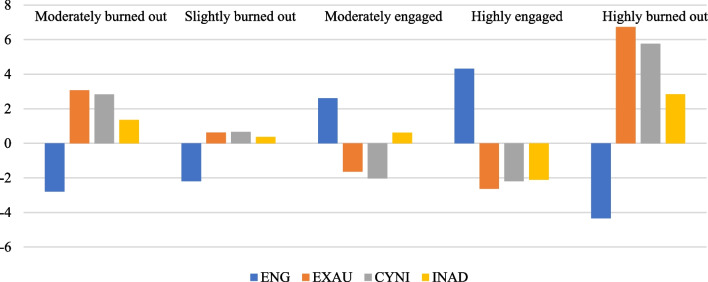
Due to its potential to address low achievement, high dropout rates, and misbehavior among students, school engagement has become an important topic in contemporary developmental psychology and educational research. Although there is a wealth of literature on the causes and effects of student engagement, the current understanding of how student engagement varies in response to different teaching styles is limited. This study examined the engagement and burnout profiles of elementary school pupils (N = 798; 51% females; Mage = 11.54, SDage = 0.72) and the interactions between those profiles, students' characteristics and their perceptions of instructional behaviors (e.g., supporting criticism, suppressing criticism & independent viewpoints, intruding). Latent profile analysis revealed five types of profiles: moderately burned out, slightly burned out, moderately engaged, highly engaged, and highly burned out. Follow-up logistic regression analysis found that students clustered into engagement groups were likely to report higher autonomy support from teachers, especially when teachers permit criticism and independent thinking from students. In contrast, students clustered into burned out profiles were more likely to rate teacher strategies as autonomy suppressive. This became more obvious when instructors imposed meaningless and uninteresting activities. Taken together, this study indicated that autonomy-supportive teaching behaviors are pivotal in understanding student engagement and school burnout. The significance of the findings was addressed, along with implications and limitations.
Keywords: Latent profile analysis; Motivational styles; School burnout; Student engagement; Teacher behaviors.
© 2023. The Author(s).
Conflict of interest statement
The authors declare that they have no competing interests.
Figures
References
-
- Lawson MA, Lawson HA. New conceptual frameworks for student engagement research, policy, and practice. Rev Educ Res. 2013 doi: 10.3102/0034654313480891. - DOI
-
- Appleton JJ, Christenson SL, Kim D, Reschly AL. Measuring cognitive and psychological engagement: validation of the student engagement instrument. J Sch Psychol. 2006 doi: 10.1016/j.jsp.2006.04.002. - DOI
-
- Bae CL, Lai MHC. Opportunities to participate in science learning and student engagement: a mixed methods approach to examining person and context factors. J Educ Psychol. 2020 doi: 10.1037/edu0000410. - DOI
-
- Fredricks JA, Filsecker M, Lawson MA. Student engagement, context, and adjustment: addressing definitional, measurement, and methodological issues. Learn Instr. 2016 doi: 10.1016/j.learninstruc.2016.02.002. - DOI
-
- Fredricks JA, Blumenfeld PC, Paris AH. School engagement: potential of the concept, state of the evidence. Rev Educ Res. 2004 doi: 10.3102/00346543074001059. - DOI
MeSH terms
Grants and funding
LinkOut - more resources
Full Text Sources
